





Firewood Rack Buying Guide: Sizes, Placement, and Indoor vs Outdoor Storage
A firewood rack keeps logs off the ground and away from moisture, which is what determines if firewood lights easily, burns clean, and lasts. Freshly cut wood can hold 100% moisture or more, and even properly seasoned or kiln-dried wood will reabsorb it if left on the ground or exposed to rain.
A good rack solves both of these elevation and airflow problems and is usually the right size and placement for your home. This guide covers what to look for in a rack, which size fits your space, and where to put it.
Why a Firewood Rack Matters
When wood is stored directly on the ground, it pulls moisture up from the soil. Although that is fine for a few hours, after a couple of weeks the contact raises moisture content in the wood enough to cause real problems. The wood can become too hard to light, have weaker heat output, increase pest activity, grow mold, and build up heavy creosote in a chimney or flue.
Burning wood that has reabsorbed moisture also produces more smoke and pollutants. If the fire is anywhere near an occupied porch, patio, or living room, that can be a problem. A firewood rack solves this by holding logs above grade so nothing but air reaches them. It also keeps the stack organized so older wood gets burned before newer wood, rather than getting forgotten in the back.

What to Look for in a Firewood Rack
Four things separate a firewood rack that protects your wood from one that just holds it.
- Elevation: Look for a frame that lifts wood a few inches off the ground. A slab or paver underneath adds a vapor barrier and keeps ground moisture from wicking up through legs or feet.
- Airflow: A firewood rack with open sides lets air move through the stack from all directions, which can help dry out any residual moisture. Solid-sided bins or tightly packed enclosures trap humidity instead of releasing it.
- Materials and Cover: A steel frame built for outdoor exposure will outlast wood or plastic construction, and a treated finish resists rust through repeated rain and snow. If the firewood rack sits outside, a weather-resistant cover that still allows airflow protects the top layer without sealing in moisture underneath.
- Capacity: Match the rack to how often you actually burn. A household that lights a fire once or twice a month needs far less standing capacity than one hosting regular bonfires or running a wood stove through the winter. Buying more capacity than you'll use just means more wood sitting exposed to the weather for longer.
Firewood Rack Sizes: Which One Fits Your Space
Rack sizing comes down to two questions:
- How much wood do you want to store?
- Where is it going?
A compact indoor firewood rack can run around 30 to 37 inches tall and is built to sit beside a fireplace or wood stove, holding a few days' worth of logs within easy reach without taking over a room.
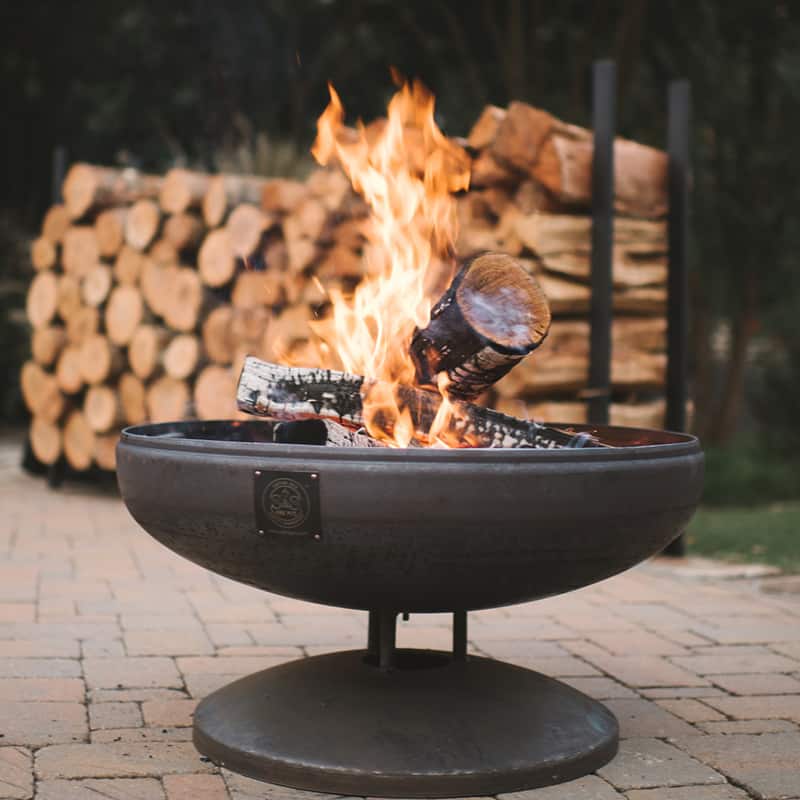
A standard outdoor firewood rack is usually larger. A 4-foot by 4-foot frame handles a moderate stockpile for regular weekend fires, and an 8-foot-wide frame roughly doubles that capacity for anyone who burns often through the season.
For a rack that also holds firewood pieces neatly organized without stacking loose logs, a metal wood rack with defined slots works well for smaller footprints like a porch or a garage corner.
Once the firewood rack itself is sorted, a couple of accessories round out the setup. A fitted rack cover protects an outdoor stack through a full season of weather and a canvas log carrier makes moving wood from an outdoor firewood rack to an indoor fireplace far less messy than an armload of loose logs.
If you'd rather skip the separate purchase entirely, Cutting Edge Firewood's firewood racks come pre-loaded with kiln-dried wood in your choice of species, standing 4 feet tall and 2 feet wide. The rack, cover, and fuel all arrive as one order, ready to display.
Indoor vs Outdoor Firewood Storage: Choosing Placement
Kiln-dried firewood is the one variety that's genuinely safe to bring inside. Because it's dried at high heat rather than air-dried over months, it doesn't carry the bugs or mold spores that green or naturally seasoned wood can. It’s great for sitting next to a fireplace or wood stove, or anywhere else in a home, without the risks that come with other storage types.
That safety is also what makes indoor displays practical. A firewood rack near a fireplace or in a great room is a memorable design choice. For anyone entertaining regularly, a well-stocked, well-kept rack by the hearth does more for the room than firewood stacked loose in a corner.
Outdoors, the same rules apply. Keep the firewood rack elevated, cover it, and give it airflow. A covered patio, an awning, or a secured waterproof tarp over an elevated rack all work. Indoors, placement is mostly about convenience and floor protection. A rack keeps logs from leaving bark and debris directly on flooring and elevation means less sweeping or vacuuming.
However you stack the wood once it's on the rack, keep pieces loose enough for air to move between. For help, read our full walkthrough of stacking techniques.
Frequently Asked Questions
How should I store firewood?
Keep it off the ground, covered from rain or snow, and in a spot with airflow on all sides. These three conditions prevent the moisture buildup that causes poor burning, mold, and pests. Rotating older wood to the front so it burns first also keeps a stockpile from sitting exposed longer than it needs to.
How do I build a wood rack for firewood?
A basic DIY firewood rack can be built from two cinder blocks or pallets as end supports with two long rails. Pressure-treated 2x4s work well, laid across them to elevate the wood, or from a simple pallet frame with the top pallet used as a partial roof.
However, DIY racks built from reclaimed pallets or untreated wood tend to break down faster outdoors than a welded steel frame, and most don't include a cover, which means added exposure during exactly the weather a rack is meant to guard against. A pre-built metal firewood rack skips the build time and holds up through repeated seasons outdoors.
Can I store firewood in my garage?
Yes, with the same conditions as any indoor space. Remember to keep the wood elevated and away from direct contact with a concrete floor, which can hold moisture, and allow for some airflow rather than sealing it into a closed bin. Garages can trap humidity more than an open room, especially without much ventilation, so kiln-dried wood is the safer choice for garage firewood storage since it starts drier and is pest- and mold-free going in rather than needing to dry out over time.
Ready to stop hauling and stacking wood by hand? Browse Cutting Edge Firewood's rack collection for indoor and outdoor sizes, or check out our artisanal delivery service to have a firewood rack placed and filled for you!