
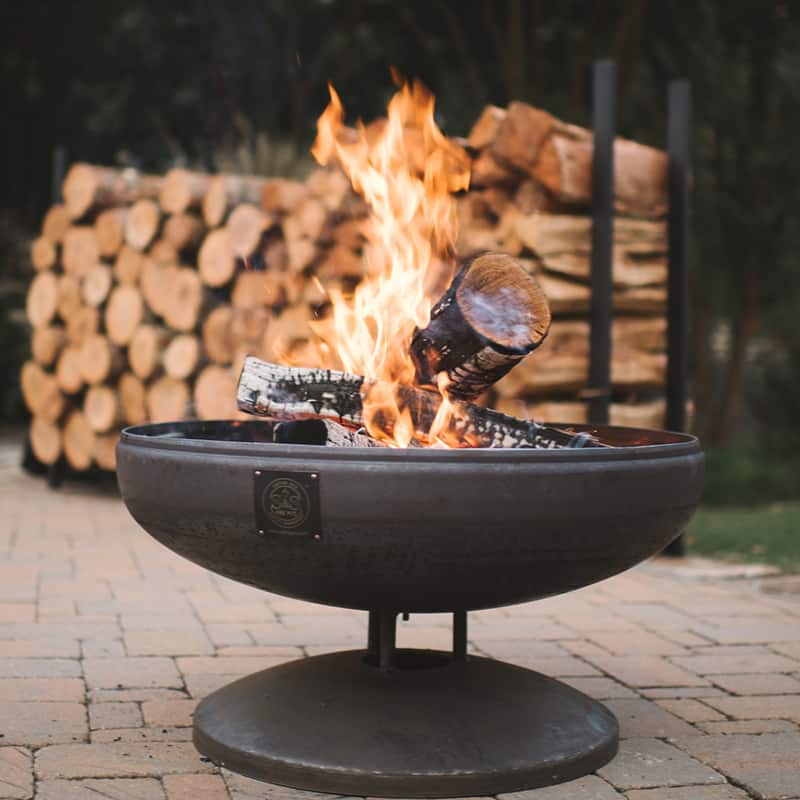

When you think of fires, what's the first color that comes to mind? If you answered orange, you aren't alone. Most people associate orange with fires. Whether you're fire starters or indoors in your fireplace, it will probably produce an orange flame. However, there are times when a fire may produce a different-colored flame.
Why Orange Is the Most Common Flame Color
Before we reveal the different flame colors and their respective meaning, let's first discuss why orange is the most common color for flames. Most traditional fuel sources contain carbon, which is apparent from their orange flame. Wood, charcoal, paper, gas, etc. all contain carbon -- an abundant chemical element that's found naturally in all living things as well as some inorganic compounds. When any carbon-containing fuel source is burned, it may release micro-sized carbon particles in the flame. The flame then illuminates these suspended particles, thereby creating the appearance of an orange or yellow flame.
Orange and Yellow Flames Indicate Unburned Carbon
Not all carbon-containing fuel sources will produce an orange or yellow flame. These colors indicate the presence of unburned carbon compounds. Carbon is typically burned through combustion, but trace amounts may linger. As the fire burns, some of these unburned carbon compounds are released into the flame rather than fully igniting. The end result is an orange- or yellow-colored flame.
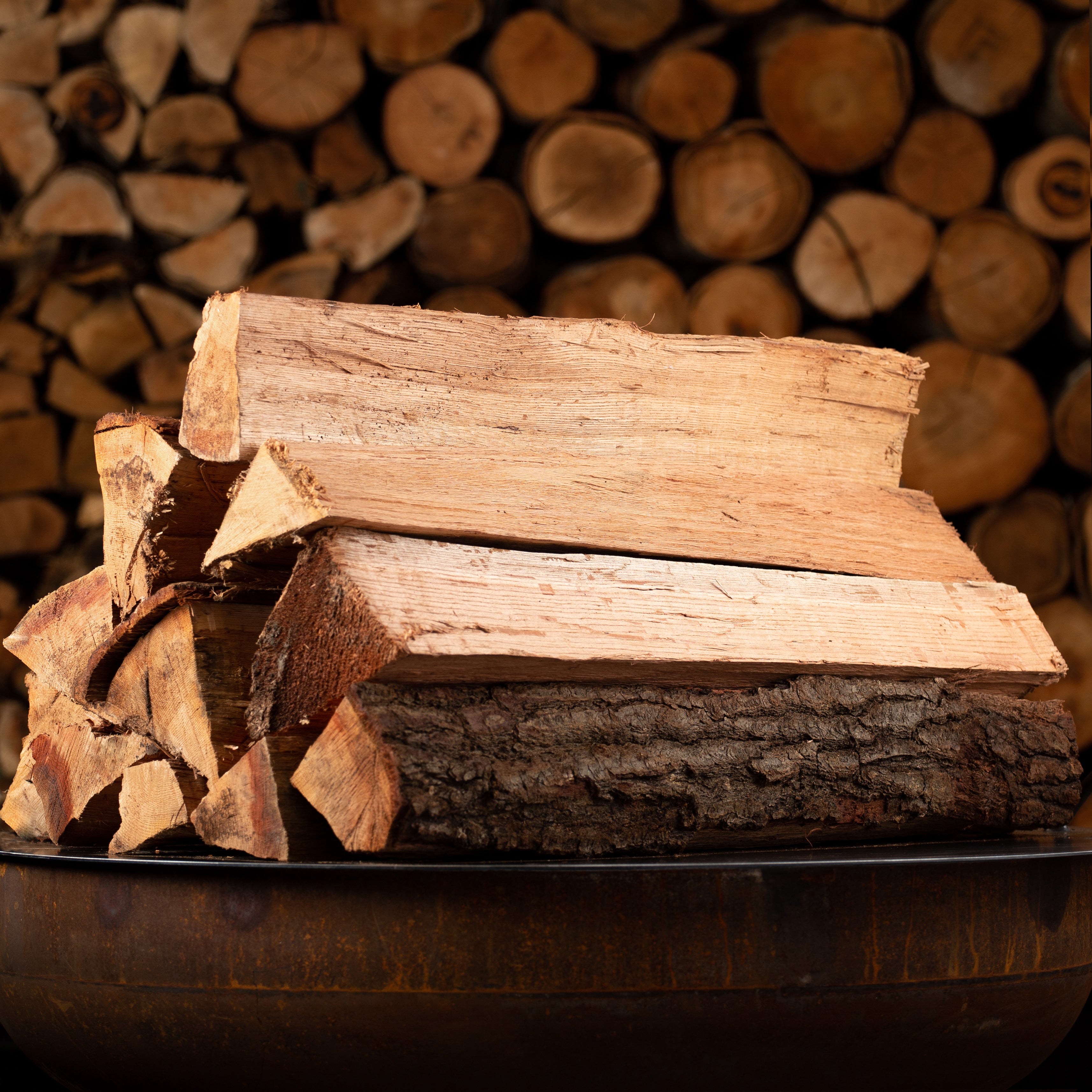
This doesn't mean that orange- or yellow-colored flames are bad. On the contrary, you can expect most traditional fuel sources, including firewood for sale, to produce a flame in either of these two colors. It's perfectly normal and shouldn't cause any reason for concern. In fact, orange and yellow flames are actually better for grilling and smoking meats, as they release a more savory and flavorful smoke. This is why dense hardwoods like oak cooking wood are the gold standard for low-and-slow BBQ — the steady orange flame delivers consistent heat and rich smoke flavor.
A Blue Flame Indicates Complete Burning of Carbon
If you're using a gas grill or stove, you may discover a blue flame. Propane gas, like firewood, contains carbon compounds. However, it often produces a blue flame instead of an orange or yellow flame because it burns all the carbon. An article published by the University of South Carolina Beaufort (USCB) explains that blue flames indicate the complete burning of carbon. When all the carbon compounds are burned, there's no particulate matter for the flame to illuminate. Therefore, the flame appears bright blue. While wood fires rarely burn pure blue, you can get closer to that clean, complete combustion by using extremely dry firewood — our ultra kiln-dried firewood is dried to a moisture content low enough to burn cleanly with minimal smoke and maximum heat output.

Orange Flames Indicate Temperatures of 1,100 to 2,200 Degrees
It's not just the efficiency at which a flame burns carbon that determines its color. The temperature of a flame will also affect its color. Orange flames, for example, typically occur at temperatures of 1,100 to 2,200 degrees Fahrenheit. This falls in line with the temperature at which wood burns. When a fire burns cooler or hotter, though, the flame color may change.
Blue Flames Indicate Temperatures of 2,300 to 3,000 Degrees
Blue flames burn hotter than orange flames, with temperatures reaching up to 3,000 degrees Fahrenheit. Along with the complete burning of carbon, this is why gas-burning fires typically have a blue flame. They heat up more quickly and to higher temperatures than fires using other fuel sources, resulting in a blue flame. If a flame's temperature drops to 2,200 degrees or below, however, it may turn to an orange or yellow color, especially if it uses a tangible fuel source like firewood.
Chemicals and Compounds Can Affect Flame Color
Finally, it's worth mentioning that the presence of certain chemicals or compounds can alter the color of a flame. A green flame, for instance, indicates the presence of copper. As copper heats up, it absorbs energy that's manifested in the form of a green flame. A pink flame, on the other hand, indicates the presence of lithium chloride. And burning strontium chloride will create a red flame. Of course, you should avoid burning chemicals due to the potential health hazards it poses. Scientists often create these flames in a controlled environment where they are protected from the potentially toxic fumes.
Should I Worry About Flame Color?
The only time when you should worry about the color of your flame is when it's not orange, yellow or blue. These three colors indicate a natural burning process, with the fire either completely or partially burning all the fuel's carbon compounds. But if you notice a green, pink or other alternative flame colors, you should consider choosing a different fuel source. As mentioned above, these colors may indicate the presence of chemicals or compounds, some of which could be harmful to your health. And if your bigger problem is a fire that fades to embers too quickly or won't stay lit at all, that's usually a fuel or airflow issue rather than a color issue — see our guide on why your fire won't stay lit for troubleshooting steps.
Flame Color FAQ
What is the hottest flame color?
White is the hottest flame color you'll typically see, burning at roughly 1,400°C (2,550°F) or higher. The visible flame color scale runs from coolest to hottest as red, orange, yellow, white, and finally blue-violet at the extreme end. In a properly burning hardwood fire, the white-yellow tips of the flames are the hottest part, while the deep red embers below are cooler but radiate heat more steadily.
Why is my fire green?
Green flames are caused by copper compounds burning in the fire. If you're seeing green in your fireplace, the most common culprits are pressure-treated wood (which contains copper-based preservatives), driftwood that has absorbed copper salts from seawater, or scrap lumber with copper nails or wiring. Burning treated wood is unsafe — it releases toxic fumes including arsenic and chromium. Always burn seasoned, untreated hardwood only.
What does a blue flame mean?
A blue flame means complete combustion — the fire is hot enough and has enough oxygen to fully burn the fuel, leaving little soot or smoke. Blue flames in a wood fire typically appear at the base of the logs where gases are burning most efficiently, and they indicate temperatures above 1,400°C (2,550°F). It's a sign of a well-built, well-ventilated fire using dry, properly seasoned firewood.
Is a white flame hotter than blue?
It depends on the fuel. In an incandescent flame like a wood fire, white is hotter than the yellow and orange around it, but blue is hotter still — blue indicates the highest-temperature combustion zone. In gas flames (propane, natural gas), blue is unambiguously the hottest. The general rule: among the colors a flame emits from glowing soot, white tops yellow and orange, but a true blue flame from gas combustion is hotter than any of them.