

When comparing seasoned vs. kiln-dried firewood, kiln-dried burns more consistently. Seasoned firewood air-dries for months, so its moisture depends on weather and storage. Kiln-dried firewood dries in days inside a controlled kiln and arrives dry and free of pests and mold. Cutting Edge Firewood kiln-dries every piece for 48 hours at 250°F. Seasoned wood makes sense if you cut your own, can wait, and want a lower cost.
What Is Seasoned Firewood?
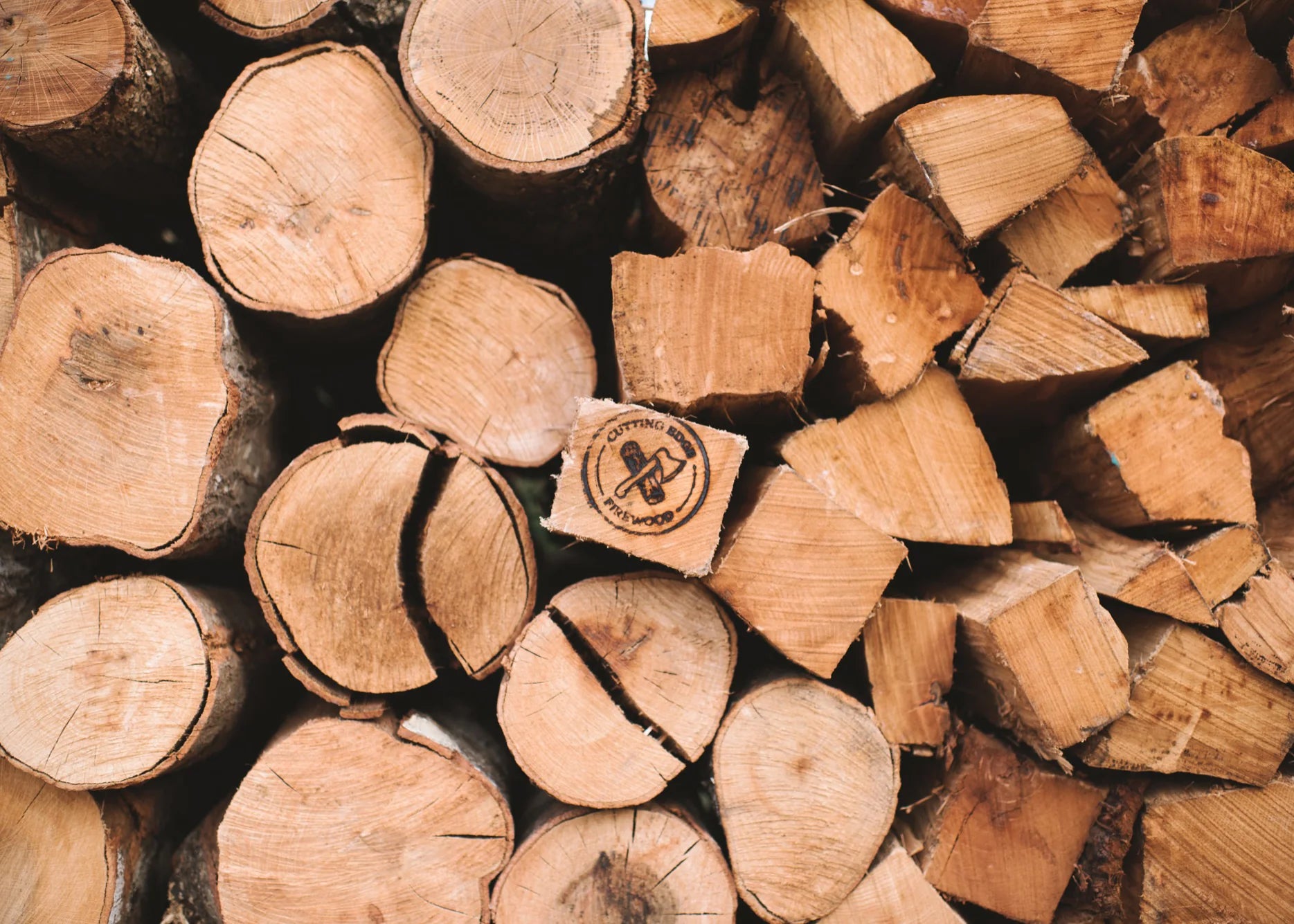
Seasoned firewood is wood that has been cut, split, and left outside to air-dry until its moisture content drops below 20%, which typically takes 6 to 24 months depending on the species. The seasoning process evaporates the natural moisture stored in the wood's cells and sap, so it burns more efficiently than freshly cut "green" wood. The EPA's Burn Wise program sets 20% moisture or less as the point where wood burns best.
When you shop for firewood, seasoned firewood is one of the first labels you'll see, and one of the most loosely used. Freshly cut wood holds roughly 50% water by weight, and seasoning brings that number down through time, sun, and airflow. The same word covers wood that dried carefully for two years and wood that was cut three months ago and left under a tarp. Nothing on the label tells you which one you're buying.
What Is Kiln-Dried Firewood?
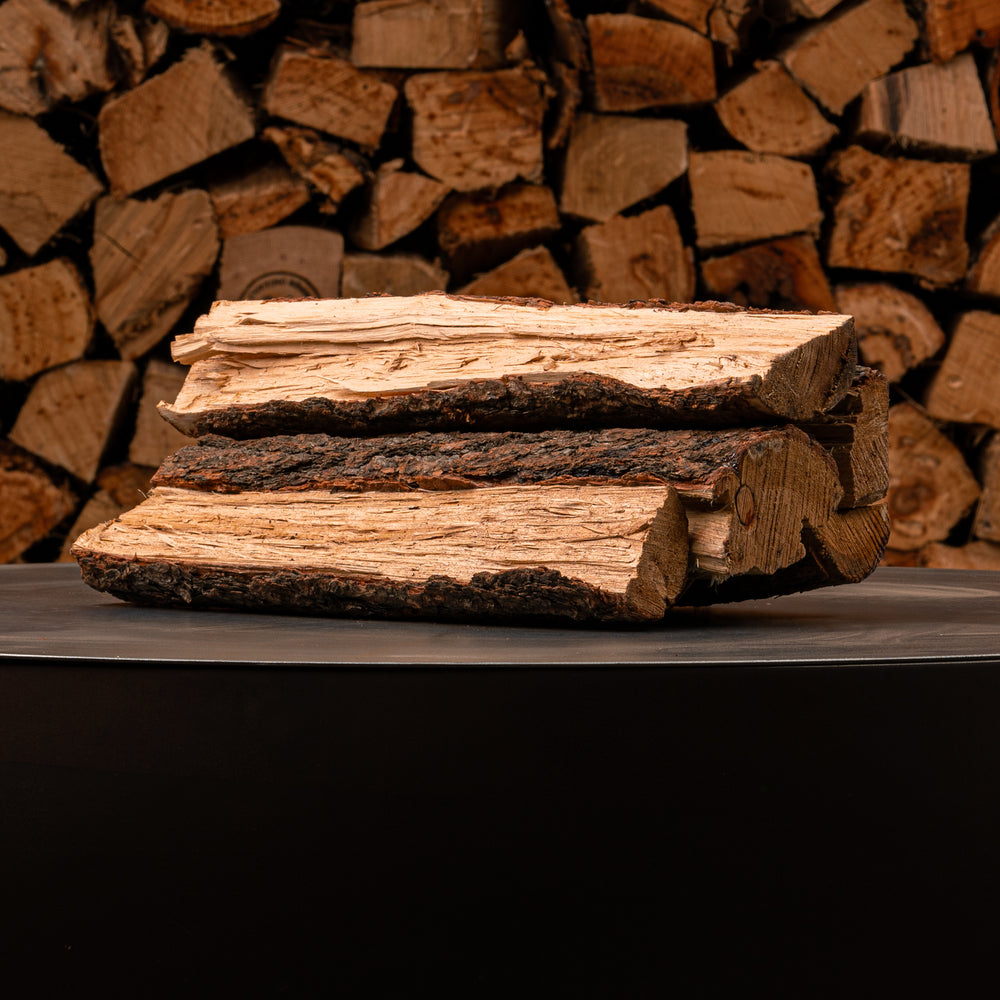
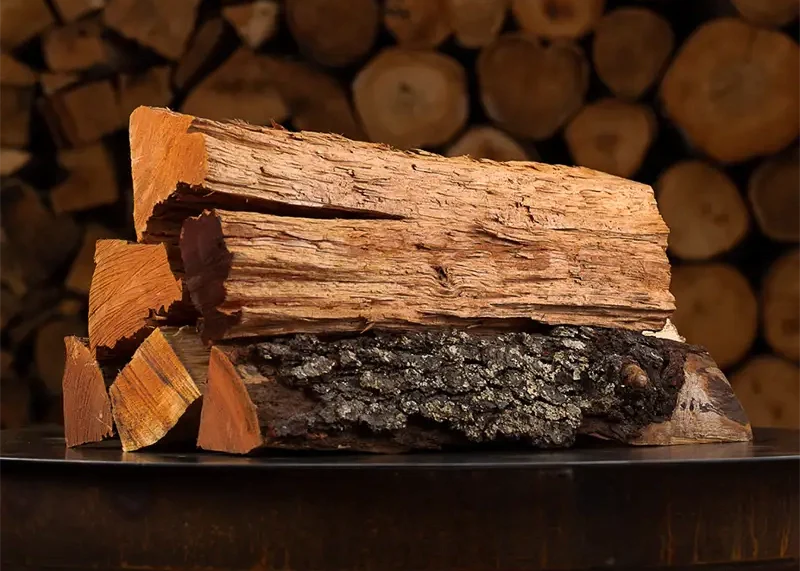
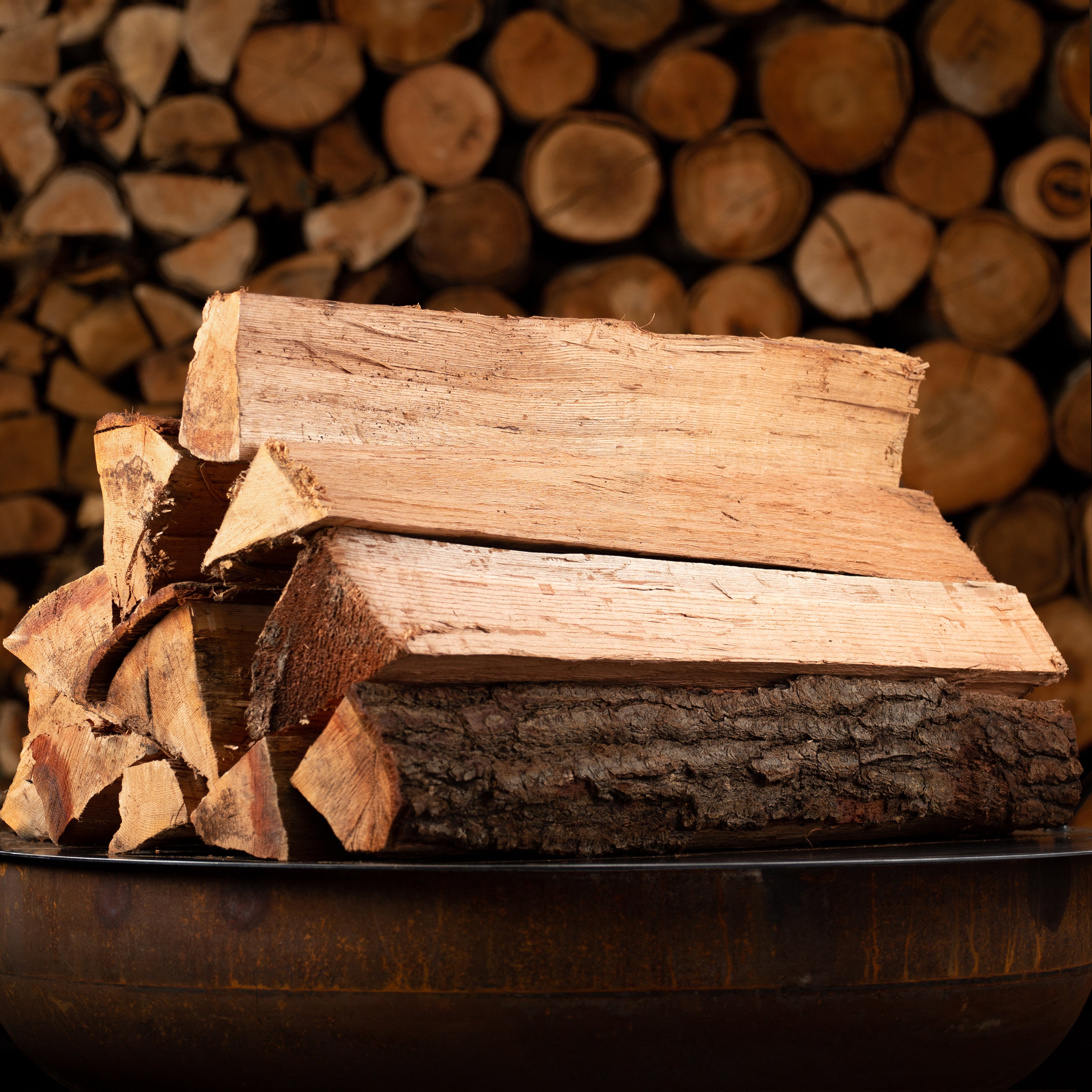
Kiln-dried firewood is fresh-cut wood dried in a heated, controlled-airflow chamber until it is ready to burn, a process measured in days instead of seasons. Because heat and airflow are controlled, every load comes out the same, and the heat kills the insects, mold, and fungi living in the wood.
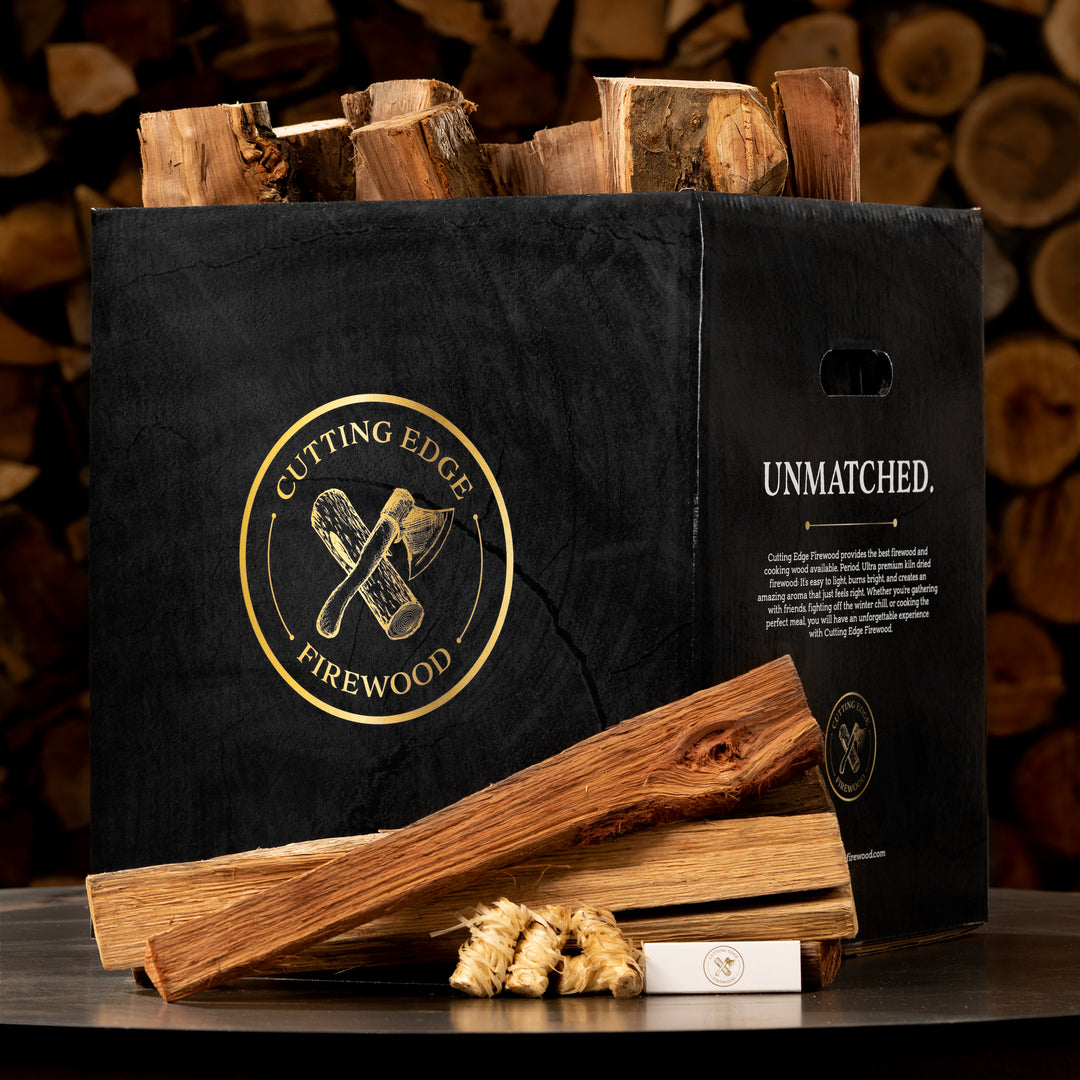
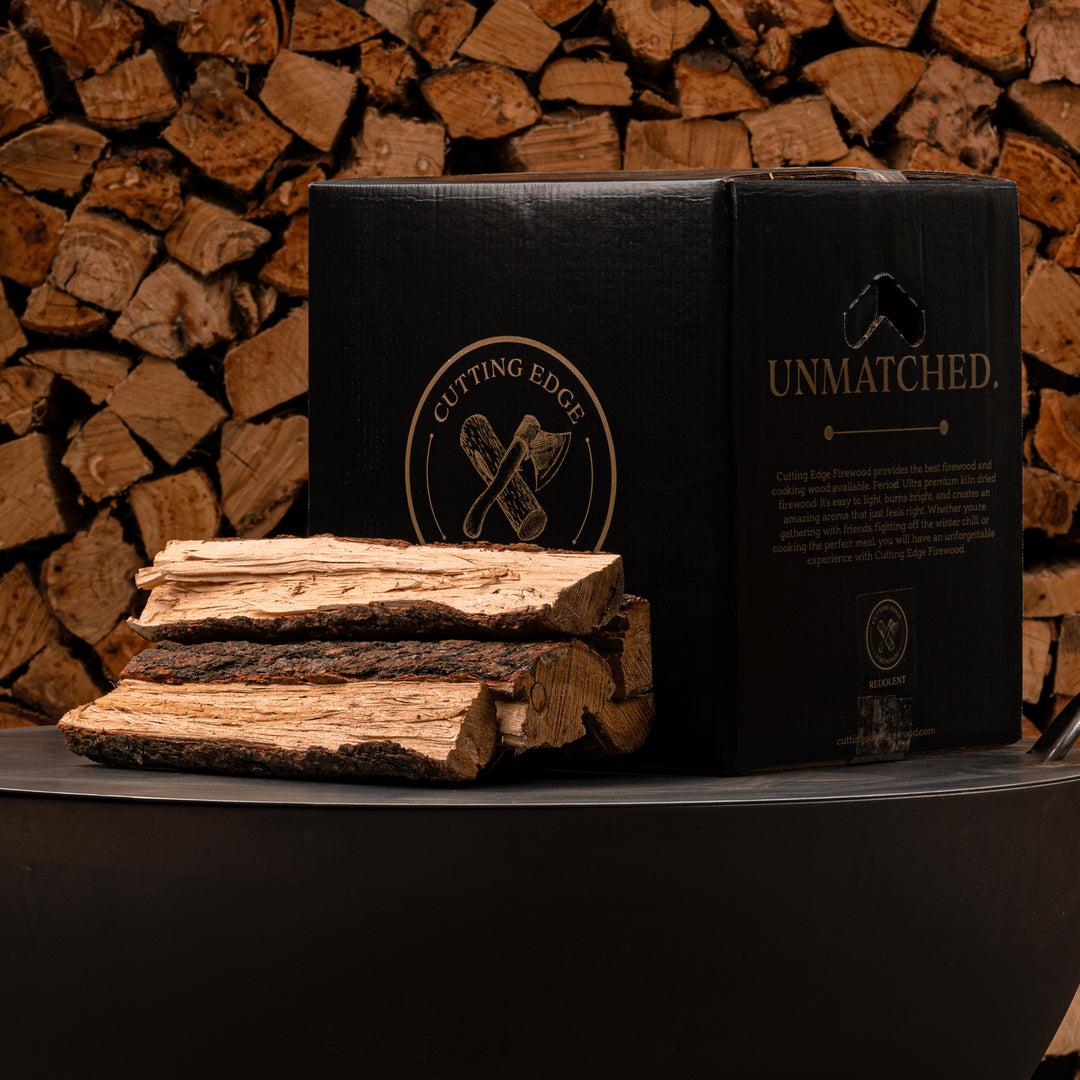
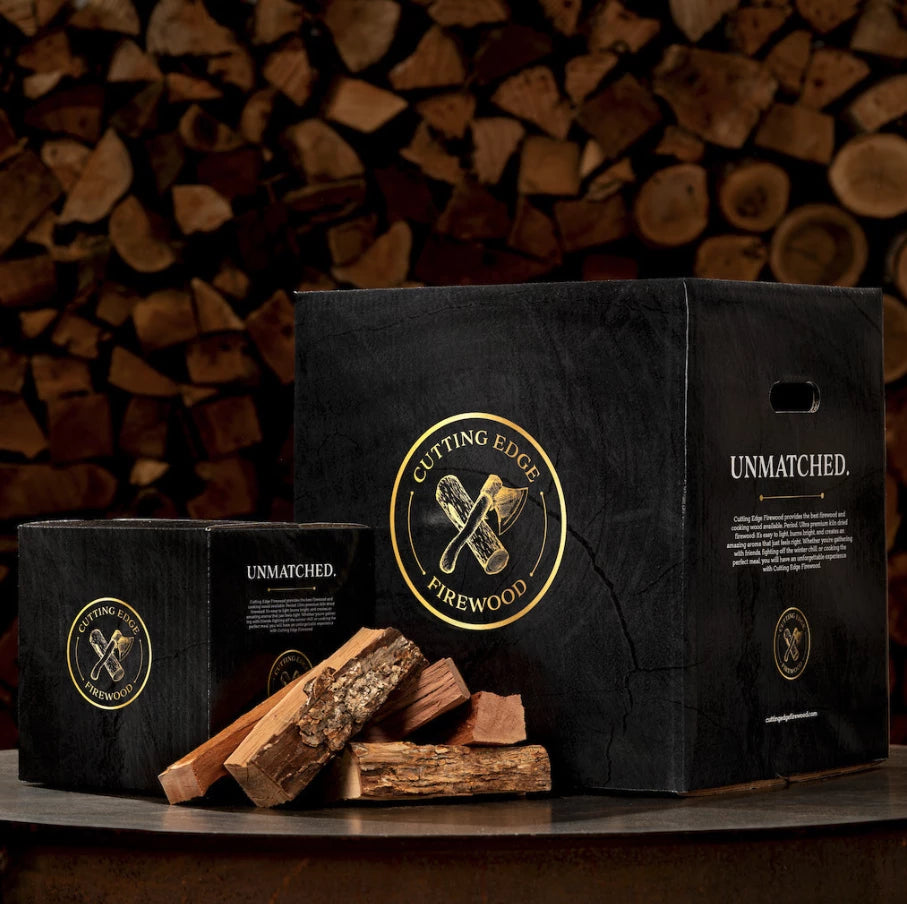
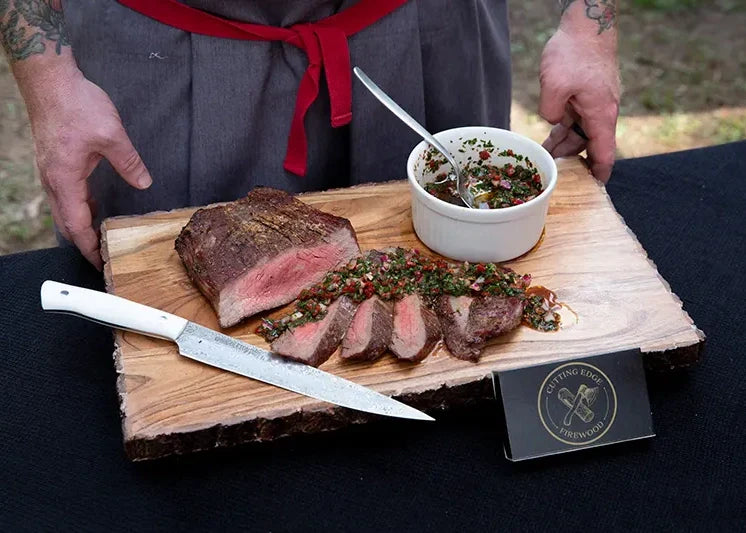
That consistency is what matters when the fire is part of the evening. A host setting up a dinner party or a holiday gathering wants the fire to catch on the first try and burn clean until the last guest leaves. Cutting Edge Firewood's kiln-dried firewood is hand-selected, kiln-dried for 48 hours at 250°F, and lights easily.

Seasoned vs. Kiln-Dried Firewood: Side-by-Side
The core difference is the drying method, and that one difference shows up in nearly every row below.
| Green wood | Seasoned firewood | Kiln-dried firewood | |
|---|---|---|---|
| Drying method | None, freshly cut | Air-dried outdoors | Heated, controlled kiln |
| Drying time | None | 6 to 24+ months | Days (48 hours at Cutting Edge Firewood) |
| Typical moisture | Roughly 50% water by weight | 15 to 25%, varies by supplier and weather | Consistently low, controlled by the kiln |
| Pests and mold | Often present | High risk from open-air storage | Eliminated by kiln heat |
| Ease of lighting | Very difficult | Varies; needs more kindling | Easy and predictable |
| Smoke | Heavy | Moderate to heavy, sometimes acrid | Minimal, clean |
| Heat output | Low; energy goes to boiling off water | Reduced by residual moisture | High; energy goes to heat (compare species) |
| Creosote risk | Highest | Higher | Lowest |
| Indoor storage | No | Risky; pests can spread indoors | Yes; clean and pest-free |
| Cost | Lowest per cord | Lower per cord | Higher per cord |
| Best for | Stacking to season yourself | Owners with time, space, and their own supply | Indoor fireplaces, entertaining, cooking, consistent fires |
How to Season Firewood
To season firewood, cut and split it, stack it off the ground with the top covered and the sides open, then let sun and air dry it until a moisture meter reads 20% or less.
- Cut to Length: Standard fireplace length is 16 inches. Shorter pieces dry faster.
- Split: Splitting exposes the inner wood to air. Split wood seasons in roughly half the time of unsplit rounds.
- Stack Off the Ground: Use a rack, pallet, or rails. Ground contact pulls moisture into the bottom row.
- Cover the Top: A roof or tarp keeps rain and snow off the stack.
- Leave the Sides Open: Wrapping the whole stack traps moisture. Airflow on at least three sides is what does the drying.
- Wait and Test: Check a freshly split piece with a moisture meter before you burn.
Wood piled in a heap almost never seasons evenly, because the center stays wet. For rack and shed setups, see our complete guide to storing firewood.
How Long Does It Take to Season Firewood?
Most hardwoods take 12 to 24 months to season, and softwoods like pine, fir, and cedar take 6 to 12 months. The EPA's minimum is 6 months for softwood and 12 months for hardwood.
Seasoned hardwood firewood takes longer because dense wood holds water deeper in its cells. Oak sits at the long end, typically 18 to 24 months, while Cherry, Hickory, and Maple usually need 12 to 18. For seasoned oak firewood specifically, see how long it takes oak firewood to cure.
Species is only one factor. Split size, stacking, climate, and rain protection all matter too. Hot, dry summers speed drying, and cool, damp climates slow it dramatically. The working rule: cut, split, and stack one full year before you plan to burn, and two years ahead for oak.
How to Dry Firewood Faster
To dry firewood faster, split it smaller, stack it where it gets full sun and steady wind, keep air moving through the stack, and keep rain off the top. Single rows dry faster than deep piles. A south-facing spot clear of fences and walls gives the stack the most sun and airflow.
Air-drying still depends on weather, and no backyard method matches a kiln on time or consistency. If you need wood that is ready to burn this weekend, kiln-dried is the practical answer.
How Do You Know If Firewood Is Seasoned?
The most reliable way to tell if firewood is seasoned is a moisture meter. Split a piece, push the meter's pins into the freshly exposed inside face, and read the number. A reading of 20% or less means the wood is seasoned and ready to burn. A reading above 25% means the wood is still wet and will smoke, light poorly, and leave more creosote.
Without a meter, these cues together point to seasoned wood:
- Color: Darker and grayer than fresh-cut wood, with weathered ends.
- End Checks: Cracks running from the center of the cut face outward.
- Weight: Noticeably lighter than green wood of the same size.
- Sound: Two pieces knocked together ring hollow instead of thudding.
- Bark: Loose and easy to peel off.
- Hiss: Wet wood hisses and bubbles at the ends when it burns. Seasoned wood doesn't.
How Kiln Drying Works
Kiln drying works by placing fresh-cut firewood in a heated chamber with controlled airflow, which pulls moisture out of the wood in days and kills insects, larvae, mold, and fungi in the same pass. A firewood kiln is a wood kiln built for split logs instead of lumber, so the goal is ready-to-burn fuel.
Timing matters as much as heat. Cutting Edge Firewood sources wood close to the kiln so it goes in while still fresh, before the slow breakdown that happens during a year outdoors. The wood comes out dense, bright, clean, and light, with no weathered gray surface and nothing living inside it. That’s why kiln-dried wood can sit next to your fireplace or in a rack in the living room.
How Long Does It Take to Kiln Dry Wood?
Kiln-drying firewood takes days, while kiln-drying lumber can take weeks because boards must dry slowly to avoid warping and cracking. Cutting Edge Firewood kiln-dries every piece of firewood for 48 hours at 250°F.
Why Seasoned Firewood Is Inconsistent
Seasoned firewood is inconsistent because "seasoned" has no legal definition and no industry quality standard, so the same label covers very different wood. A careful supplier who splits and stacks for 18 months delivers something close to 20% moisture. Another supplier can cut a tree last month, leave it in a pile, and call it seasoned.
Even a careful supplier is at the mercy of the weather. A wet summer can shift the final moisture by 5 to 10 percentage points, and stacks rained on without a roof can regain moisture faster than they lose it. That is why one delivery burns hot and clean and the next smokes and won't stay lit.
Even when seasoned wood does reach 20%, the trade-offs remain:
- Harder to Light: Residual moisture means more kindling and more patience.
- Mustier Smoke: Mold picked up during seasoning produces acrid smoke that clings to clothing and upholstery.
- More Emissions: Damp wood burns cooler and less completely, releasing more particulates.
- Pests Indoors: Bringing outdoor-stored wood inside is how termites, beetles, and ants get into a home.
- Lost Density: A year or two outdoors breaks down the wood's structure, so each log burns faster with less total heat.
- More Creosote: Moisture vaporizes in the fire and condenses on cooler chimney walls as creosote, a chimney fire hazard.
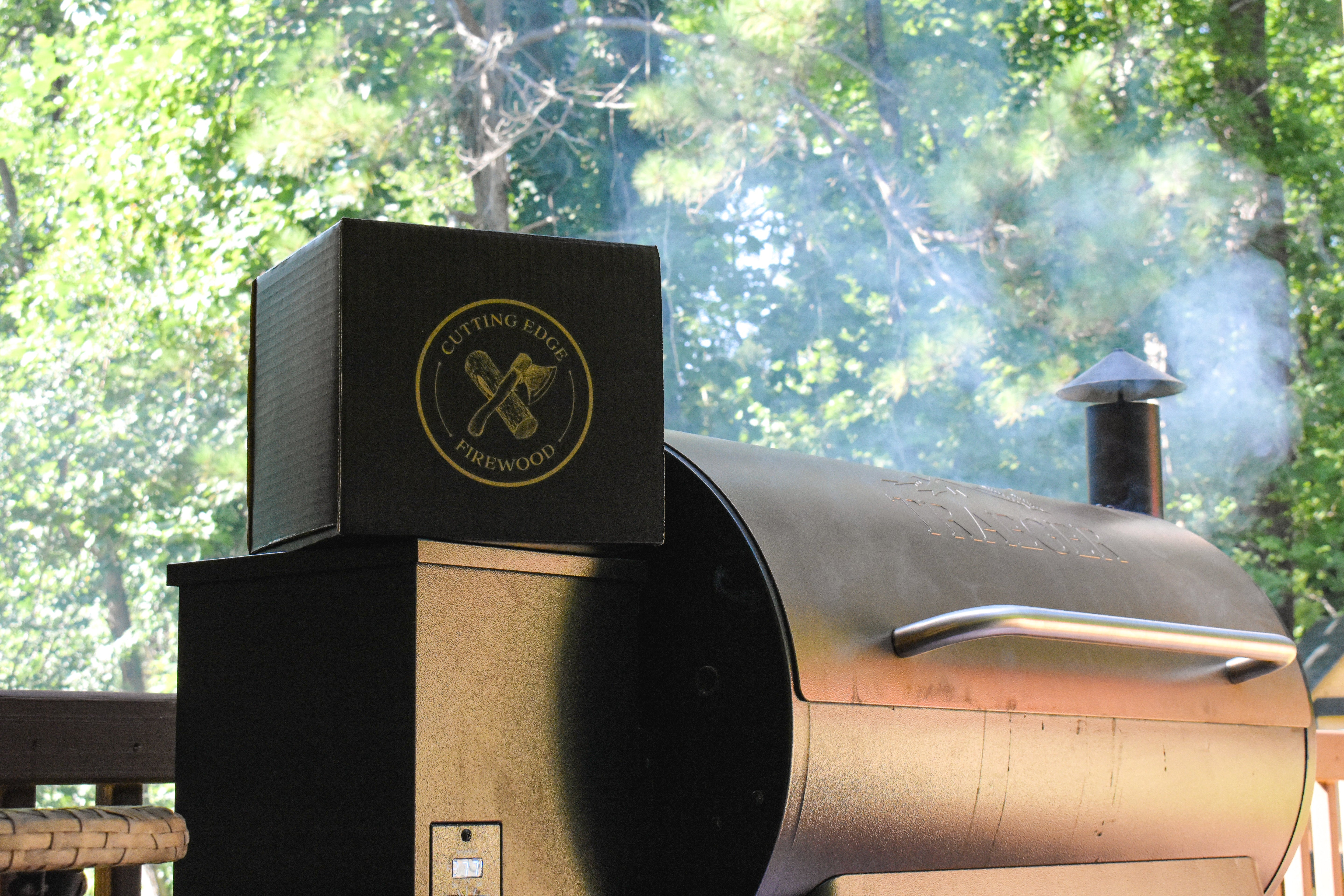
Every piece of Cutting Edge Firewood is kiln-dried for 48 hours at 250°F, hand-selected, and free of pests and mold. The same burn, every order.
Does Kiln-Dried Wood Change the Flavor of Smoked Food?
Kiln-drying does not strip flavor from cooking wood. The species sets the flavor and dryness controls how clean the smoke is. Some pitmasters believe naturally aged wood gives a fuller flavor. In practice, wet or unevenly dried wood smolders, and smoldering wood produces the heavy, bitter smoke that coats meat with an acrid taste.
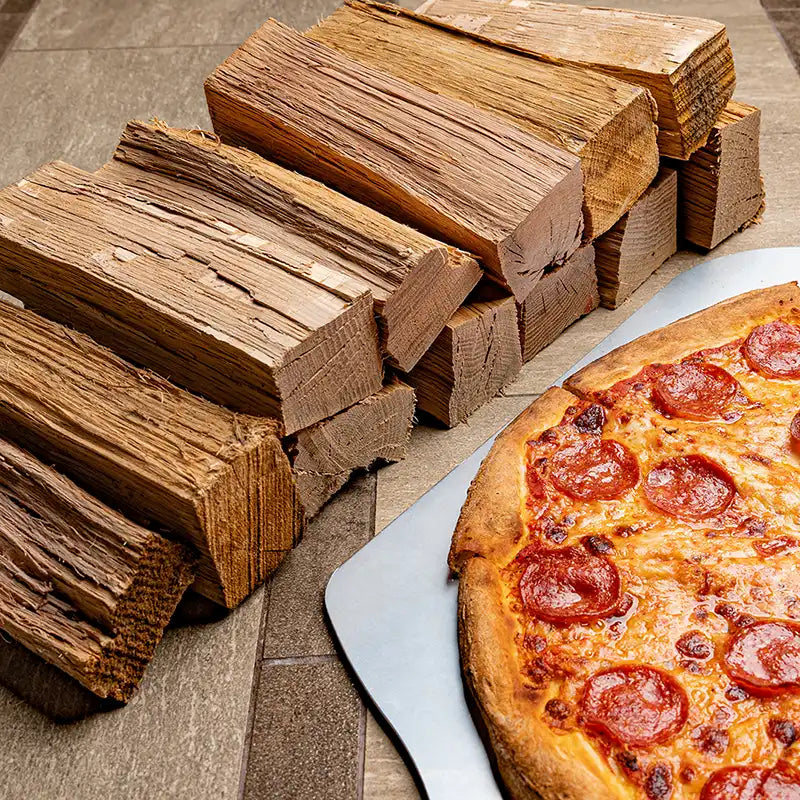
Dry wood combusts cleanly and gives off the thin, steady smoke cooks look for, so the character of the wood comes through. That is why a pitmaster picks Apple or Cherry for a mild, sweet smoke on pork and poultry, and Hickory, Oak, or Mesquite for something bolder on beef.
Explore species and cuts in our cooking wood collection.
Seasoned vs. Kiln-Dried Firewood: Which Should You Buy?
For most homes, kiln-dried firewood is the better buy because it lights reliably, burns clean, and can be stored indoors. Seasoned wood is a reasonable choice if you have your own supply, room to stack it, and a year or two to wait, and you'd rather save on cost than control the result.
Here is how the choice plays out by use.
- Indoor Fireplace: Indoor burning is where pests, smoke, and creosote matter most. Kiln-dried wood is the clear pick, and racks of kiln-dried firewood keep a season's supply stacked and ready beside the hearth.
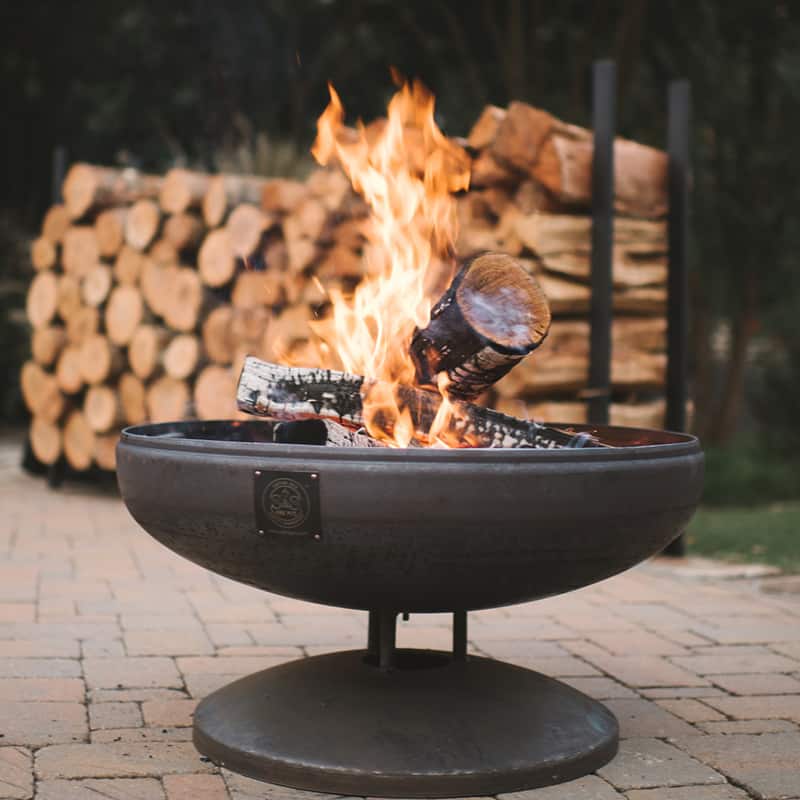
- Fire Pits and Occasional Fires: If you light a fire for weekend gatherings, kiln-dried firewood boxes ship nationwide with complimentary shipping and include kindling and fire starters.
- Whole-Home Heating: Long burns call for thicker pieces. Extended burn firewood keeps a fire going for hours once it's established.
- Cooking: Choose by species for flavor and kiln-dried for clean smoke. Start with our cooking wood.
- Travel and Camping: Many states and parks restrict moving firewood because it can carry invasive pests. Check local rules before you pack wood, or buy it where you'll burn it.
In metro Atlanta, Cutting Edge Firewood offers white-glove delivery on racks and stacks them where you want them. Check our delivery service area.
Frequently Asked Questions
What is seasoned firewood?
Seasoned firewood is wood that has been cut, split, and air-dried outdoors until its moisture content falls below 20%, usually over 6 to 24 months depending on species. Seasoning evaporates the water stored in the wood, so it lights more easily and burns hotter and cleaner than freshly cut green wood.
How do you season firewood?
Cut the wood to length, split it, and stack it off the ground in a sunny, breezy spot. Cover the top of the stack and leave the sides open so air can move through. Let it dry until a moisture meter reads 20% or less on a freshly split face, typically 6 to 24 months.
How long does it take to season firewood?
Most hardwood firewood needs 12 to 24 months of air-drying, with oak at the long end at 18 to 24 months. Cherry, Hickory, and Maple usually need 12 to 18 months, and softwoods such as pine and fir need 6 to 12. Wood must be split and stacked off the ground with good airflow to dry on that schedule.
How do you dry firewood?
Split it small, stack it off the ground with airflow on at least three sides, cover the top, and give it full sun and wind. That speeds air-drying, but it still takes months. A kiln dries firewood in days under controlled heat, which is why kiln-dried wood arrives ready to burn.
How long does it take to kiln dry wood?
Firewood kilns dry split logs in days, while lumber kilns can take weeks because boards need slow drying to avoid warping. Cutting Edge Firewood kiln-dries every piece of firewood for 48 hours at 250°F, a process that also eliminates insects and mold.
Seasoned vs. kiln-dried firewood: which is better?
Kiln-dried is better on nearly every measurable variable: more consistent dryness, easier lighting, less smoke, less creosote, no bugs or mold, and safe indoor storage. Seasoned firewood costs less per cord and works when it has been properly split and stored for 18 months or more, but quality varies widely between suppliers.
Is seasoned wood the same as dry wood?
Not necessarily. "Seasoned" describes the air-drying process, not a guaranteed moisture level. Wood counts as seasoned below 20% moisture, but the label is used loosely for wood that hasn't reached that point, and air-drying rarely brings wood below 18 to 20% even after 24 months. A moisture meter is the only way to confirm.