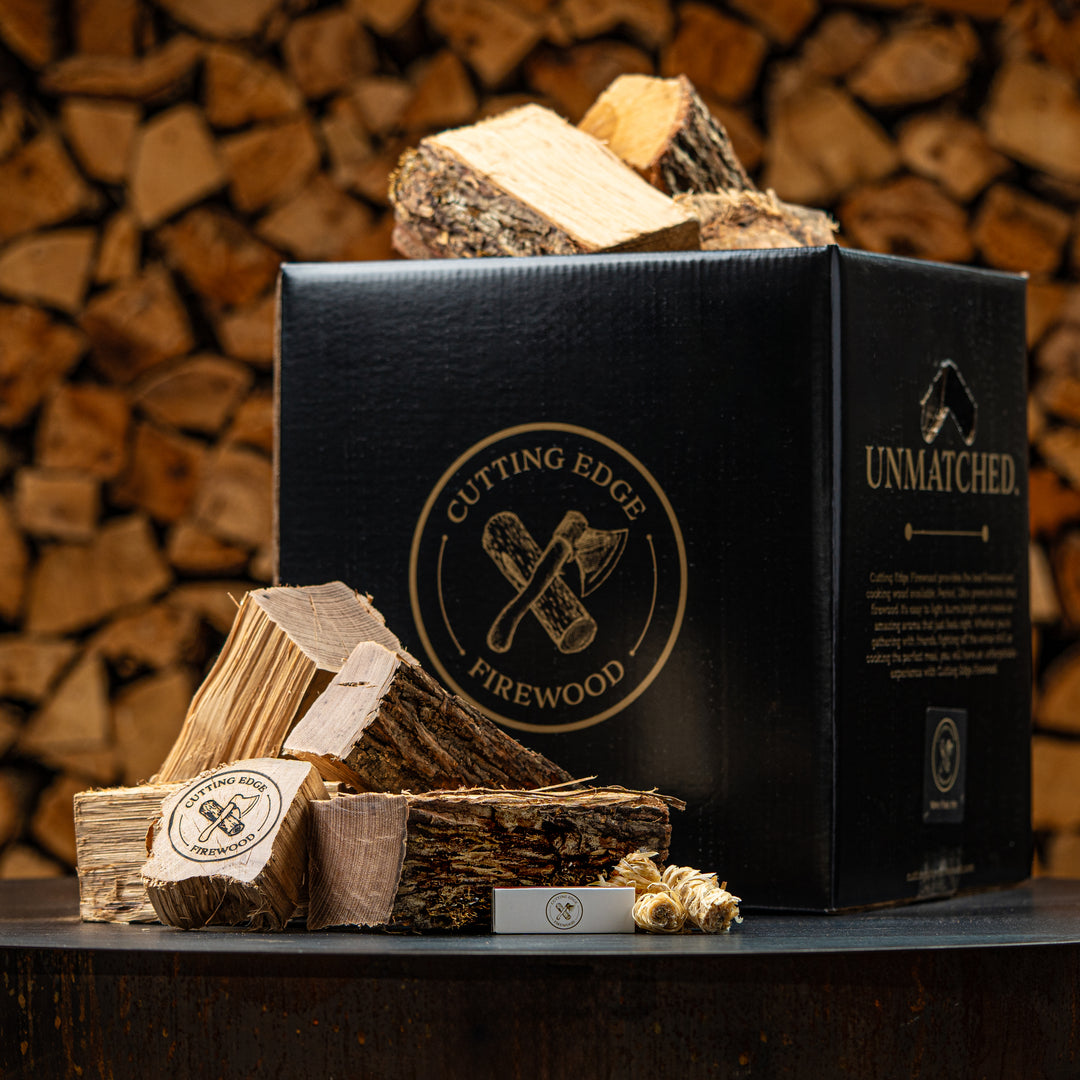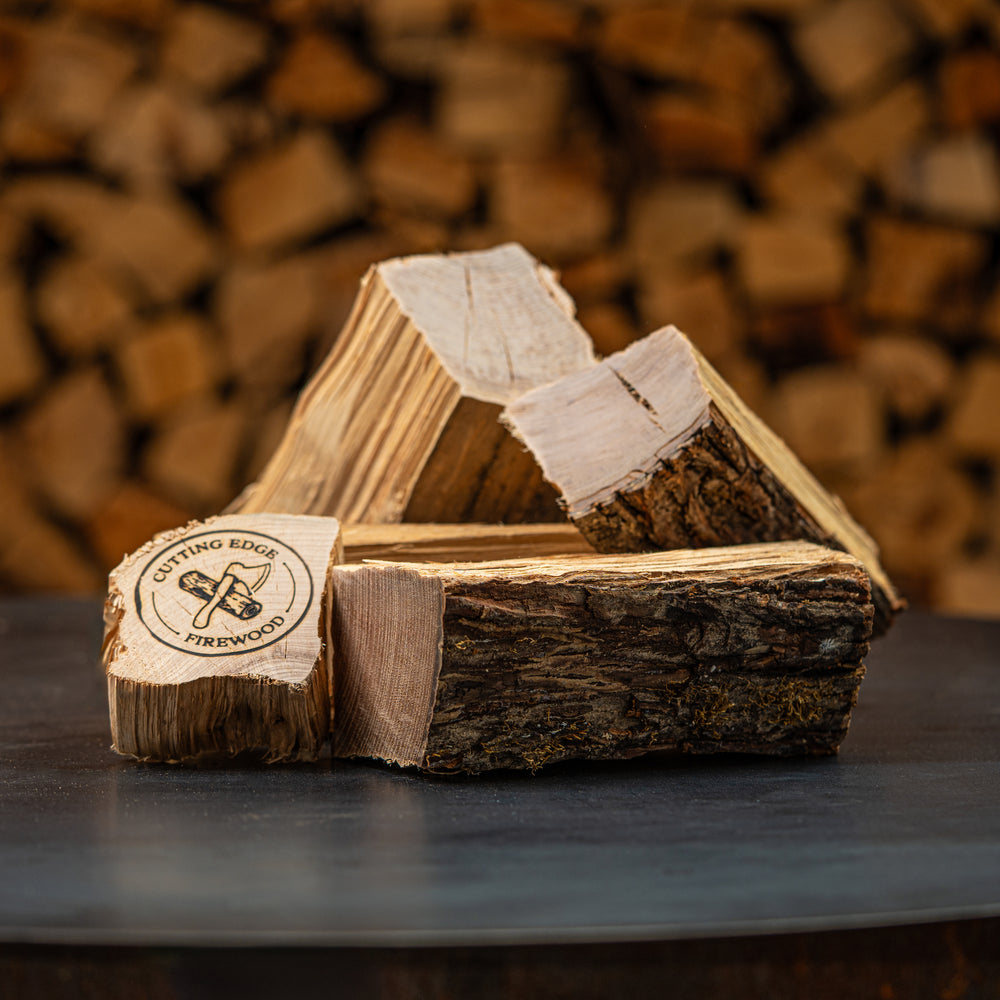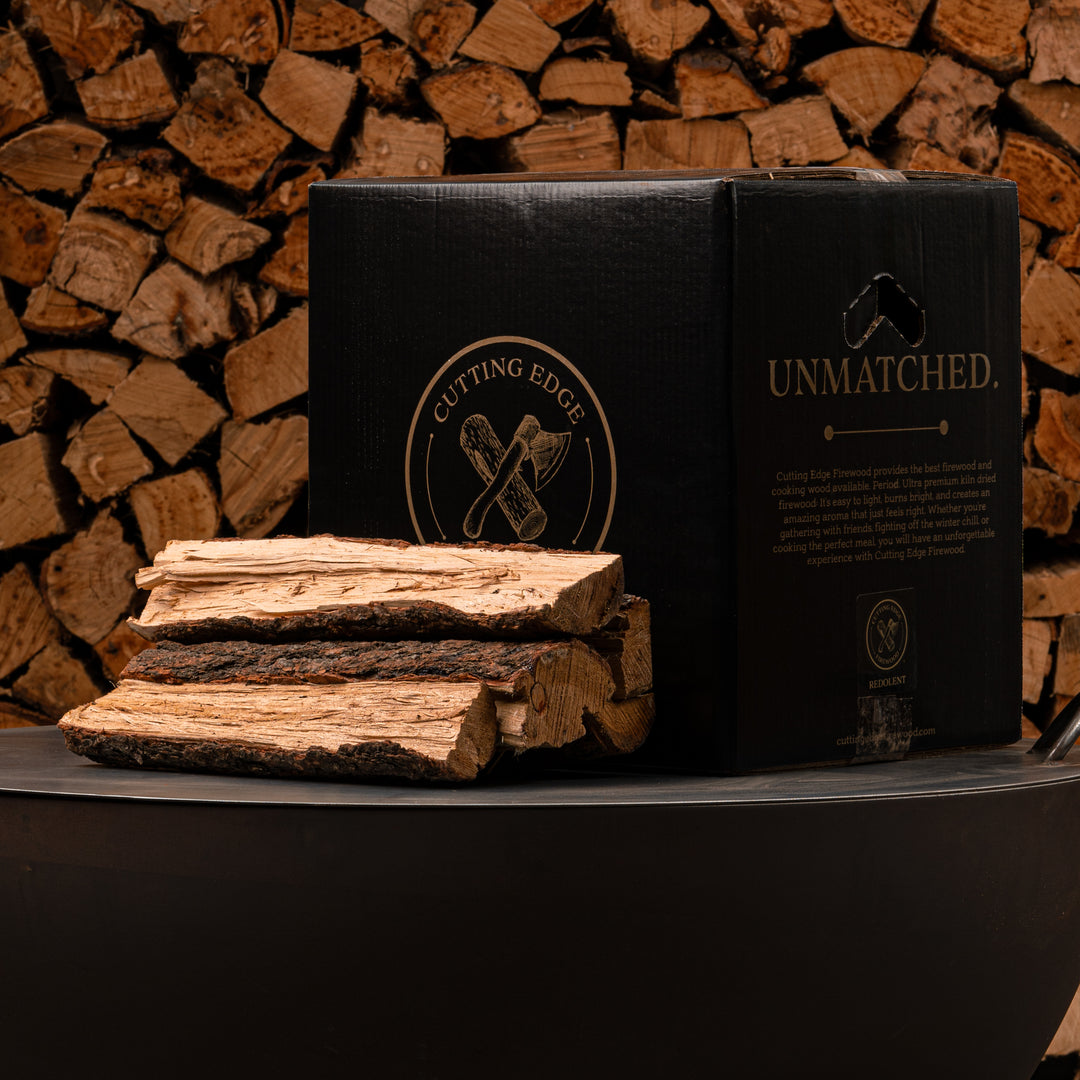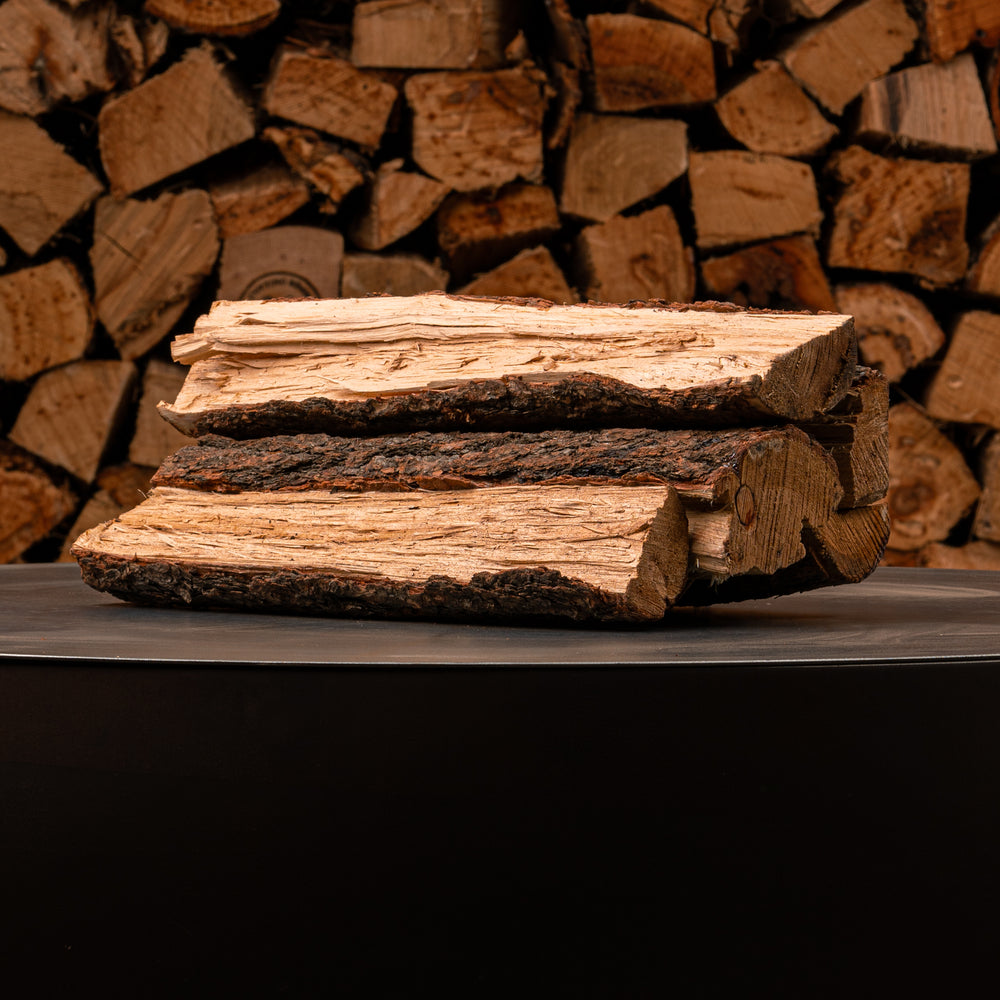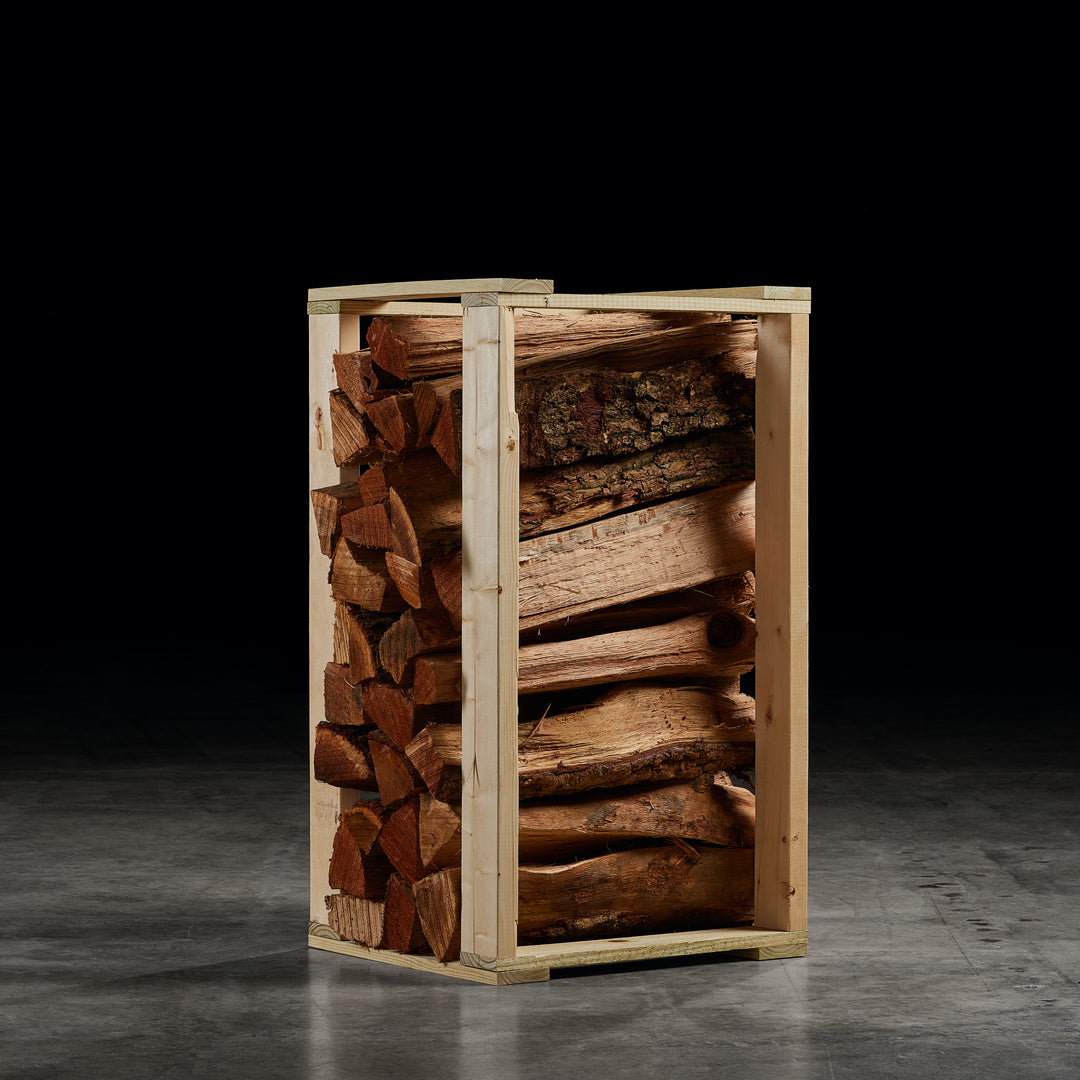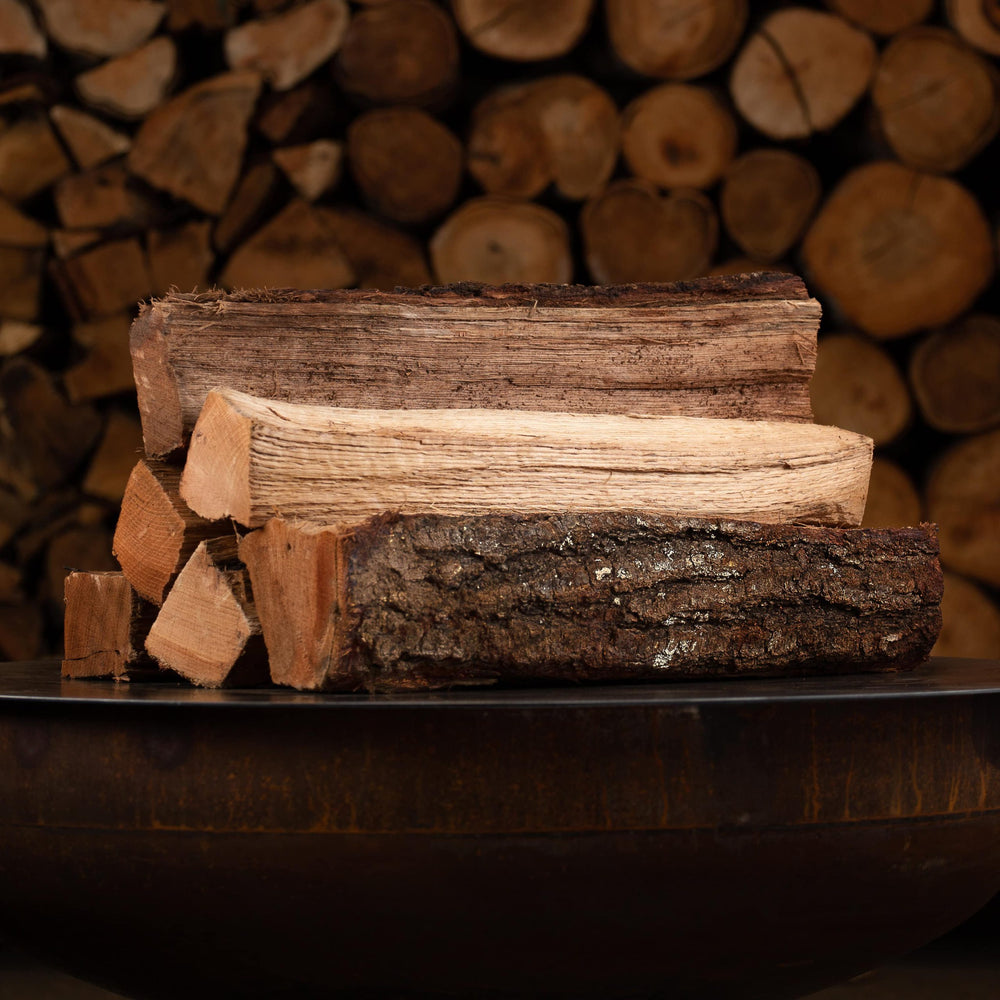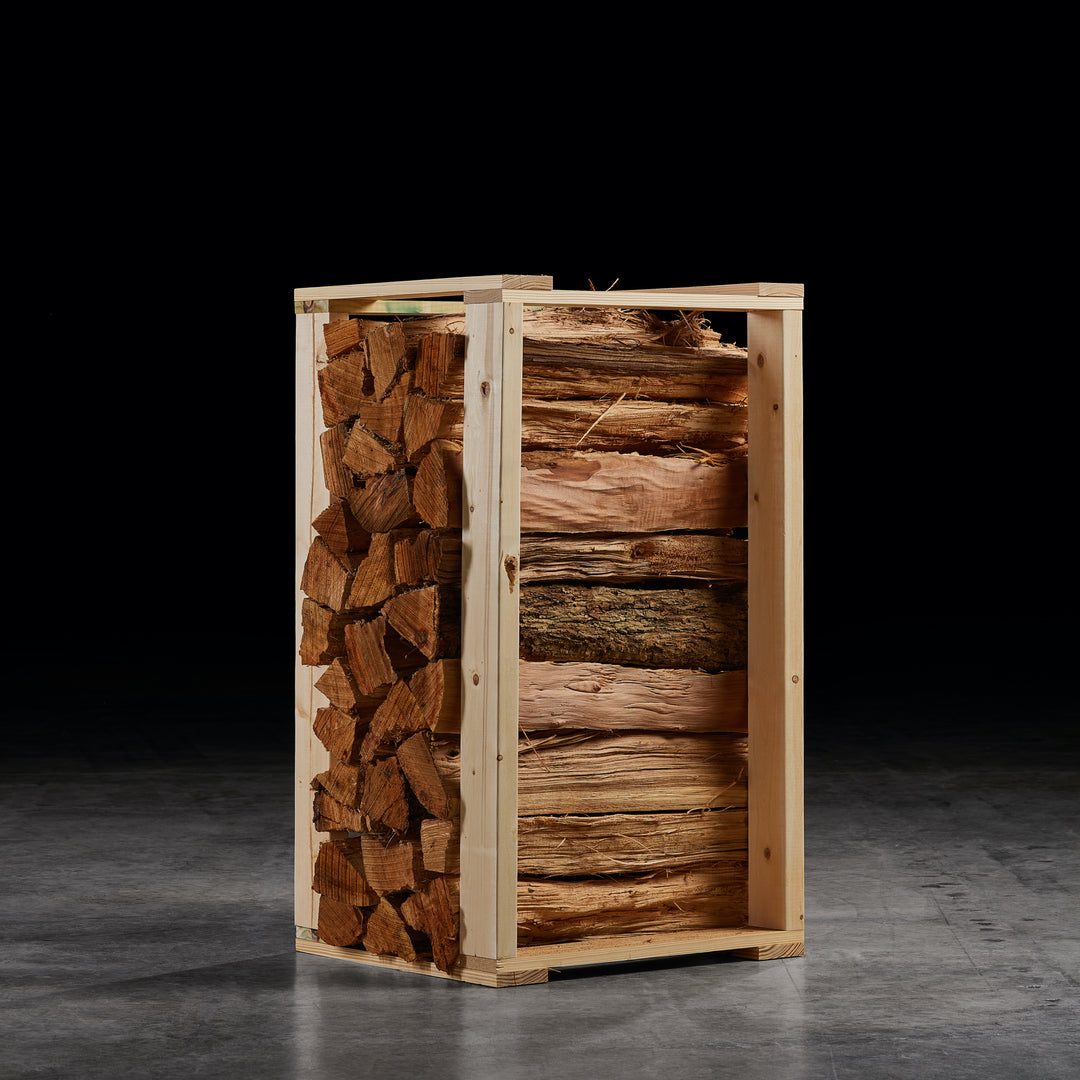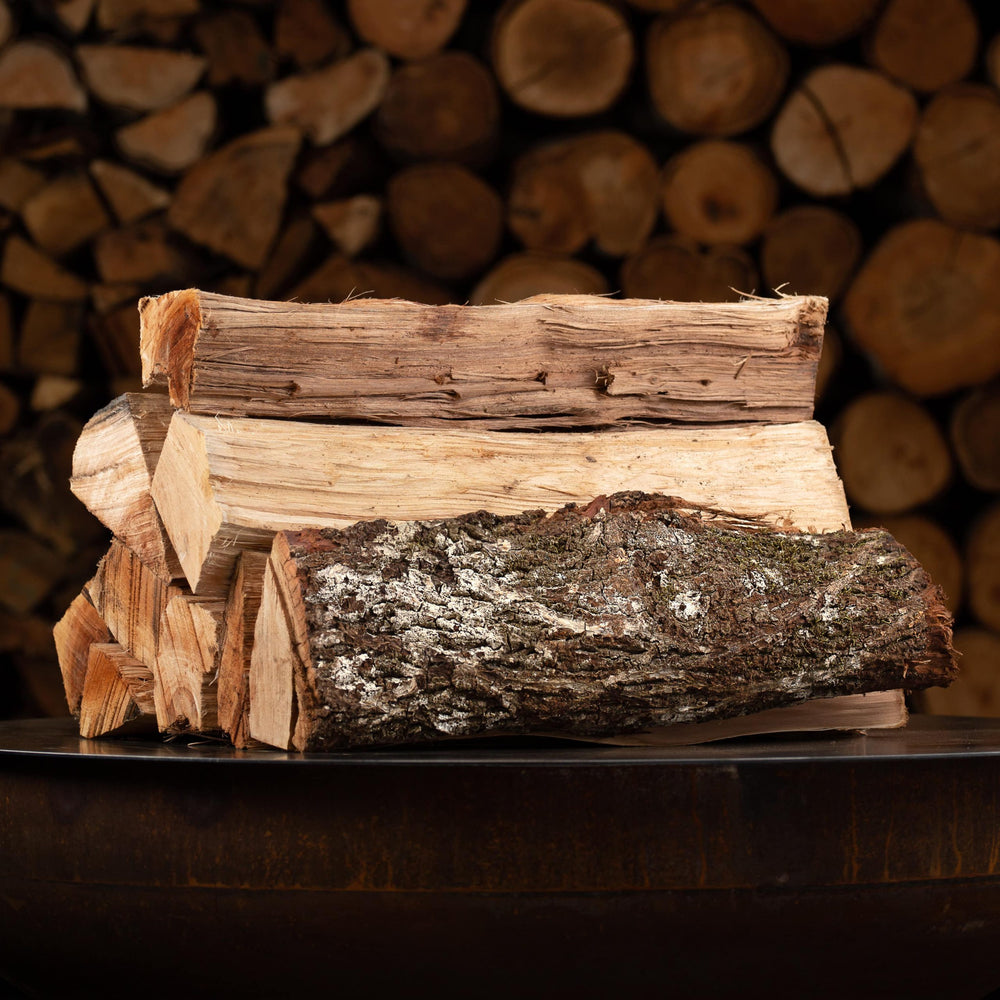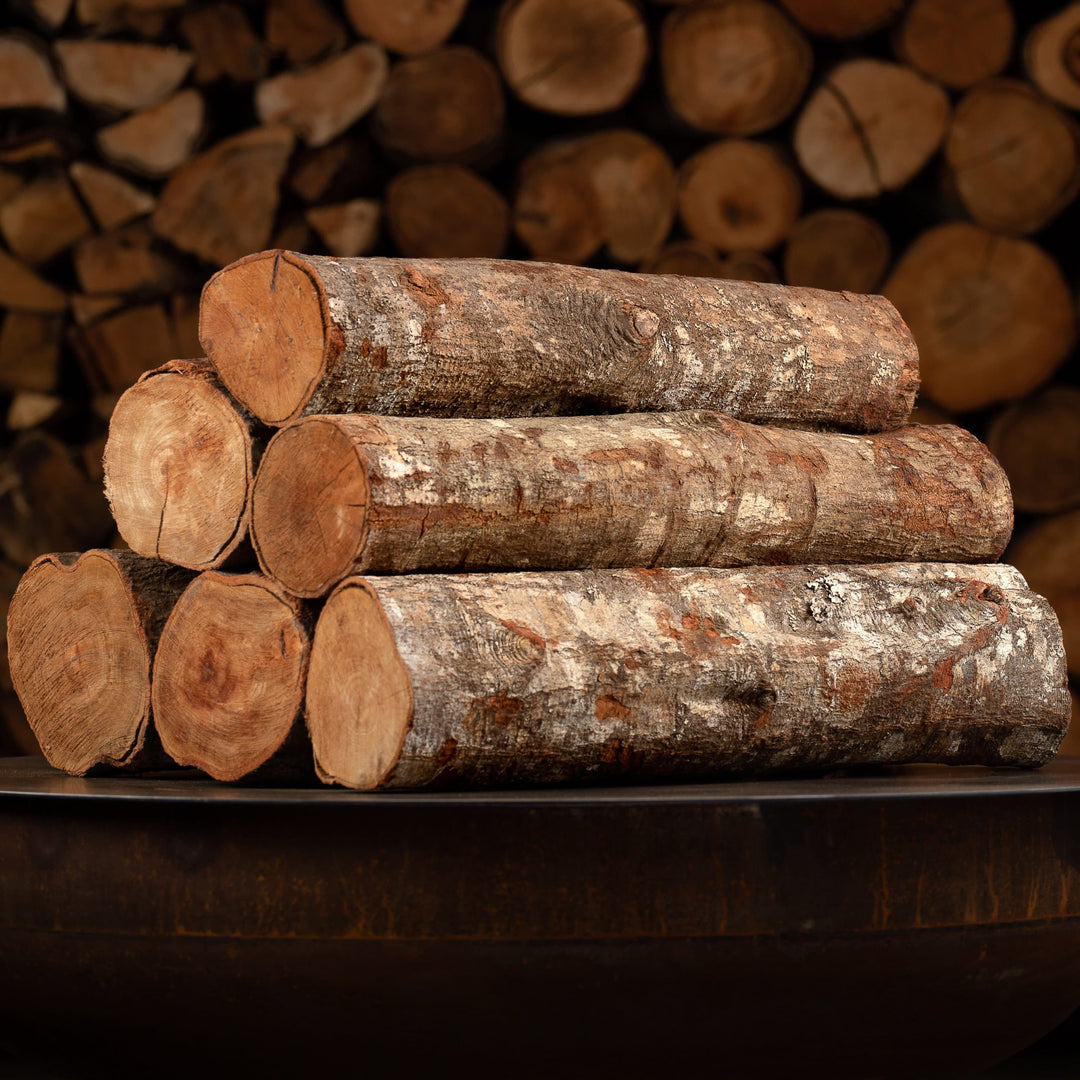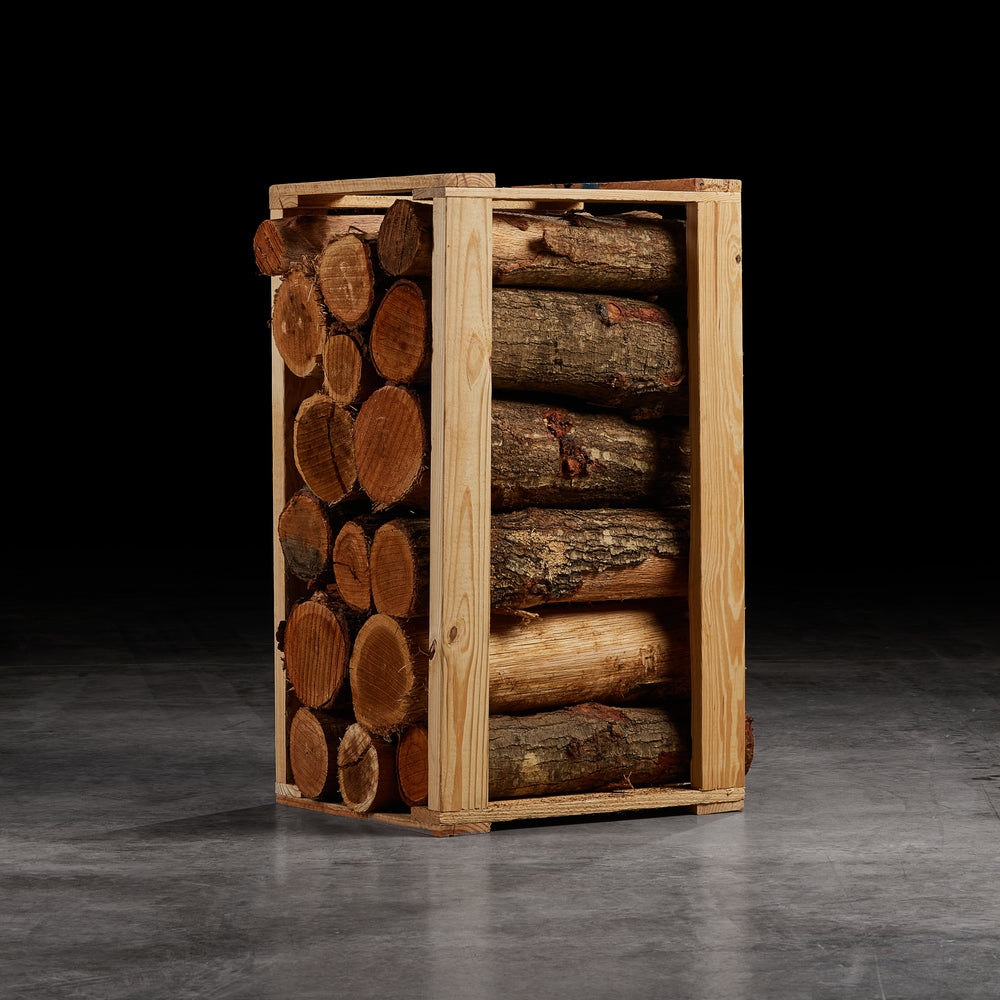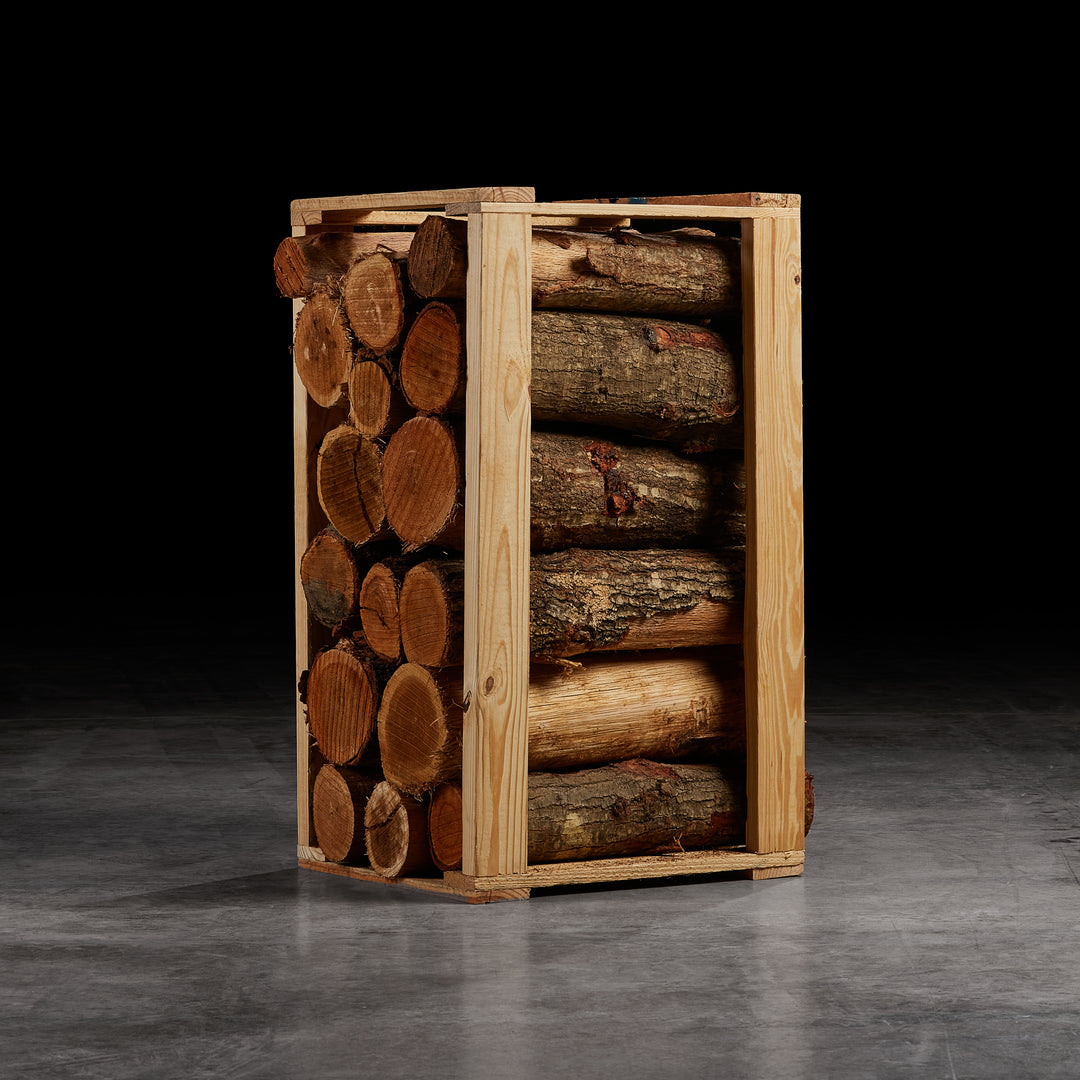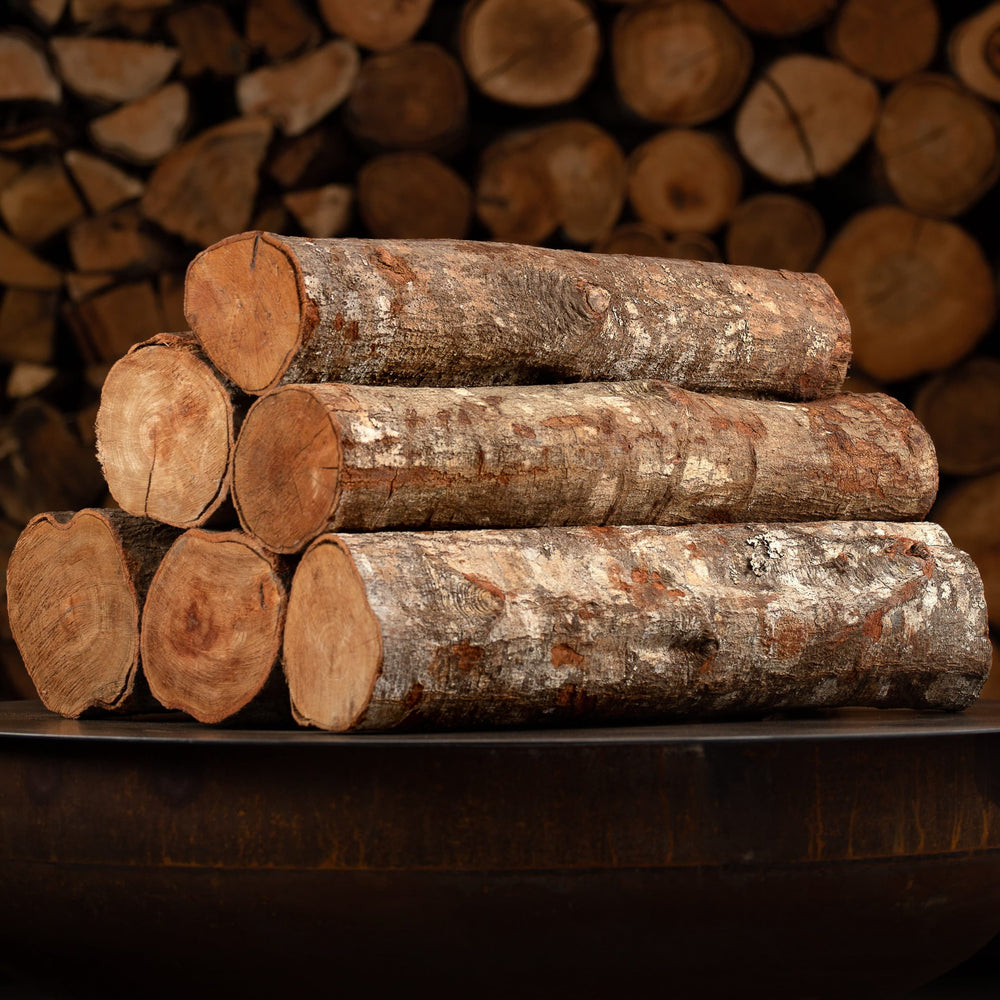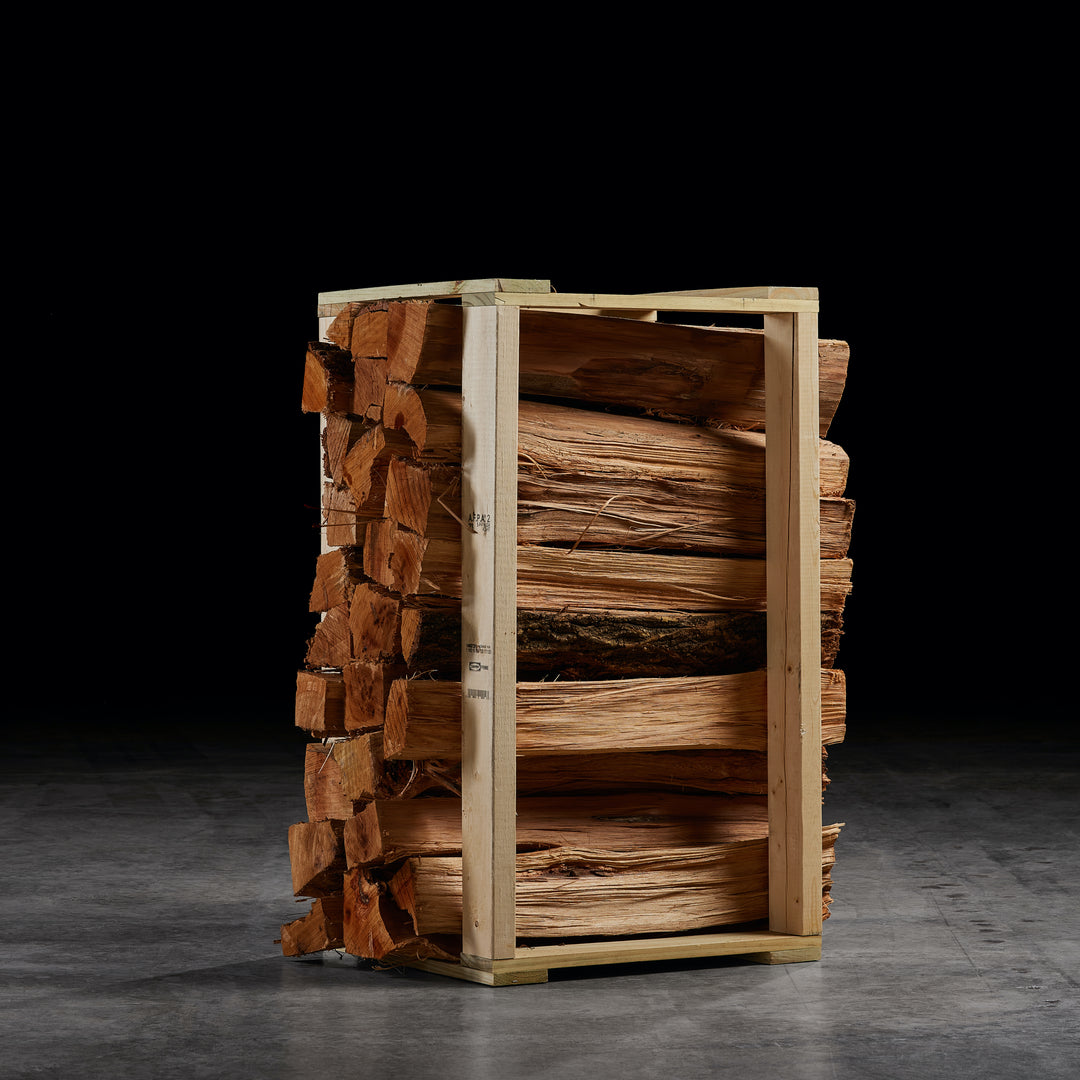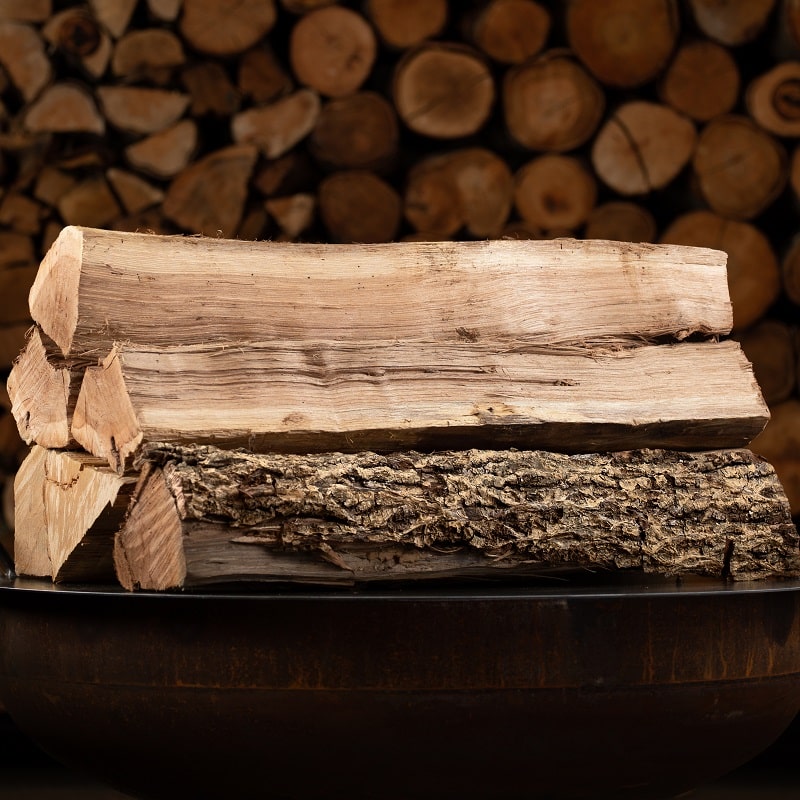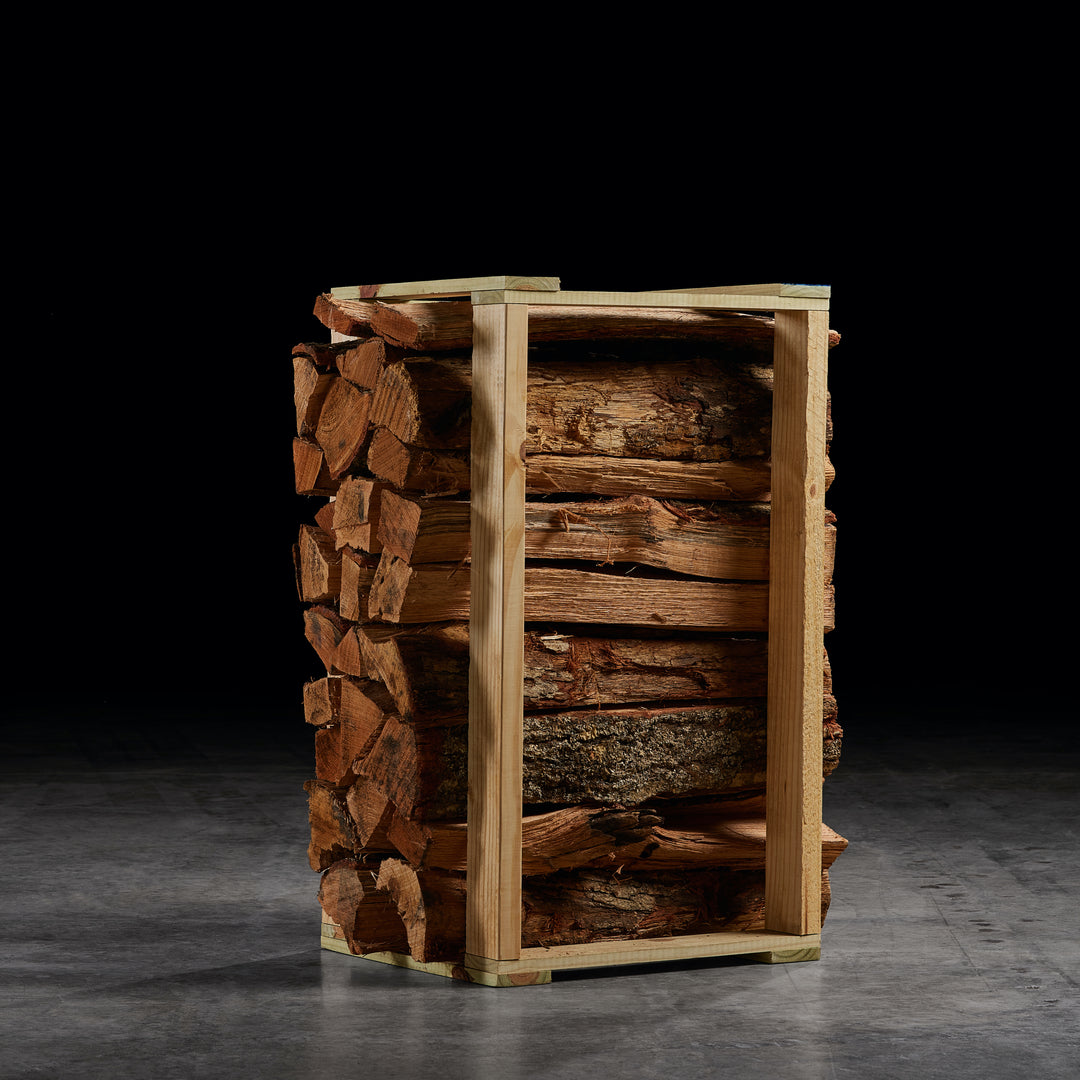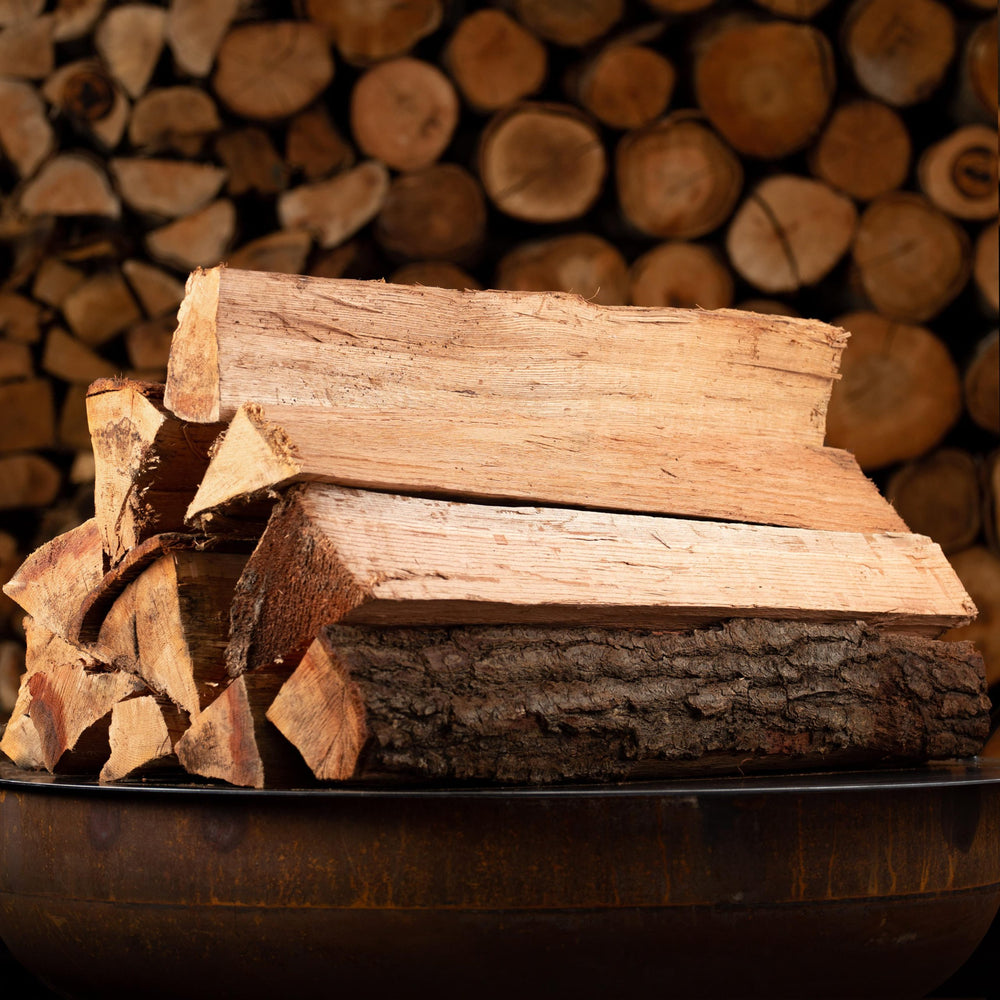

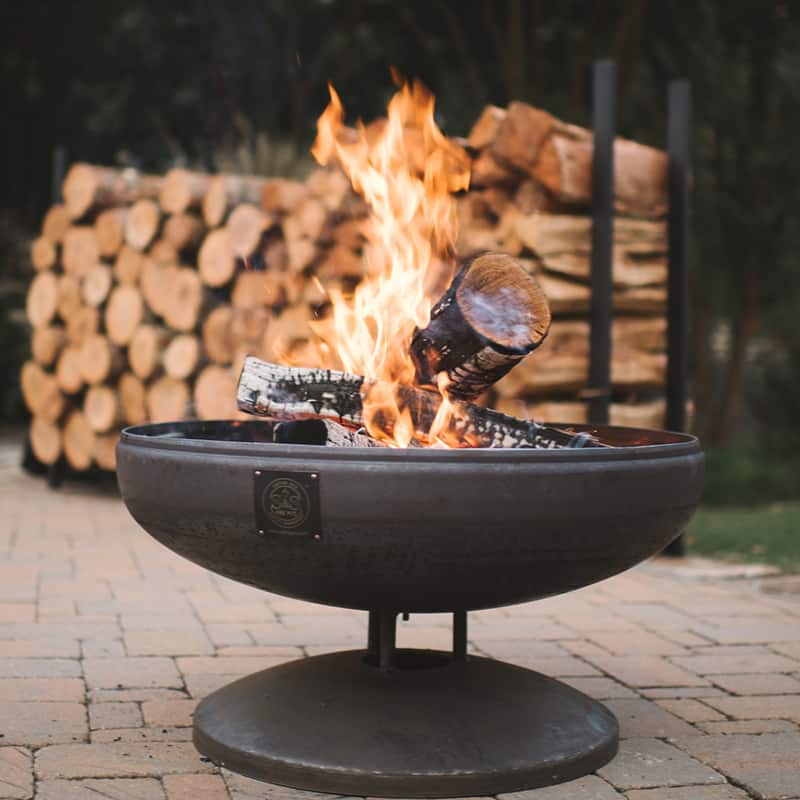

Getting ready for your next outdoor gathering? Choosing the right fire pit firewood is critical. In this blog, we’ll explain the best wood for fire pit use, what wood you should avoid, and how you can start using kiln-dried firewood for your next backyard event.
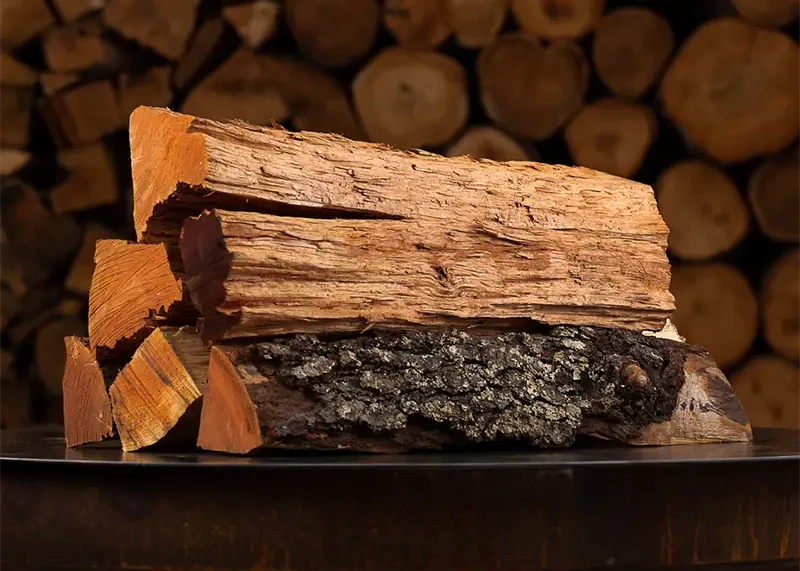
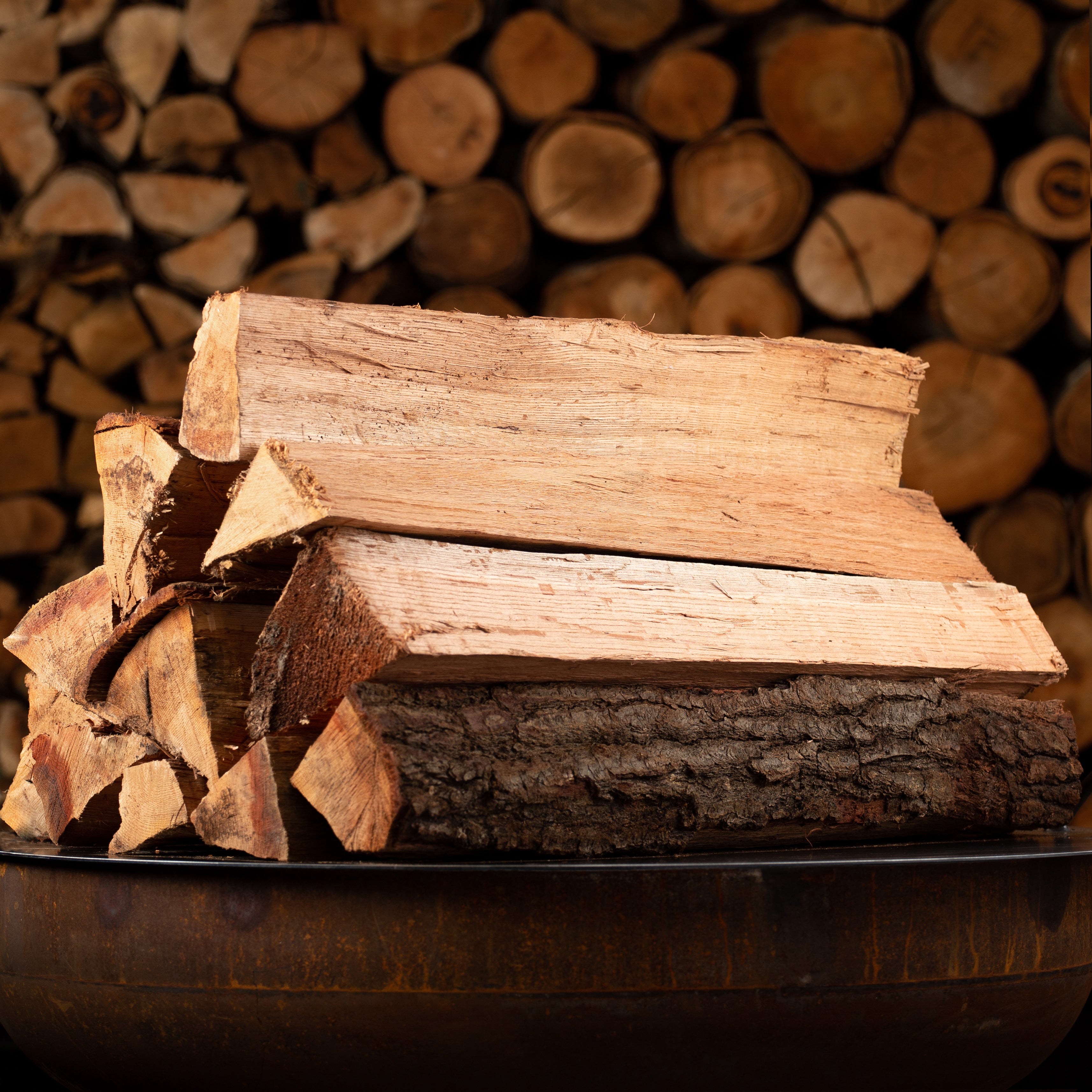
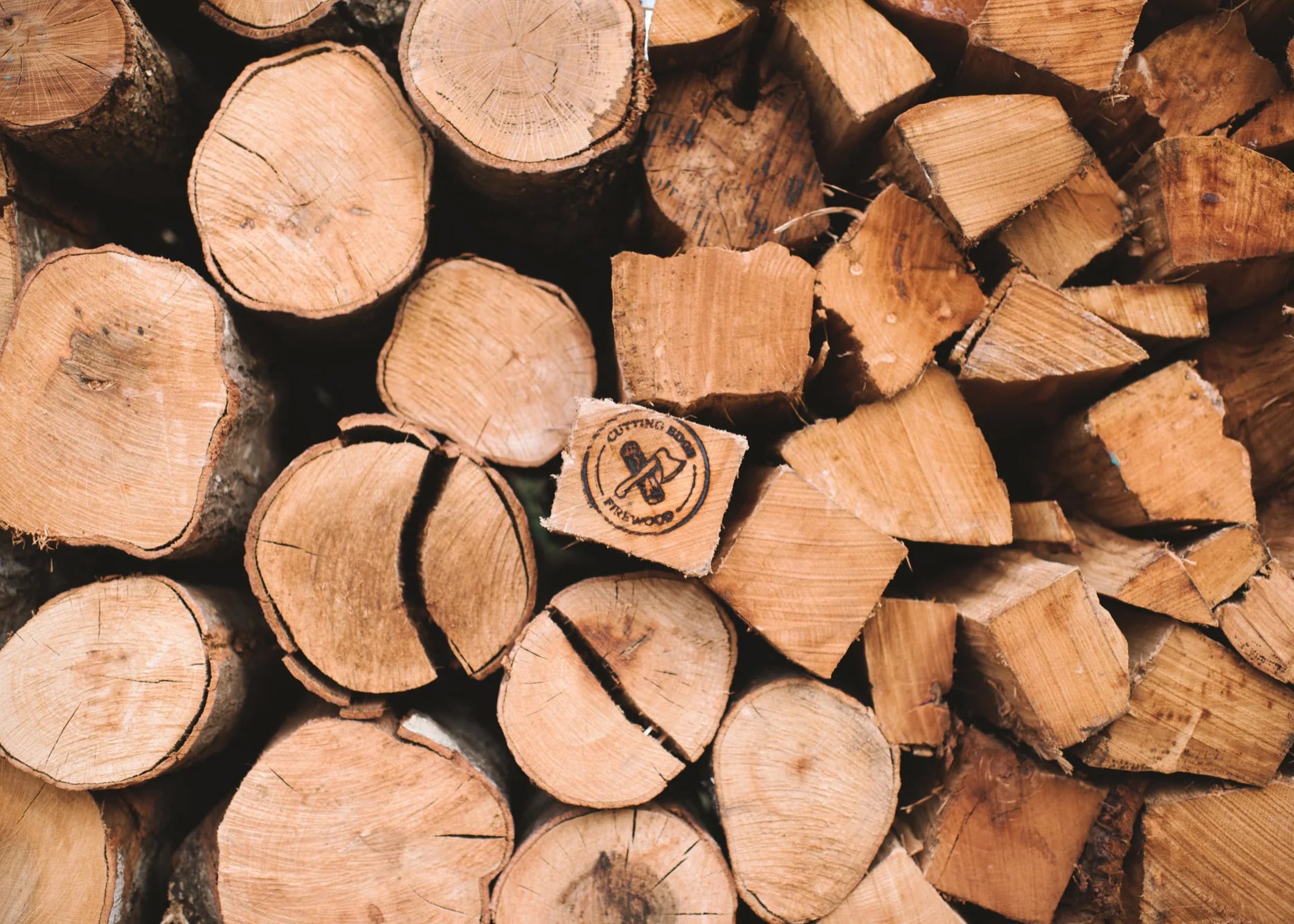
The best wood for fire pit use is seasoned or kiln-dried hardwood with low moisture content. Our favorites are oak, hickory, ash, or maple. These dense hardwoods sustain heat, produce minimal smoke, and have long burn times without too much sparking or creosote buildup. You should stay away from softwoods like pine and cedar in fire pits. Their high resin content causes popping embers and heavy smoke.
Key Takeaways
- The best wood for fire pit use is seasoned hardwood.
- Kiln-dried firewood outperforms air-seasoned wood by igniting faster, producing more heat, and generating significantly less smoke.
- Never burn treated lumber, painted wood, or green wood in fire pits.
- Softwoods work only as kindling or quick fires. Their high resin content makes them burn faster, spark, and produce heavy smoke.
- Ash produces the least smoke of all firewood species due to naturally low moisture retention and clean-burning properties.
What Is the Best Firewood for a Fire Pit?
The best wood for fire pit use: seasoned hardwoods with low moisture content, including oak, hickory, ash, maple, and birch. These species have a higher heat output, measured in British Thermal Units (BTUs). BTUs determine the wood's heating efficiency. The higher the BTU value, the more warmth and comfort the fire pit wood provides. Essentially, the drier the wood, the higher its BTU.
The best fire pit wood also burns longer and produces less smoke compared to softwood. Because of its density, availability, and consistent coals, oak is one of our top choices for fire pit use.
The type of hardwood you choose for a fire pit matters because the density impacts burn time and heat efficiency. Using hardwoods leads to fewer log additions and reduces airborne particulates that irritate eyes and lungs.
The moisture content in fire pit wood also heavily impacts the quality of the burn. Wet or green wood usually produces more smoke. That’s because it takes more energy to evaporate the water content in this wood. This leads to smokier fires, less heat, and higher carbon emissions.
Here are our choices of the best wood for fire pit use:
- Oak: Longest burn time, high heat, widely available, minimal sparking
- Hickory: Highest BTU output, pleasant aroma, dense coals, premium cost
- Ash: Easy splitting, low moisture retention, clean burn, fast seasoning
- Maple: Moderate burn time, consistent heat, minimal smoke, good availability
- Birch: Quick ignition, moderate heat, attractive flame, faster consumption
Can You Use Softwood in a Fire Pit?
You can use softwood in a fire pit for kindling or quick fires, but it shouldn’t be your main source of fuel. Softwoods like pine, spruce, and fir light easily. However, burning softwood can throw sparks up to 10 feet and build up heavy creosote deposits. Plus, softwood requires refueling every 30-45 minutes while hardwood has a longer, 90-120 minute burn cycle.
Another problem with burning softwood is safety. Popping embers that ignite nearby materials or burn guests and thick smoke with higher concentrations of volatile organic compounds are common. In enclosed fire pit areas, softwood smoke lingers and reduces air quality. For outdoor use where you need a quick light and smoke can disperse, softwood works, but hardwood is the better overall choice.
Appropriate softwood applications in fire pits:
- Kindling to establish initial flame (split into 1-2 inch pieces)
- Emergency fuel when hardwood is unavailable
- Quick 15-30 minute fires for ambiance only
- Mixing small amounts with hardwood for easier ignition
What Wood Should You Avoid in a Fire Pit?
Avoid burning treated lumber, painted or stained wood, green (unseasoned) wood, driftwood, plywood, particleboard, and any wood with visible mold or rot in fire pits. Treated lumber can have arsenic, chromium, and copper compounds. When inhaled, these toxins can be detrimental to your health. In addition, painted or stained wood has toxic fumes from chemical additives. Green wood creates excessive smoke, poor heat output, and collects large amounts of creosote.
Driftwood has its own unique problems. Because the wood absorbs salt, it can release chlorine gas and corrosive compounds when burned. These chemicals are bad for the health of your lungs and your fire pit.
On top of that, engineered wood products like plywood and particleboard have formaldehyde-based adhesives in them. These can emit carcinogenic fumes at high temperatures.
Never burn these materials in fire pits:
- Pressure-treated lumber (CCA, ACQ, or copper azole treated)
- Painted, stained, or varnished wood
- Plywood, OSB, particleboard, or MDF
- Green wood
- Driftwood or saltwater-exposed wood
- Moldy, rotted, or diseased wood
- Construction debris or demolition wood
- Cardboard with colored inks or glossy coatings
Does Kiln-Dried Wood Burn Better in Fire Pits?
Kiln-dried wood burns significantly better in fire pits than air-seasoned alternatives. The kiln-drying removed moisture faster. It also ignites in half the time and generates more heat per log. There’s also noticeably less smoke during startup and it's cleaner throughout the entire burn.
Why does kiln-dried wood perform better in fire pits? It’s because of the moisture content. Every percentage point of moisture above 20% means less heat. That means the energy normally used for producing flame instead goes to evaporating water. Kiln-dried firewood has very low moisture content, making it the best for burning in a fire pit.
The advantages of kiln-dried fire pit wood:
- Low moisture content
- Quicker ignition time
- Less smoke production
- No insect larvae or mold spores present
- Consistent quality regardless of weather or storage conditions
- Immediate usability without additional seasoning time
What Wood Produces the Least Smoke in a Fire Pit?
Ash, oak, and maple produce the least smoke in fire pits. Ash ranks as the lowest-smoke hardwood due to its naturally low moisture retention and clean-burning properties. These hardwoods have minimal visible smoke and less volatile organic compound release. Kiln-dried versions of these species have even less smoke output.
Three factors cause smoky fires: excessive moisture, insufficient oxygen, or wood with high resin or sap content. Kiln-dried firewood and a well-built fire are critical to avoiding these three smoke traps. However, smokeless fire pit wood isn't truly smokeless. It’s just barely visible after the first 5-10 minutes.
Lowest-smoke firewood options ranked:
- Ash: Naturally low moisture, minimal smoke even when partially seasoned
- Oak (white oak preferred): Dense, clean burn, very low smoke when fully seasoned
- Maple (sugar maple best): Consistent low-smoke performance, pleasant aroma
- Hickory: Minimal smoke with sweet scent, requires full seasoning
- Beech: Low smoke output, high heat, less common availability
Smoke reduction techniques:
- Use only fire pit wood with moisture content below 20%
- Allow fire to establish hot coal bed before adding larger logs
- Avoid overloading fire pit
- Position logs to create chimney effect for better draft
- Store firewood covered with sides exposed for continued drying
If you’re looking to create the best possible fire pit experience, nothing is going to match the results you get from kiln-dried wood.
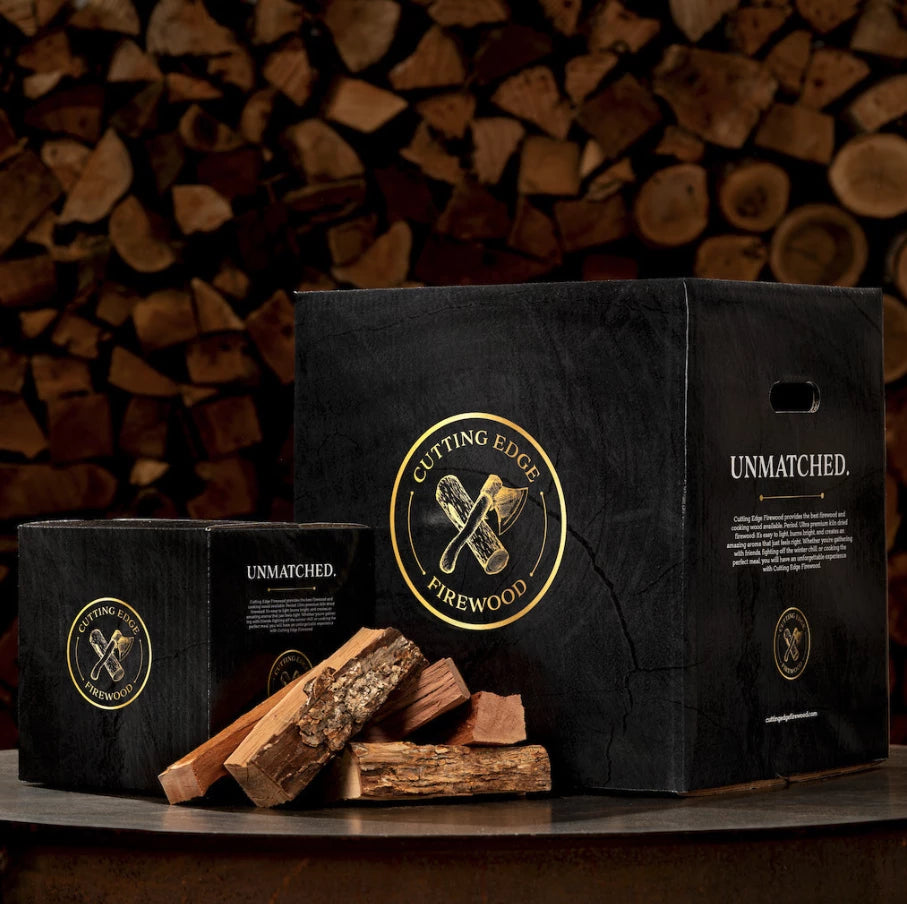
At Cutting Edge Firewood, each piece of firewood is kiln-dried, inspected, and hand-picked by our team so you only get premium cuts of fire pit wood. The result is a firewood that’s cleaner, lighter, and easier to light. It burns hotter, brighter, and with significantly less smoke, providing an unparalleled fire experience every single time.
Browse our firewood by species:
Our firewood comes in any size you need, including mini, 24-inch, and 30-inch.
When it comes to making your memories with fire, whether you’re out in the woods, on the beach, or in front of the fireplace in your favorite easy chair, choose to use the best firewood there is. Explore our ultra kiln-dried firewood for your fire pit.