

When you think of fires, what's the first color that comes to mind? If you answered orange, you aren't alone — most people associate orange with fire. Whether you're using fire starters outdoors or sitting by a fireplace indoors, your fire will probably produce an orange flame. But fire is far more colorful than most people realize — and every color tells you something specific about temperature, combustion efficiency, and what's actually burning.
Flame color is essentially a real-time diagnostic readout. A blue flame means your fuel is burning at peak efficiency. A red flame means it's barely combusting. A green flame is a warning that you may be burning something you shouldn't. This guide covers all six common flame colors — red, orange, yellow, white, blue, and green — plus the rare purple and pink flames you'll see in chemistry labs and pyrotechnics. Click any color in the chart below to jump to its dedicated section.

The Science Behind Flame Color: Why Different Fires Look Different
Flame color is governed by two factors: temperature and what's actually burning. According to Encyclopedia Britannica, the color of a flame corresponds directly to its temperature — as a flame heats up, its color shifts from red, to orange, to yellow, to white, and finally to blue at the extreme upper end. This is the same physics that governs the color of stars: cooler stars look red, hotter stars look blue.
Most traditional fuel sources — wood, charcoal, paper, propane — contain carbon. When carbon burns incompletely, microscopic carbon particles glow as they're heated, producing the orange and yellow light we associate with ordinary fires. When combustion is complete (enough oxygen, hot enough flame), there are no glowing particles left to emit light, and you instead see the molecular emission of the burning gases themselves — typically blue. Different chemical elements emit different wavelengths when heated, which is why copper makes a green flame and potassium makes a purple one.
Why Orange Is the Most Common Flame Color
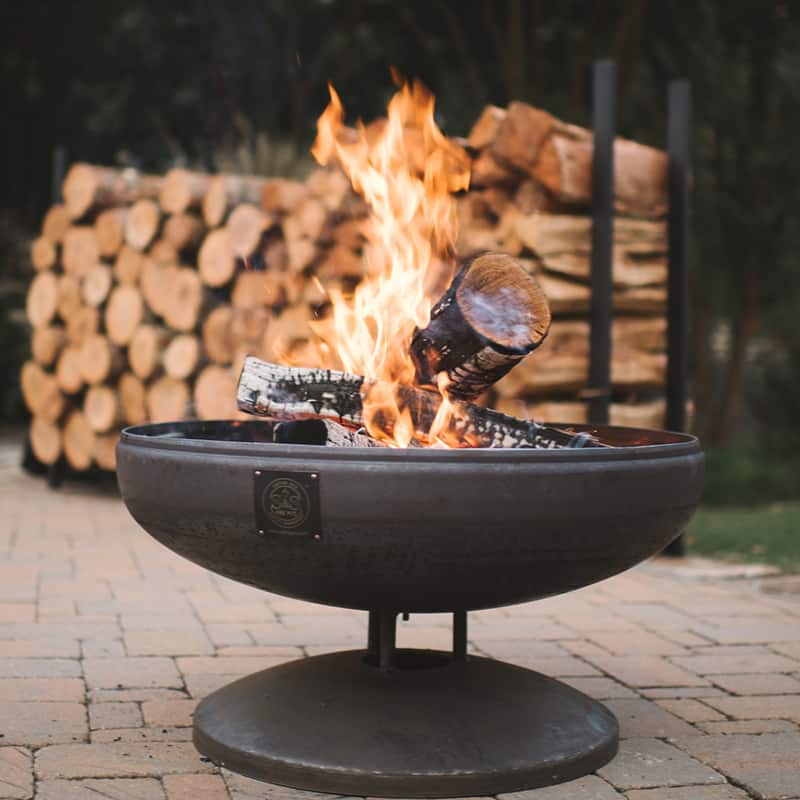
Orange is the default for most everyday fires because most fuels are carbon-based and burn at moderate temperatures with imperfect oxygen mixing. Wood, charcoal, paper, and candle wax all release micro-sized carbon particles into the flame as they combust. These suspended particles glow as they're heated, creating the warm orange-yellow light we recognize as "fire color." Orange flames typically sit in the 1,000–1,200°C range — hot enough to ignite hardwood logs and sustain a steady burn, but well short of the 1,500°C+ needed for pure blue flames.
Red Flames: The Coolest Visible Color
Red flames are the coolest of the visible incandescent flame colors, ranging from roughly 525°C to 1,000°C (977–1,832°F). According to Wikipedia's flame color article, the colder portion of any diffusion flame appears red, transitioning to orange, yellow, and white as the temperature rises. In a wood fire, the deep red glow you see at the base of logs and in the embers is not technically a flame at all — it's incandescent solid material (charcoal and ash) emitting light because it's hot enough to glow.
A wood fire that's burning only red — with no orange or yellow flames at all — is a sign of trouble. It usually means one of three things: insufficient oxygen, wet wood (high moisture content wastes heat boiling off water), or fuel that's already mostly consumed and is approaching the ember stage. If you want a hotter, cleaner fire, the fastest improvements come from better airflow and drier wood. Our ultra kiln-dried firewood burns at significantly hotter temperatures than seasoned wood because the moisture has already been driven out of the cell structure in a controlled kiln.
Orange & Yellow Flames: Wood Fire Default
Orange flames typically occur at temperatures of 1,000 to 1,200°C (1,800–2,200°F), and yellow flames slightly hotter at 1,100 to 1,300°C. Both colors indicate the presence of unburned carbon compounds — carbon is typically burned through combustion, but in a typical wood or candle fire, trace amounts of carbon particles remain suspended in the flame and glow as they're heated. The end result is the warm orange-yellow flame most people picture when they think of fire.
This doesn't mean orange and yellow flames are bad. On the contrary, you can expect most traditional fuel sources, including premium kiln-dried firewood, to produce flames in these colors. It's perfectly normal and shouldn't cause concern. In fact, orange and yellow flames are actually better for grilling and smoking meats, because they release a more savory and flavorful smoke. This is why dense hardwoods like oak cooking wood are the gold standard for low-and-slow BBQ — the steady orange flame delivers consistent heat and rich smoke flavor.
If your fire is burning a deep, dim orange with a lot of smoke, that's usually a signal that the wood is too wet or the airflow is too restricted. A healthy wood fire should produce bright, lively orange-yellow flames with minimal smoke — a sign of efficient (though not complete) combustion.
White Flames: Peak Heat in a Wood Fire
White flames are extremely hot — typically 1,300 to 1,500°C (2,400–2,700°F) and up. In an everyday wood fire, the white-yellow tips of the tallest flames are the hottest visible incandescent zone, where carbon particles are heated to such an extreme temperature that they emit light across nearly the entire visible spectrum, which our eyes perceive as white.
True sustained white flames are rare in residential settings. You'll see them when burning very dry hardwood at high airflow, in industrial furnaces, in welding torches, and when burning certain metals (magnesium famously burns brilliant white). In a home fireplace, a flame that flickers white at the tips while the body remains orange is a sign of an excellent burn — high temperature, good draft, dry fuel. It's the visible signature of efficient combustion at peak intensity.
Blue Flames: Complete Combustion
Blue flames indicate the hottest, most efficient combustion — typically above 1,500°C (2,700°F) and reaching 3,000°C (5,400°F) at the extreme upper end. According to HowStuffWorks, blue indicates a hotter, more oxygen-rich burn — the kind you see in a well-adjusted gas burner or Bunsen burner. The blue color comes from molecular emission of excited gas molecules (CO₂, H₂O, and others) rather than from glowing carbon particles. Because there are no soot particles left to glow, you see the underlying chemistry instead.
An article published by the University of California, Santa Barbara's ScienceLine explains that blue flames signal the complete burning of carbon — with sufficient oxygen, all carbon compounds are converted to CO₂ instead of remaining as glowing particulate matter. This is why propane, natural gas, and well-tuned gas appliances burn blue while wood fires generally don't.
Wood fires can produce blue zones — usually right at the base of the logs where combustion is most efficient, or briefly when the fire is at peak temperature with strong draft. Maximizing the blue you see in a wood fire comes down to fuel quality and airflow: extremely dry hardwood (under 12% moisture content), well-spaced log placement, and an open damper produce the cleanest, hottest, most blue-tinged burn. Our ultra kiln-dried firewood is dried to a moisture content low enough to burn cleanly with maximum heat output and minimum smoke.
Green Flames: A Chemistry Warning Sign
Green flames are caused by copper compounds burning in the fire. If you see green in a wood fire or campfire, the most common culprits are pressure-treated lumber (which contains copper-based preservatives like CCA or ACQ), driftwood that has absorbed copper salts from seawater, or scrap wood with copper nails or copper wiring still attached.
This is a safety problem, not a curiosity. Burning pressure-treated wood releases not just copper but arsenic, chromium, and other toxic compounds into the air you and your family breathe. The U.S. Environmental Protection Agency considers smoke from treated lumber a health hazard. If you spot green flames in your fireplace or fire pit, extinguish the fire, ventilate the room, and check what you're burning. Always burn untreated, kiln-dried hardwood only.
Outside the home, green flames also appear in chemistry demonstrations (boric acid produces a vivid green) and in fireworks (barium compounds produce the bright green star-shells seen in pyrotechnics displays). Those are intentional and controlled. In a home fire, they're a signal to stop and inspect.
Purple, Violet & Pink Flames: Specialty Chemistry
Purple and violet flames are produced by potassium compounds, particularly potassium chloride. They're rare in everyday fires and almost always intentional — laboratory flame tests, theatrical pyrotechnics, and fireworks displays. A wood fire on its own will not produce purple flames; if you see them, something foreign has been added to the fire.
Pink and light-red flames indicate the presence of lithium chloride. Bright red flames (distinct from the dim red of cooler combustion described above) come from strontium chloride, which is the source of the deep red bursts in fireworks. Other notable chemistry colors:
- Yellow-orange (intense, with bright streaks): Sodium — extremely common as a contaminant; even table salt produces this color in a flame test.
- Bright white sparks: Magnesium or aluminum metal burning.
- Pale green: Boric acid or barium compounds.
- Pale blue-green: Cupric chloride (a different copper salt than the one producing pure green).
None of these belong in a residential fire. They're useful for understanding fireworks and chemistry demonstrations but should never be created indoors due to the toxic fumes most colored-flame chemicals release when burned.
Flame Color Temperature Comparison Table
| Flame Color | Temperature Range | Combustion Efficiency | Common Source | What It Means |
|---|---|---|---|---|
| Red (deep) | 525–1,000°C / 977–1,832°F | Very low / starved | Embers, smoldering wood | Insufficient oxygen, wet wood, or fuel near depletion |
| Orange | 1,000–1,200°C / 1,832–2,192°F | Low–moderate / incomplete | Most wood fires, candles | Normal wood combustion with unburned carbon particles |
| Yellow | 1,100–1,300°C / 2,012–2,372°F | Moderate / incomplete | Hot wood fires, charcoal | Slightly hotter than orange; common in healthy wood burns |
| White (tips) | 1,300–1,500°C / 2,372–2,732°F | High | Peak heat in wood fires; magnesium burning | Very hot, efficient combustion; dry hardwood + good draft |
| Blue | 1,500°C+ / 2,732°F+ | Complete | Gas stoves, propane, base of hot wood fires | Full combustion — fuel completely converted to CO₂ and water |
| Green | Variable (chemical, not thermal) | — | Copper compounds, treated lumber | ⚠️ Warning sign in home fires — likely toxic source |
| Purple / Violet | Variable (chemical, not thermal) | — | Potassium compounds, pyrotechnics | Almost never in natural fires; intentional chemistry |
How to Read Your Fire's Flame Colors: A 5-Step Guide
You can diagnose a fire's combustion quality in under 30 seconds just by observing its color zones. Here's the sequence used by experienced fire-builders and combustion engineers.
- Wait 5–10 minutes for the fire to stabilize. A freshly lit fire burns inconsistently as it transitions from kindling to logs. Wait until the flames are steady before assessing color, otherwise you're reading a moving target.
- Look at the base of the flames, right at the wood surface. This is where combustion is most complete. A healthy wood fire shows blue or blue-violet here. If the base is dim red or yellow with heavy smoke, the wood is too wet or airflow is restricted.
- Examine the body of the flames. The middle section should be a bright, lively orange-yellow. A dim, dark orange means low temperature; a vibrant orange-yellow means a healthy burn. This is the dominant color in most wood fires and the one your eyes will register first.
- Check the flame tips. The tallest tips of the flames should flicker yellow-white at peak heat. White tips on a wood fire are a sign of excellent draft and dry fuel. If the tips never reach yellow, your fire is running cool.
- Watch for warning colors. Green flames mean copper compounds are burning — almost always a sign of treated wood or contaminated fuel. Stop the fire and ventilate. Purple, pink, or unnatural bright reds in a residential fire mean chemistry that doesn't belong indoors.
Repeat this scan periodically as the fire evolves. As logs turn to coals, the dominant color shifts toward red — that's normal and indicates the fire is in its ember phase, still radiating significant heat. If your bigger problem is a fire that fades too quickly or won't stay lit, that's typically a fuel or airflow issue rather than a color issue — see our guide on why your fire won't stay lit for troubleshooting.
Should I Worry About Flame Color?
The only flame colors that genuinely warrant concern in a home setting are green, purple, pink, and unnaturally bright red. These indicate the presence of chemicals or compounds that don't belong in firewood — copper preservatives, lithium, strontium, potassium, or similar — and the smoke from these materials can be hazardous to your health.
Red, orange, yellow, white, and blue are all normal combustion colors that simply indicate different temperatures and efficiency levels. None of them are dangerous on their own. A predominantly red fire just means a cooler, less efficient burn — the fix is drier wood and better airflow, not concern. A predominantly blue or white fire means an exceptionally hot, clean burn — exactly what you want from a wood stove or fireplace.
One additional safety note for gas appliances: a gas stove or furnace flame should always burn blue. If your gas flame turns yellow or orange, that indicates incomplete combustion and potentially elevated carbon monoxide production. Call an HVAC professional immediately and ventilate the area.
Watch: Why Fire Has Different Colors
Flame Color FAQ
What is the hottest flame color?
Blue is the hottest flame color in a typical fire, burning above 1,500°C (2,700°F) and reaching as high as 3,000°C (5,400°F) at the extreme upper end. In incandescent flames where you see glowing soot, the visible color scale runs from coolest to hottest as red, orange, yellow, and white. But true blue flames — produced by complete combustion in gas burners or at the base of very hot wood fires — are hotter than any of those incandescent colors.
Why is my fire green?
Green flames are caused by copper compounds burning in the fire. The most common culprits are pressure-treated wood (which contains copper-based preservatives like CCA or ACQ), driftwood that has absorbed copper salts from seawater, or scrap lumber with copper nails or wiring. Burning treated wood is unsafe — it releases toxic fumes including arsenic and chromium. Extinguish the fire, ventilate the area, and burn only seasoned, untreated hardwood going forward.
What does a blue flame mean?
A blue flame means complete combustion — the fire is hot enough and has enough oxygen to fully convert the fuel to CO₂ and water vapor, leaving little soot or smoke. Blue flames in a wood fire typically appear at the base of the logs where gases are burning most efficiently, and they indicate temperatures above 1,500°C (2,700°F). It's a sign of a well-built, well-ventilated fire using dry, properly seasoned firewood.
Is a white flame hotter than blue?
It depends on what's burning. In an incandescent flame like a wood fire, white is hotter than the yellow and orange around it, but blue is hotter still — blue indicates the highest-temperature combustion zone. In gas flames (propane, natural gas), blue is unambiguously the hottest. The general rule: among colors emitted by glowing soot, white tops yellow and orange, but a true blue flame from complete combustion is hotter than any of them.
What does a purple flame mean?
Purple or violet flames are caused by potassium compounds, particularly potassium chloride. They're rare in everyday fires and almost always intentional — produced in chemistry flame tests, theatrical pyrotechnics, or fireworks. A natural wood fire will not produce purple flames on its own. If you see them in a residential fire, something foreign has been introduced and you should stop the fire and identify what's burning.
Why does my wood fire burn yellow instead of blue?
Wood fires almost always burn yellow-orange because wood combustion is naturally incomplete — small carbon particles in the flame glow as they're heated, producing the warm color. Reaching pure blue requires complete combustion (full conversion of carbon to CO₂), which is much easier with gas fuels than with solid wood. You can get closer to blue by using extremely dry hardwood, ensuring strong airflow through the firebox, and keeping the fire hot. Kiln-dried wood at under 12% moisture produces the cleanest, bluest-tinged wood fire possible.
The Bottom Line
Flame color is a real-time readout of your fire's combustion quality. The natural color spectrum runs from red (coolest, ~525°C) through orange and yellow (1,000–1,300°C, where most wood fires sit) to white (1,300–1,500°C, peak heat) and finally blue (1,500°C+, complete combustion). Green, purple, and pink flames indicate chemistry rather than temperature — and in a home fire, they're warning signs to investigate what's actually burning. The fastest way to shift your wood fire toward the hotter, cleaner end of the spectrum is dry fuel and good airflow.