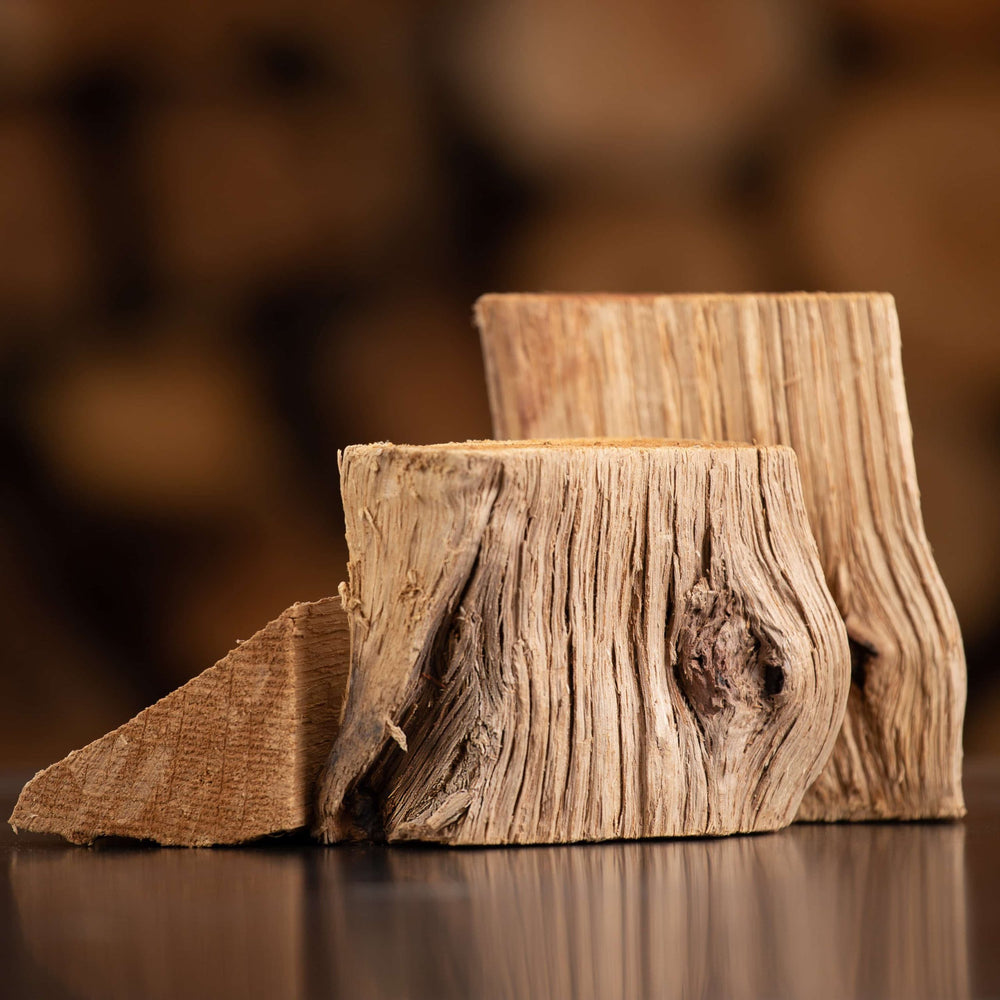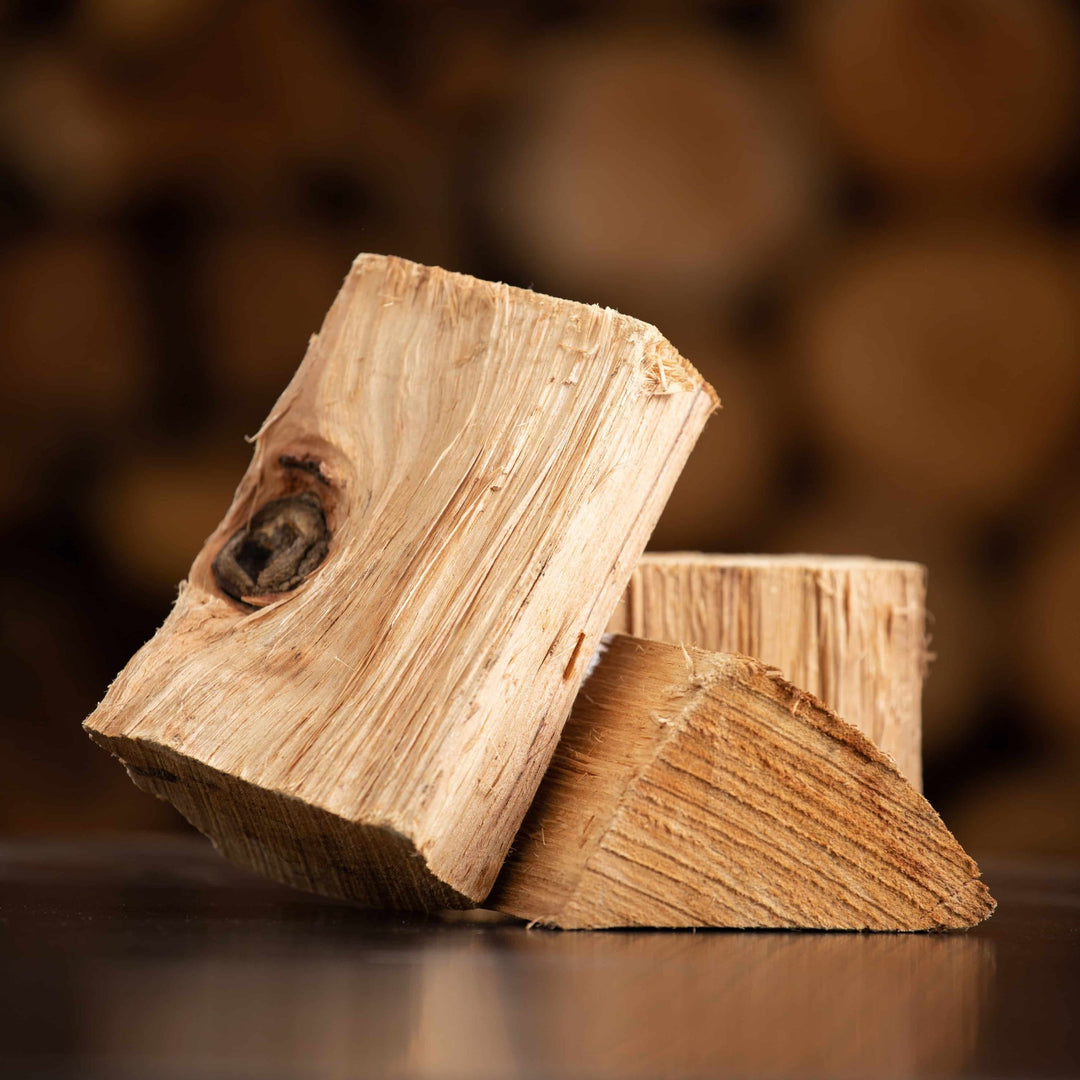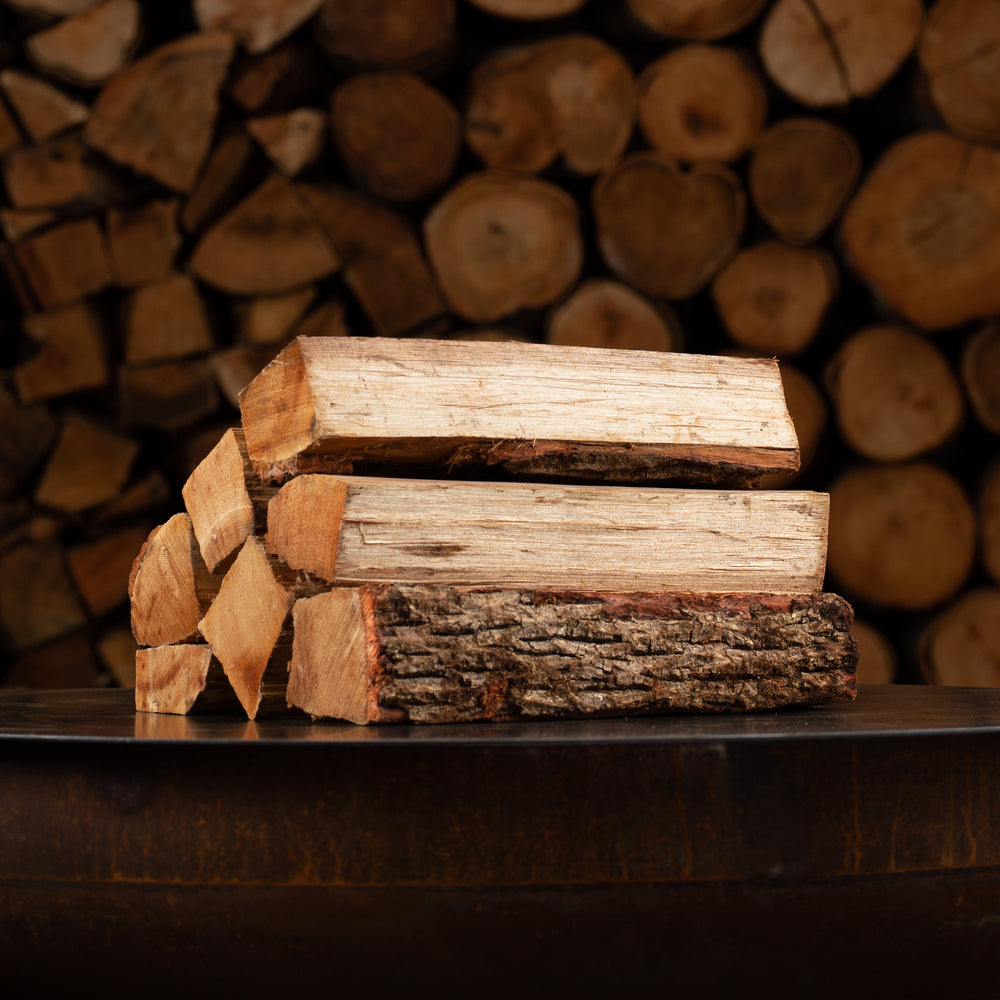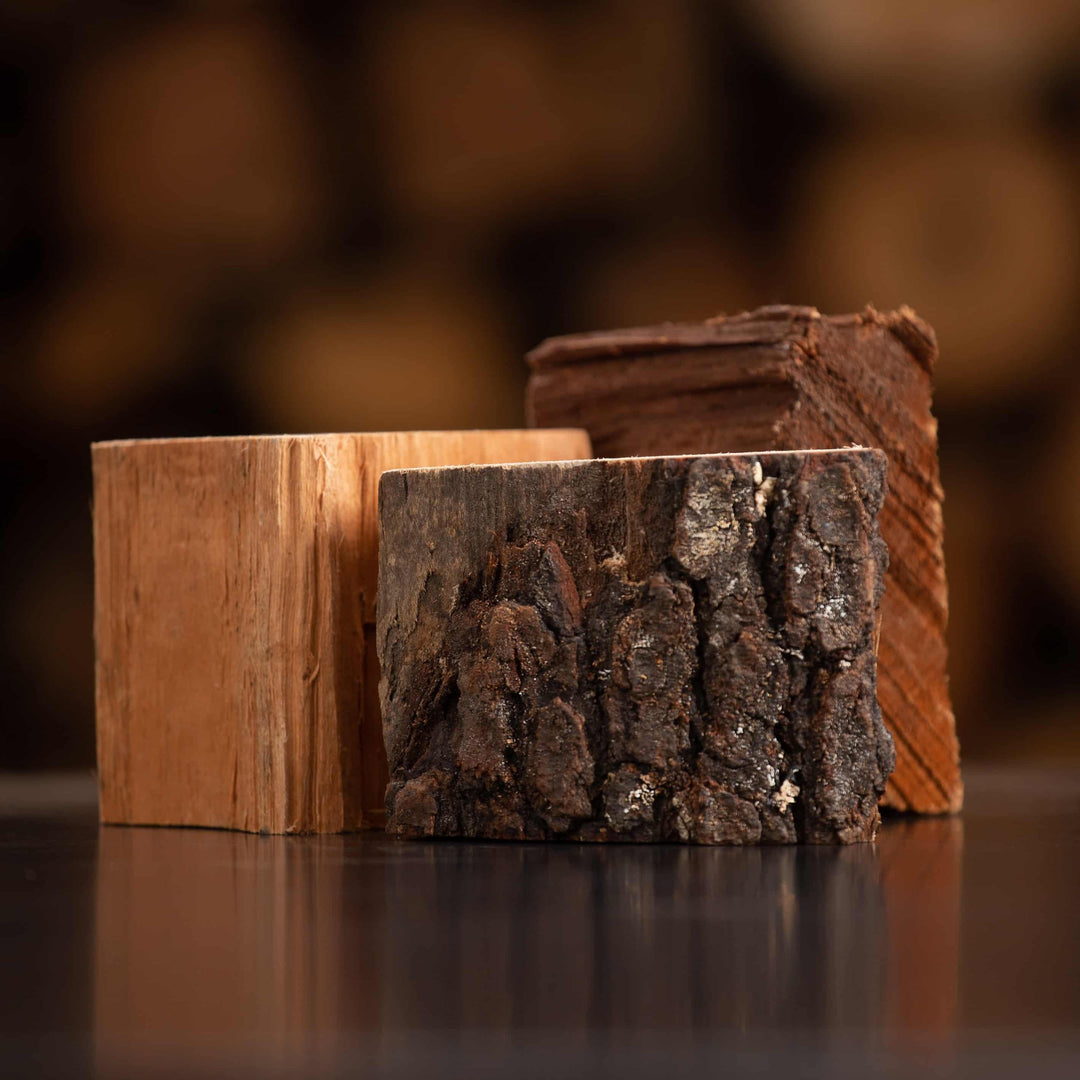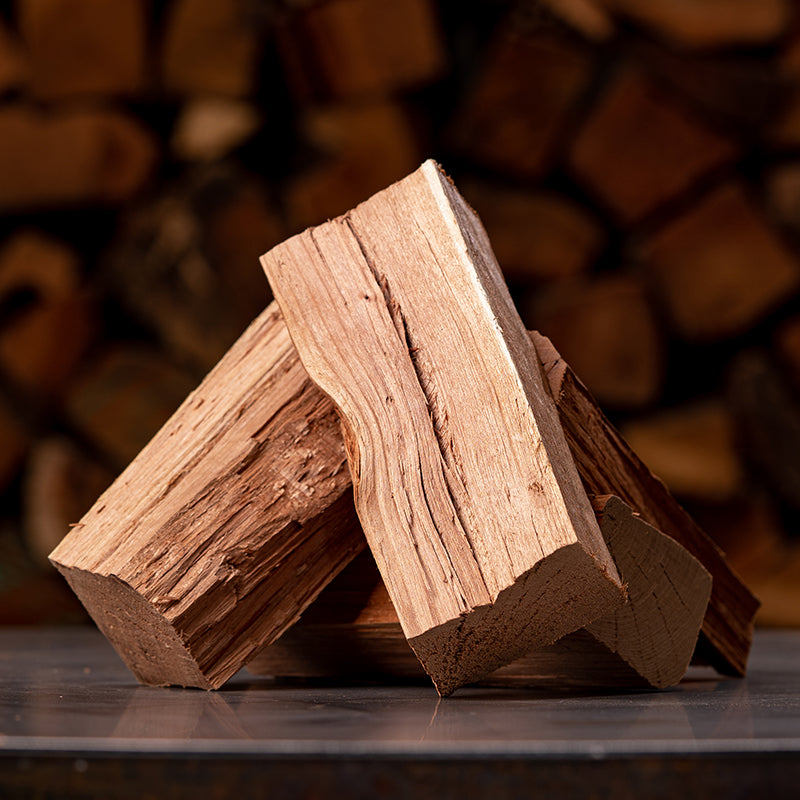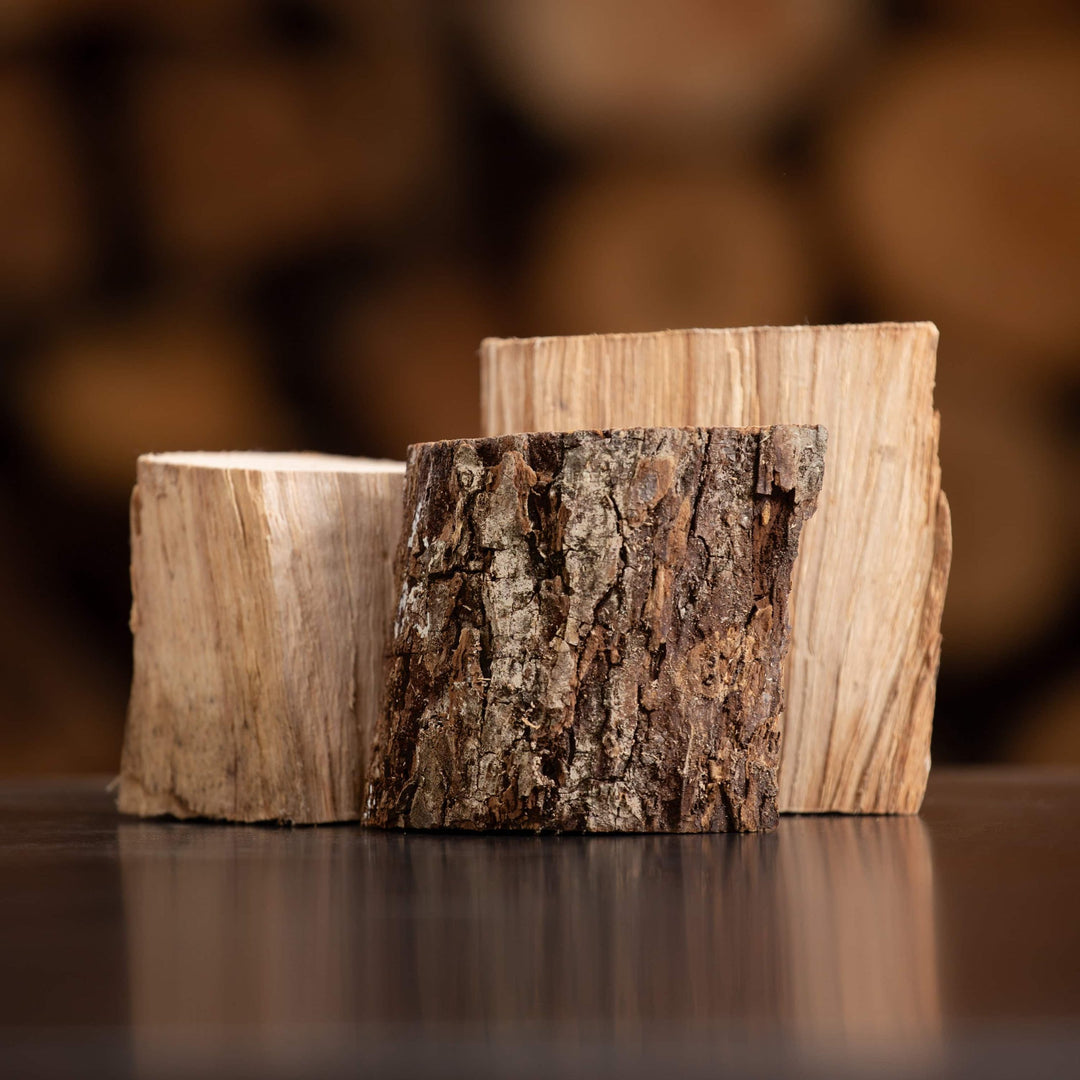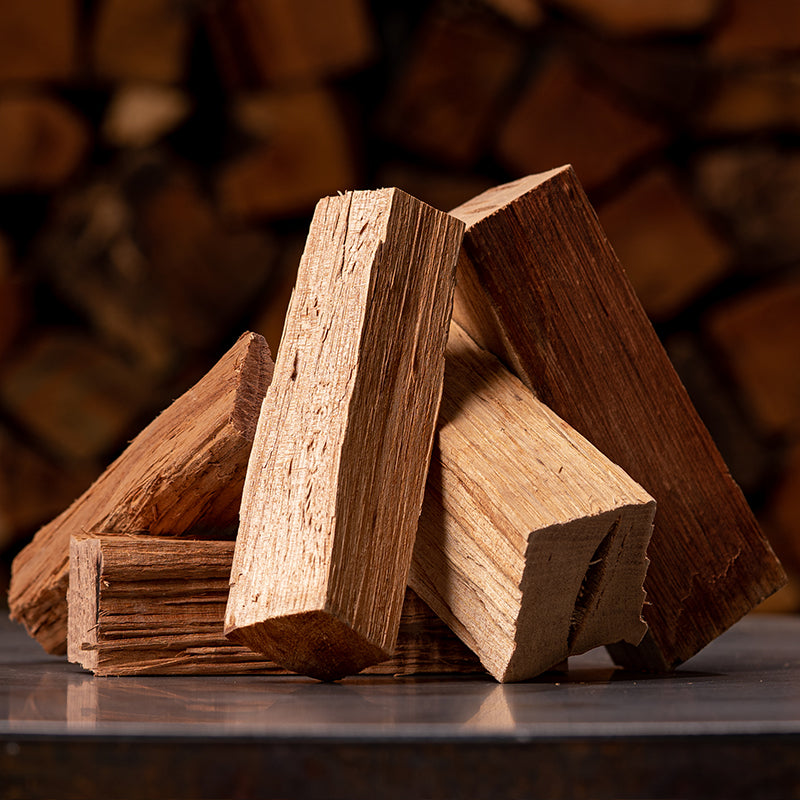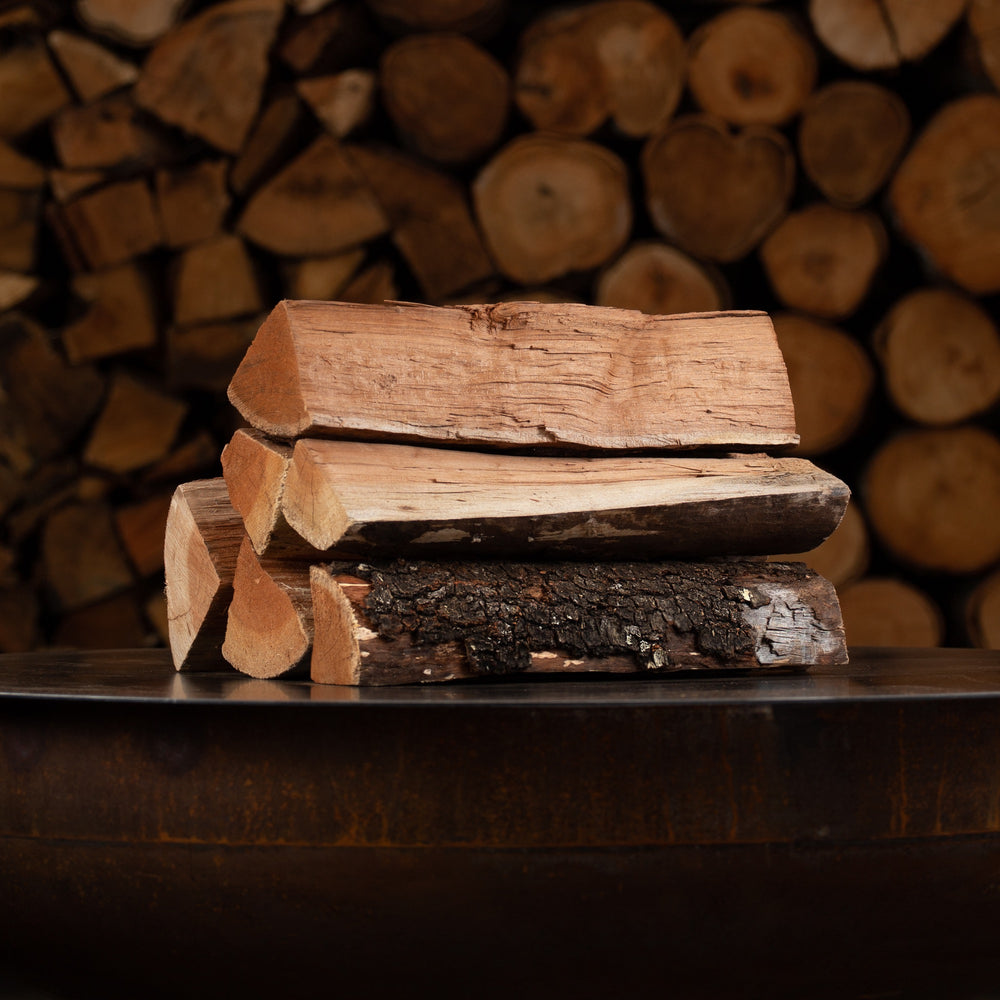
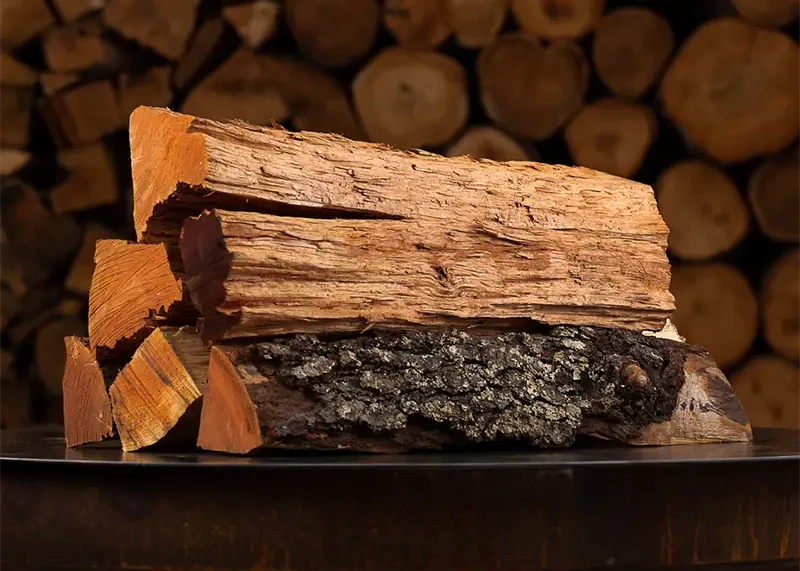
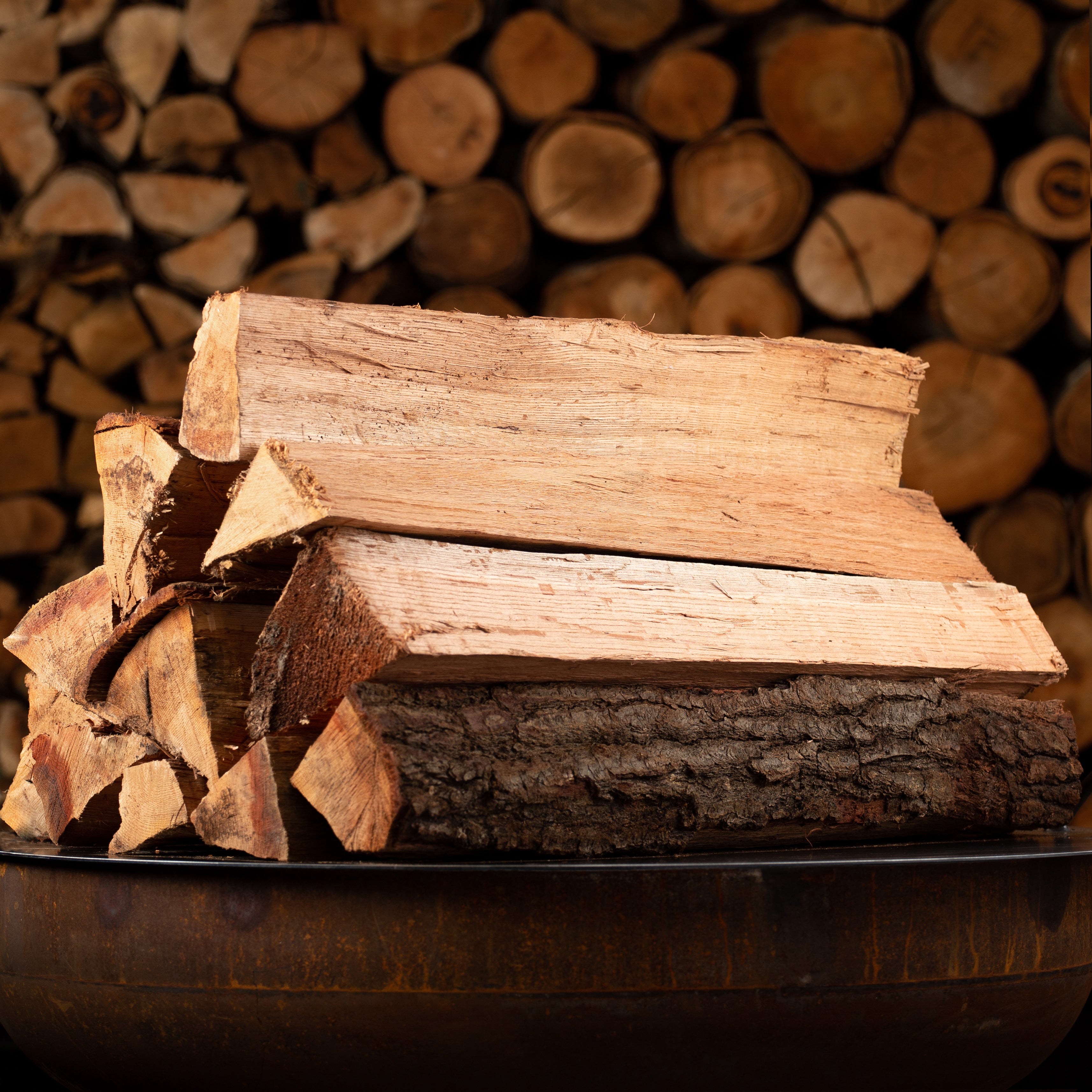

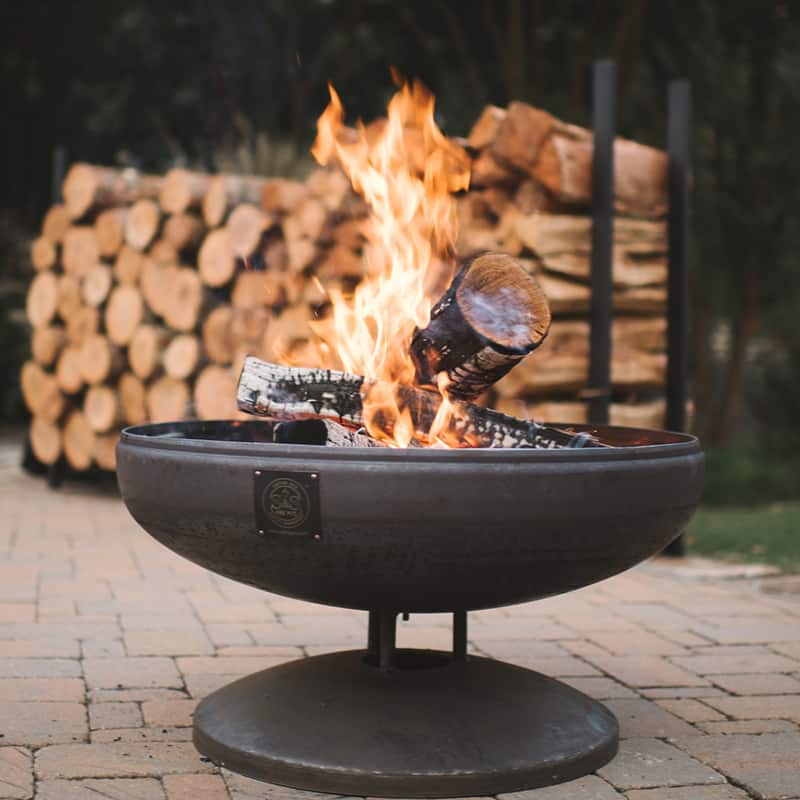

Applewood smoked describes food cooked over apple wood (Malus pumila) on a grill or smoker, where the burning wood infuses the food with a mild, sweet, fruity smoke. It's a low-and-slow technique most popular for pork, poultry, ham, and fish.
Cooking with wood has been steadily reclaiming kitchens, backyards, and pitmaster competitions — and at the heart of that revival is apple cooking wood. Applewood-smoked dishes carry a delicate, semi-sweet smoke that flatters meat instead of overpowering it, making it one of the most beginner-friendly and forgiving smoking woods you can buy.
This guide covers exactly what "applewood smoked" means, what apple wood tastes like, how it stacks up against cherry, hickory, and mesquite, the meats it pairs best with, and how to use it in your smoker.

What "Applewood Smoked" Actually Means
The term applies to any food — meat, fish, poultry, or vegetable — that has been cooked over a fire fueled by apple wood. The wood is added to a grill or smoker as chunks, splits, or logs alongside (or in place of) charcoal. As the apple wood smolders, it releases aromatic compounds — phenols, carbonyls, and acids — that adhere to the food's surface and create the signature flavor.
What sets apple apart is the chemistry. The wood contains a higher concentration of natural sugars than most hardwoods, and as it heats, those sugars partially caramelize, contributing to the distinctive sweet character of the smoke. The result is a fruit-forward, mellow smoke that's noticeably gentler than oak or hickory.
What Does Apple Wood Taste Like?
Apple wood produces a mild, sweet, slightly fruity smoke with a faint floral note and a clean, almost honey-like finish. It's often described as the wood that tastes most like the fruit it grew — though the smoke flavor is far subtler than a fresh apple. Because it's mild, apple wood is the wood pitmasters reach for when they want smoke flavor that complements rather than dominates the meat.
The flavor intensity ranks toward the gentle end of the smoking-wood spectrum. On a scale where mesquite is the most assertive and alder is the most delicate, apple sits comfortably between alder and pecan — sweeter than oak, milder than hickory, fruitier than maple. This makes it especially well-suited for proteins where you want to taste the meat itself, not just the smoke.
Apple Wood vs Cherry vs Hickory vs Mesquite: Smoking Wood Comparison
Choosing a smoking wood is mostly about matching flavor intensity to your protein. Here's how apple wood compares to the three other most common smoking woods, plus a few alternatives:
| Wood | Flavor Profile | Intensity | Burn Character | Best For |
|---|---|---|---|---|
| Apple | Mild, sweet, fruity, faintly floral | Light–Medium | Slow, even, low resin, clean smoke | Pork, poultry, ham, fish, cheese |
| Cherry | Mild, sweet, slightly tart, deeper than apple | Light–Medium | Slow, even, gives meat a rosy mahogany color | Beef, pork, poultry, lamb, vegetables |
| Hickory | Bold, savory, bacon-like, slightly sweet | Medium–Heavy | Hot, dense, can turn bitter if oversmoked | Pork shoulder, ribs, ham, brisket, sausage |
| Mesquite | Intense, earthy, slightly bitter, smoke-forward | Heavy | Very hot, fast-burning, easy to overdo | Brisket, beef ribs, large game cuts (short cooks only) |
| Oak | Medium-bodied, neutral, smoky-savory | Medium | Long, steady burn — beginner-friendly | Beef, brisket, sausage, vegetables (great base wood) |
| Pecan | Rich, nutty, slightly sweet, mellow | Medium | Slower than hickory, similar bold sweetness | Poultry, pork, fish, baked goods |
The simplest rule: delicate proteins want delicate smoke. Apple and cherry are forgiving on chicken, turkey, fish, and pork — woods you can leave on for a long cook without the meat turning acrid. Hickory and especially mesquite are best reserved for big-cut, fat-rich red meats that can absorb a heavier smoke. For a deeper dive, see our smoking wood flavors guide and fruit wood for smoking guide.
What Meat Goes Best With Apple Wood?
Apple wood's mild sweetness makes it one of the most versatile smoking woods, but it truly shines with proteins that benefit from a sweet, fruit-forward smoke. Here are the cuts where apple wood is the gold standard:
| Meat / Protein | Why Apple Wood Works |
|---|---|
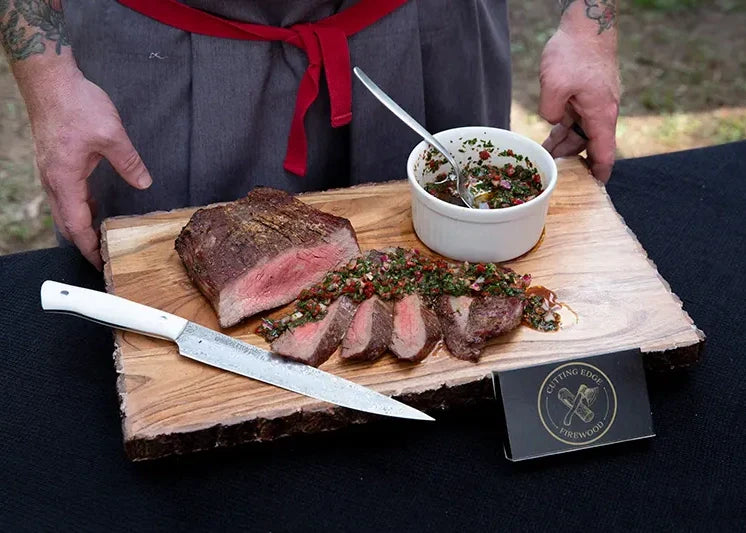
| Pork Shoulder / Boston Butt | Apple's sweetness caramelizes into the bark over a 12–14 hour cook. The classic applewood pulled-pork pairing. |
| Pork Ribs (Baby Back & Spare) | Sweet smoke balances rich pork fat. Mix apple with a small amount of hickory if you want more savory depth. |
| Whole Chicken & Turkey | Mild smoke won't overpower poultry. Skin takes on a beautiful amber-mahogany color. |
| Ham (Fresh & Cured) | The original applewood pairing. Centuries of charcuterie tradition built on this combination. |
| Salmon & Trout | Delicate fish need a delicate smoke. Apple is gentler on flaky flesh than oak or hickory. |
| Wild Game Birds | Pheasant, duck, and quail benefit from sweet smoke that softens their natural gamey notes. |
| Pork Loin & Tenderloin | Lean pork cuts can dry out under heavy smoke. Apple keeps the smoke flavor present without overdoing it. |
| Cheese (Cold-Smoked) | Cheddar, gouda, and brie develop subtle fruit notes when cold-smoked over apple at sub-90°F. |
Apple is generally too mild for brisket, beef ribs, and other big-cut red meats — you'll want hickory, oak, or a mix that includes mesquite for those. But for everything else on a typical backyard smoker, apple is hard to beat.

What Is Apple Wood?
Apple wood is harvested from the apple-bearing tree Malus pumila, a species believed to have originated in Central Asia and now cultivated worldwide. According to the Food and Agriculture Organization of the United Nations (FAO), global apple production exceeded 84 million tons in 2014, with China producing nearly half of that volume.
While most apple trees are cultivated for their fruit, mature trees eventually pass their fruit-bearing prime — typically after 30–40 years — and are removed from orchards to make room for younger, more productive trees. Historically, those felled trees were burned or chipped on-site. Increasingly, they're reclaimed for cooking wood, which is why most apple smoking wood on the market today is genuinely a sustainability story: the wood would otherwise be wasted.
As a hardwood, apple is denser than softwoods like pine and cedar and burns slower and more evenly. Its low resin content is a key reason it's so well-suited to cooking — softwoods produce harsh, soot-laden smoke that can leave food tasting acrid. Apple wood burns clean.
The Science Behind Smoking and Flavor
Smoking food works through a combination of heat, time, and chemistry. As wood smolders below combustion temperature, it releases hundreds of aromatic compounds — phenols (which contribute the smoky flavor and act as natural preservatives), carbonyls (which create surface color and the famous "smoke ring"), and acids (which lower the food's surface pH and slow microbial growth). The science of smoked food, summarized by ScienceDirect, describes how these compounds collectively create both the flavor and the antimicrobial protective layer that historically made smoking a preservation technique.
The species of wood matters because each species releases a different blend of aromatic compounds. Hickory is high in guaiacol-family phenols (responsible for that bacon-like smoky savory flavor). Oak is balanced and neutral. Apple wood, with its higher sugar content and softer phenol profile, contributes more sweet, fruity compounds and fewer of the heavy savory notes. According to Michigan State University Extension, smoking traditions date back to prehistoric food preservation — and the principle hasn't changed: the wood you choose dictates the flavor you get.
How to Smoke with Apple Wood: Sizes and Methods
Apple wood comes in three primary sizes, and the right one depends on your equipment:
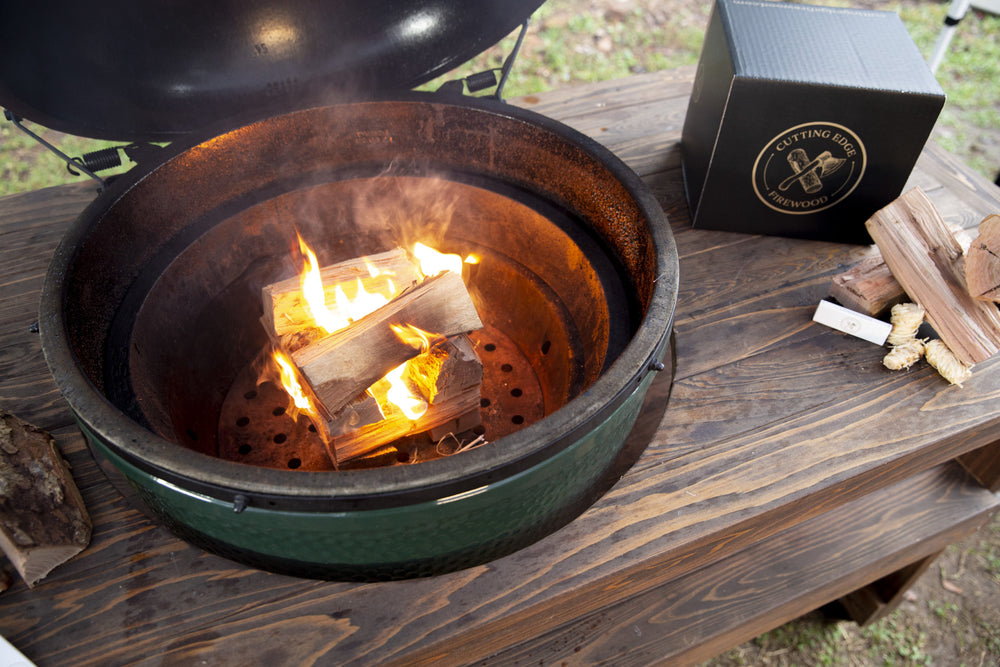
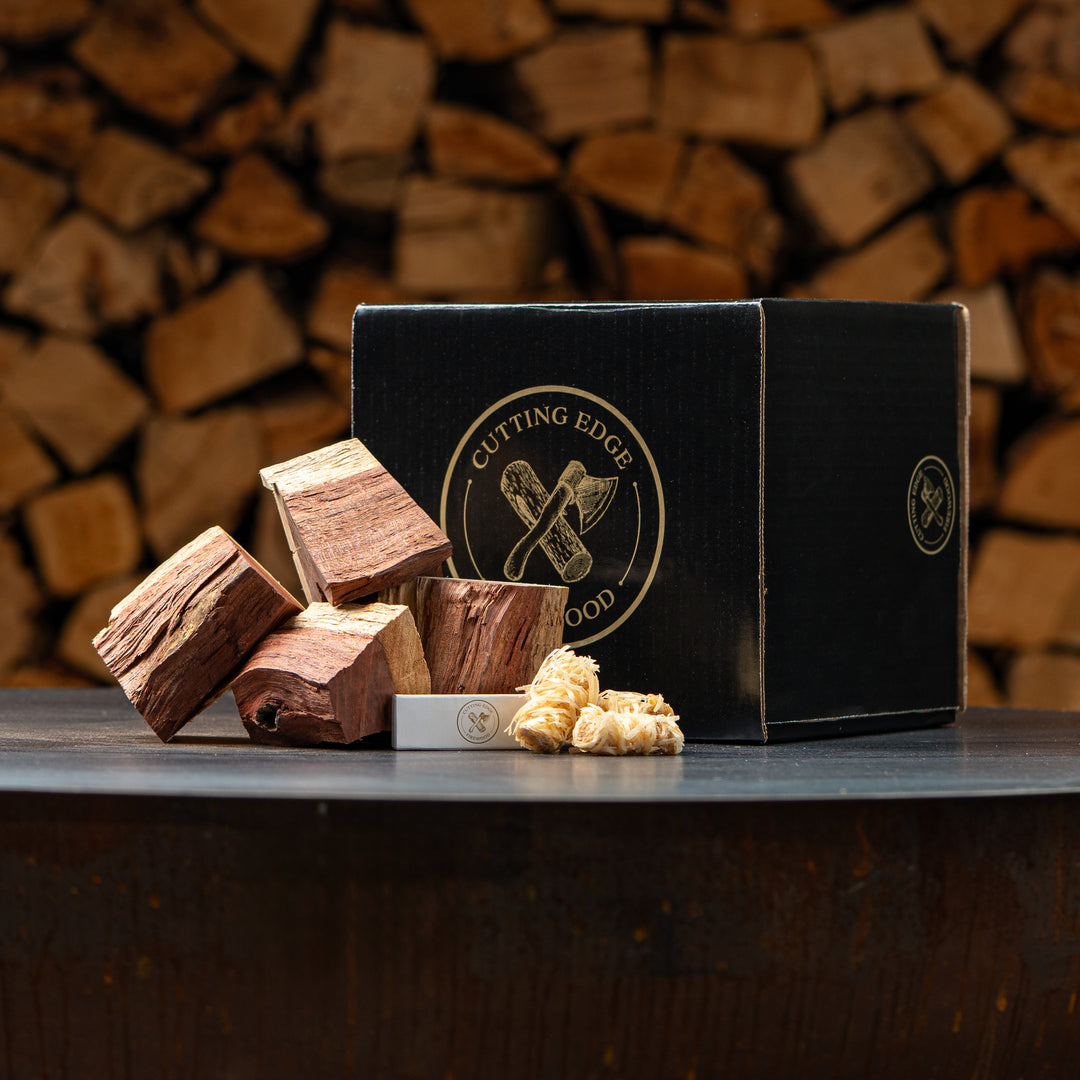
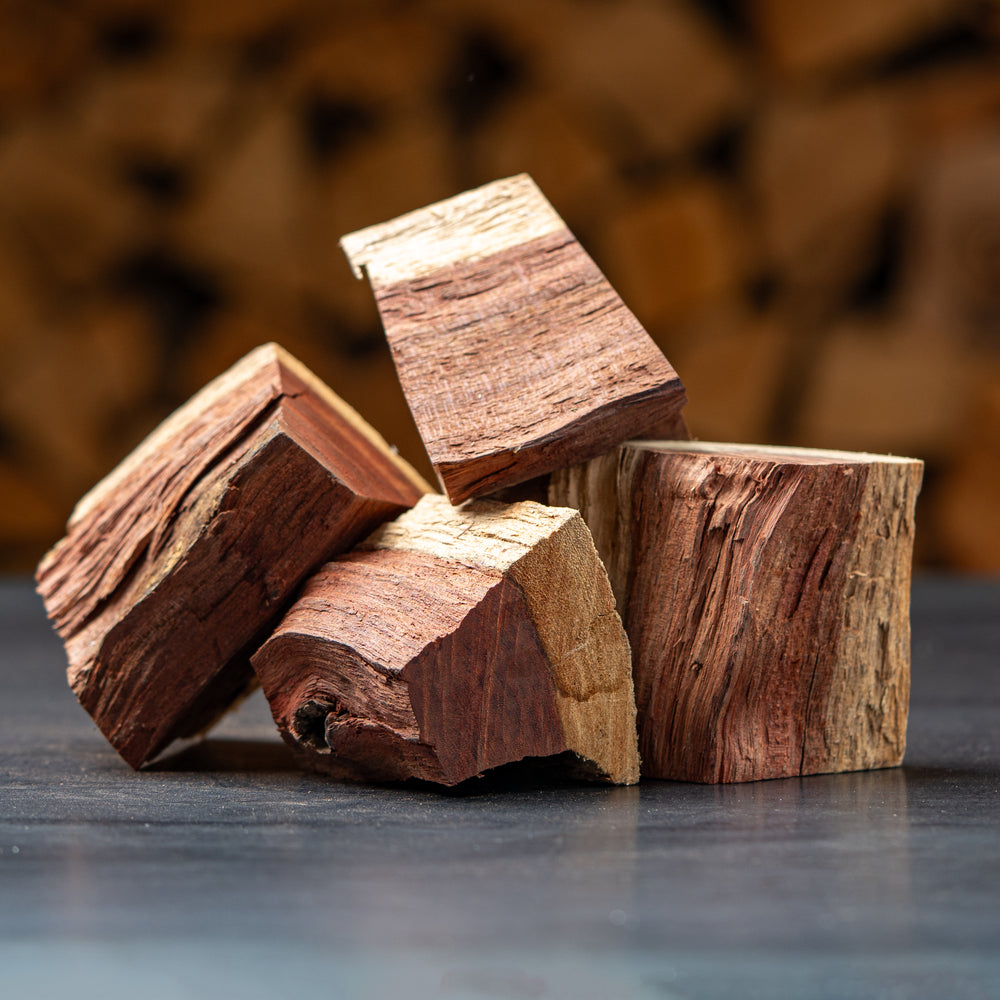
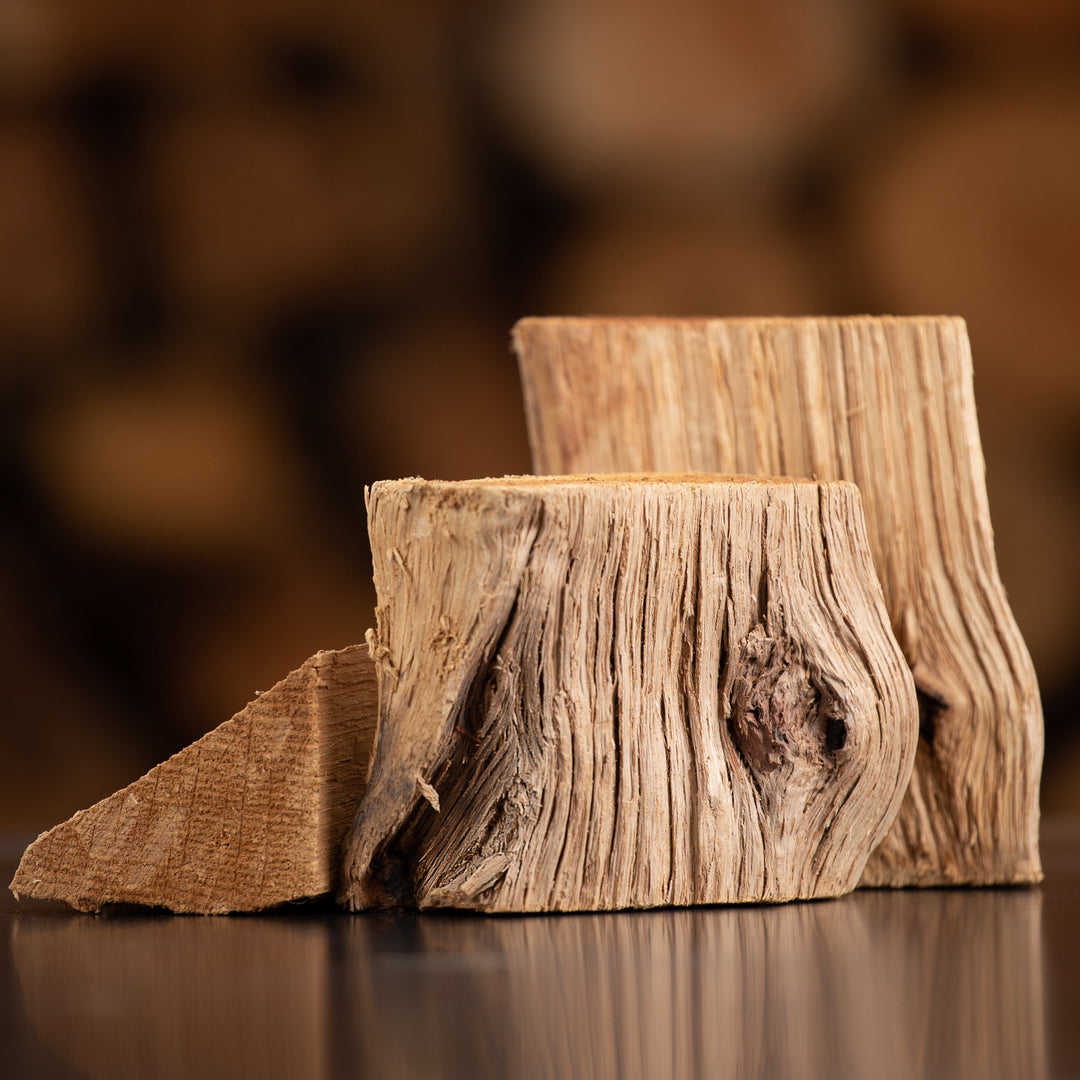
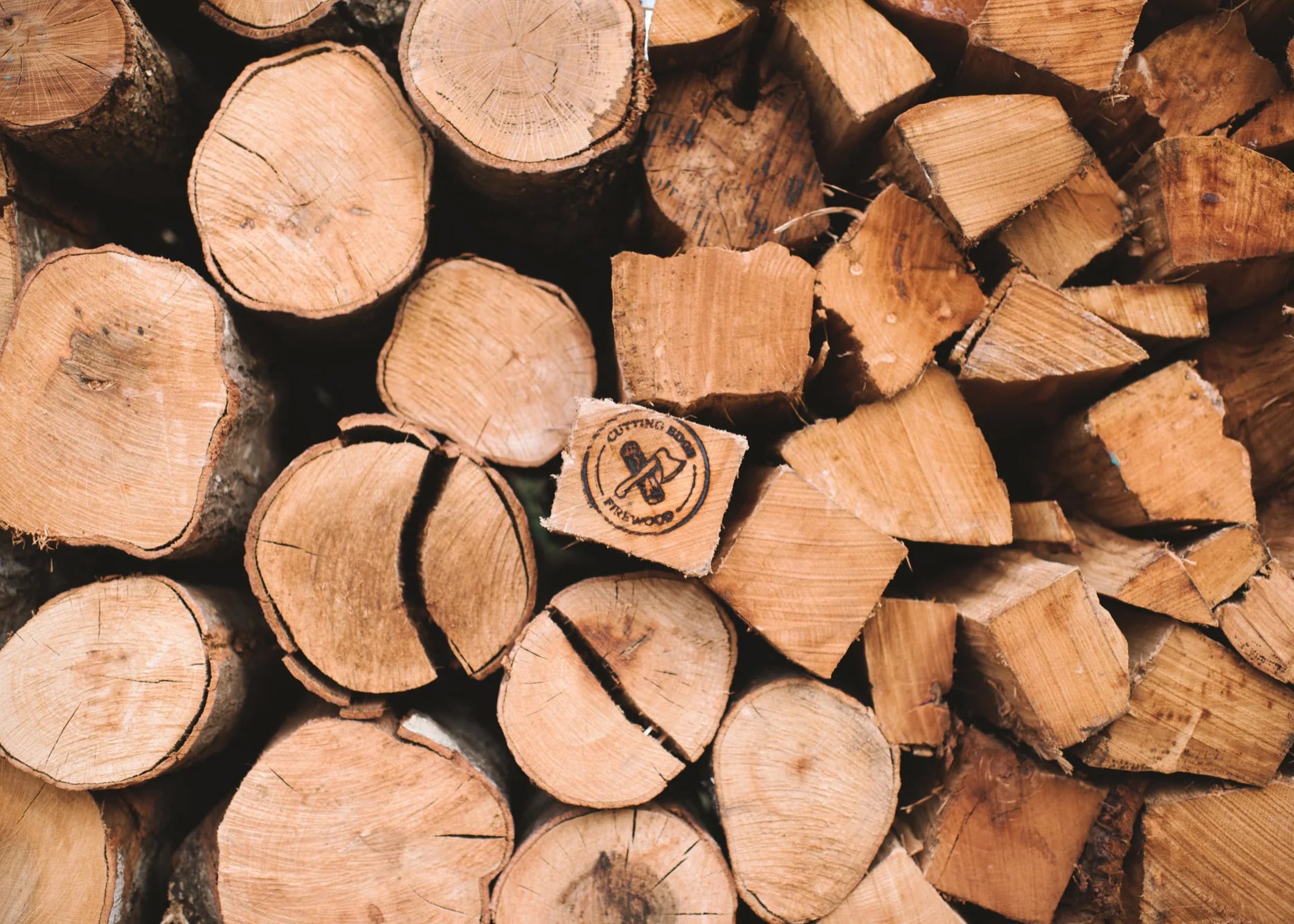
- Apple wood chunks (fist-sized, irregular): Ideal for kamado/ceramic grills like the Big Green Egg, Kamado Joe, and Primo. Use charcoal as your primary heat source and add 2–3 large apple chunks just before placing food on the grate, for maximum smoke at the moment of contact.
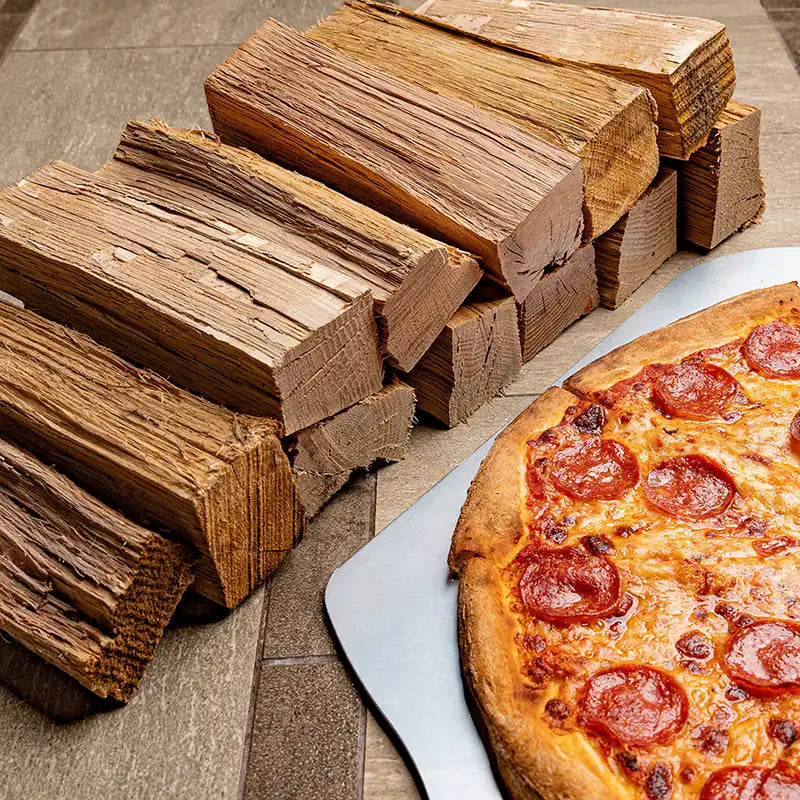
- Apple wood splits (8" long, 1–2" thick): Best for offset smokers, vertical smokers, and large kamados. Can be used exclusively or layered with charcoal in a smoker box.
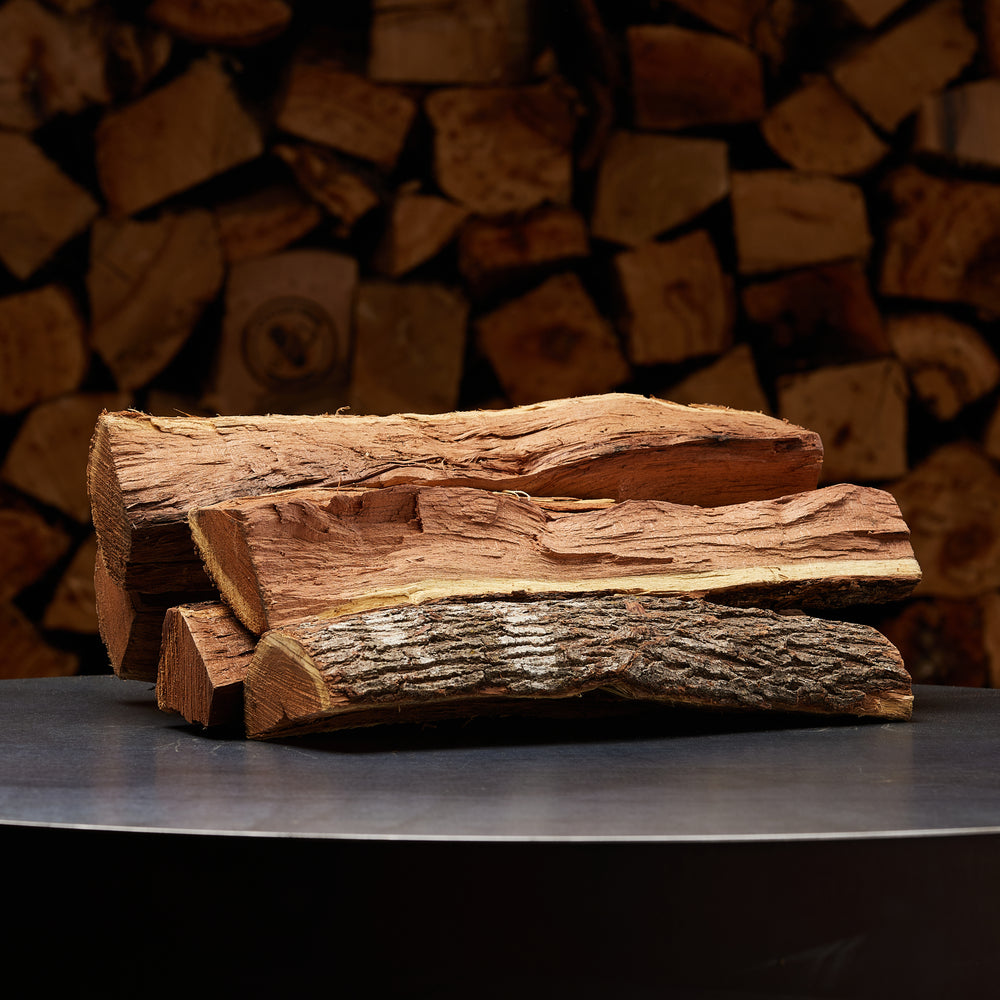
- Apple wood logs (16" long, 3–5" thick): Designed for open-fire cooking and large commercial smokers where you need long, steady, hours-long smoke output.
Two important technique notes. First, you don't need to soak apple wood chunks before smoking — soaking is a popular myth that simply slows ignition and adds steam without adding flavor. Second, smoke food low and slow: 225–250°F for hours, not high heat for minutes. The longer the smoke contact time at low temperature, the deeper the flavor penetration and the more tender the result.
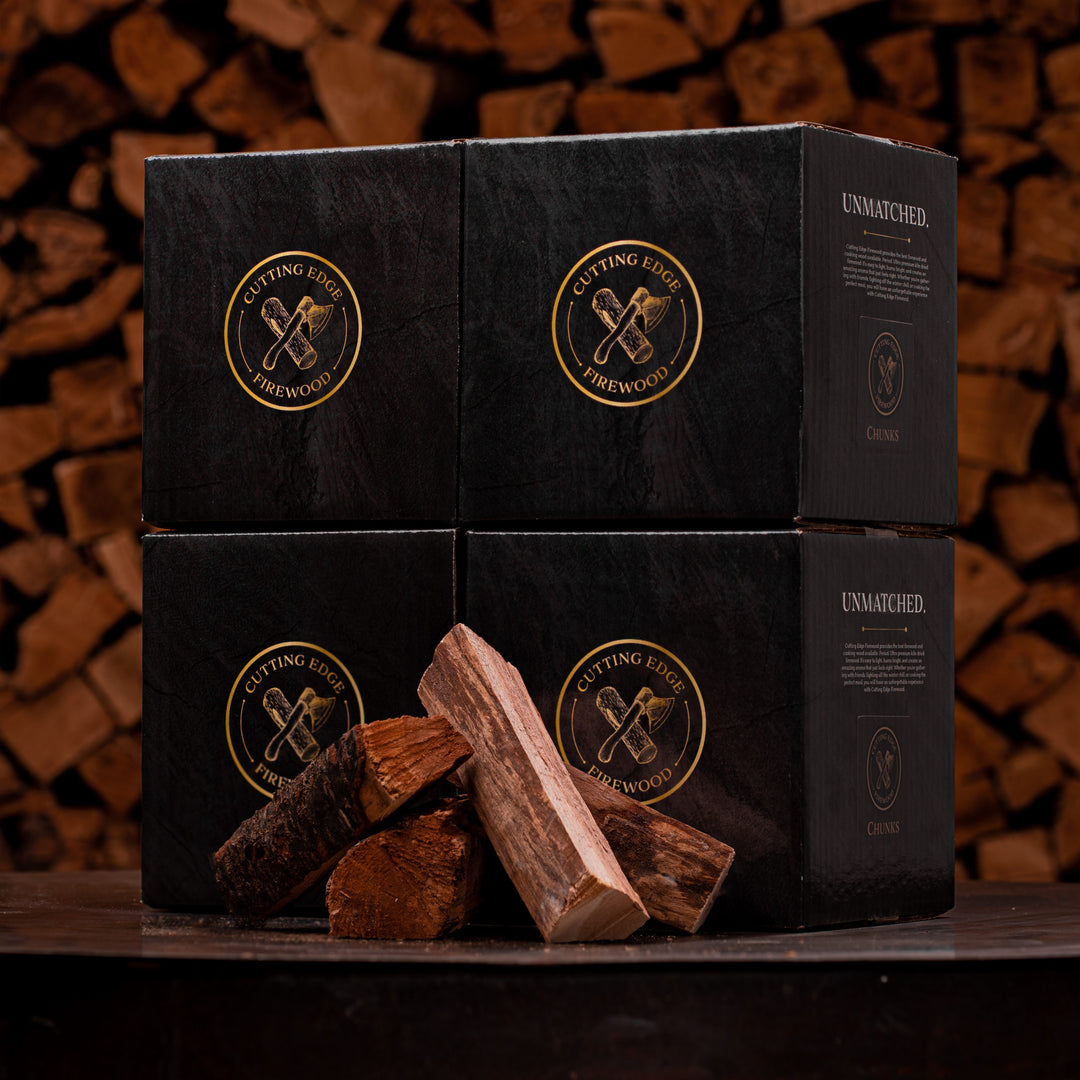
Why Cutting Edge Apple Cooking Wood Stands Out
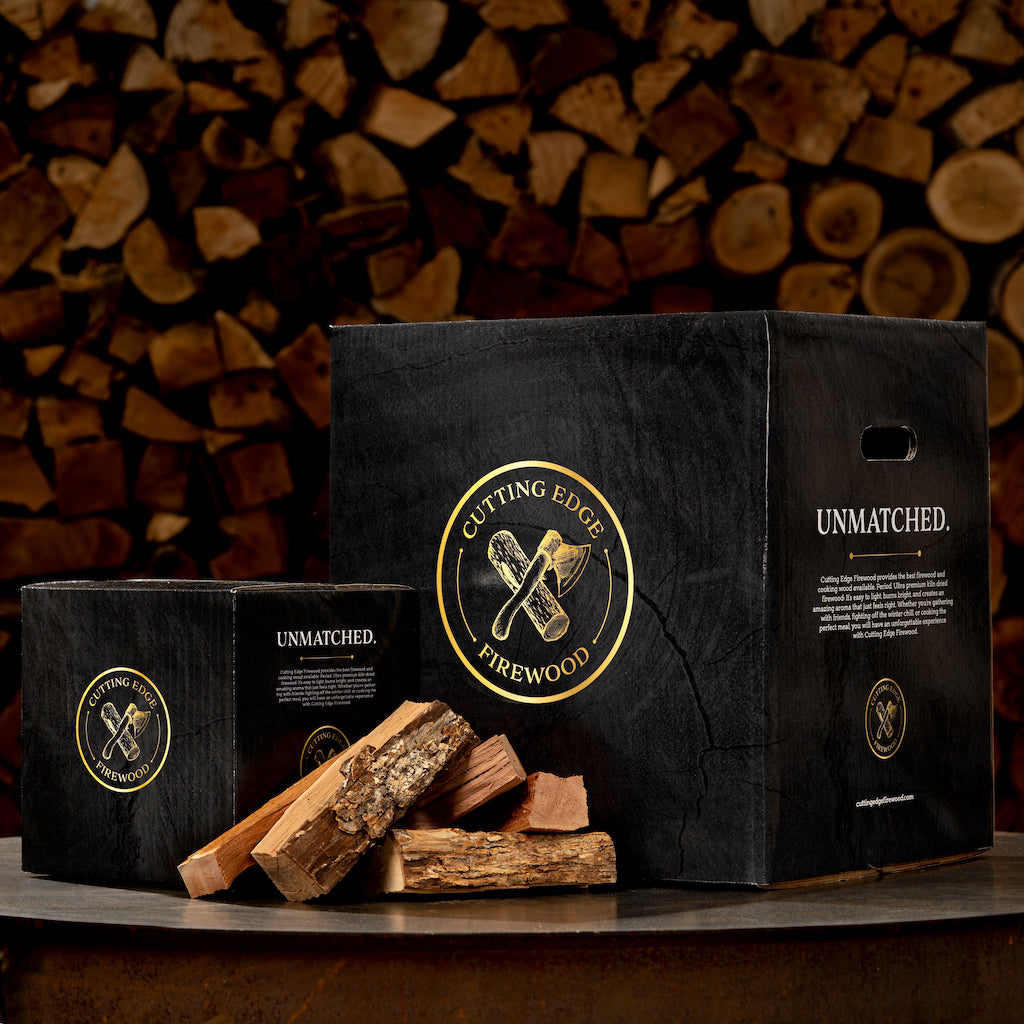
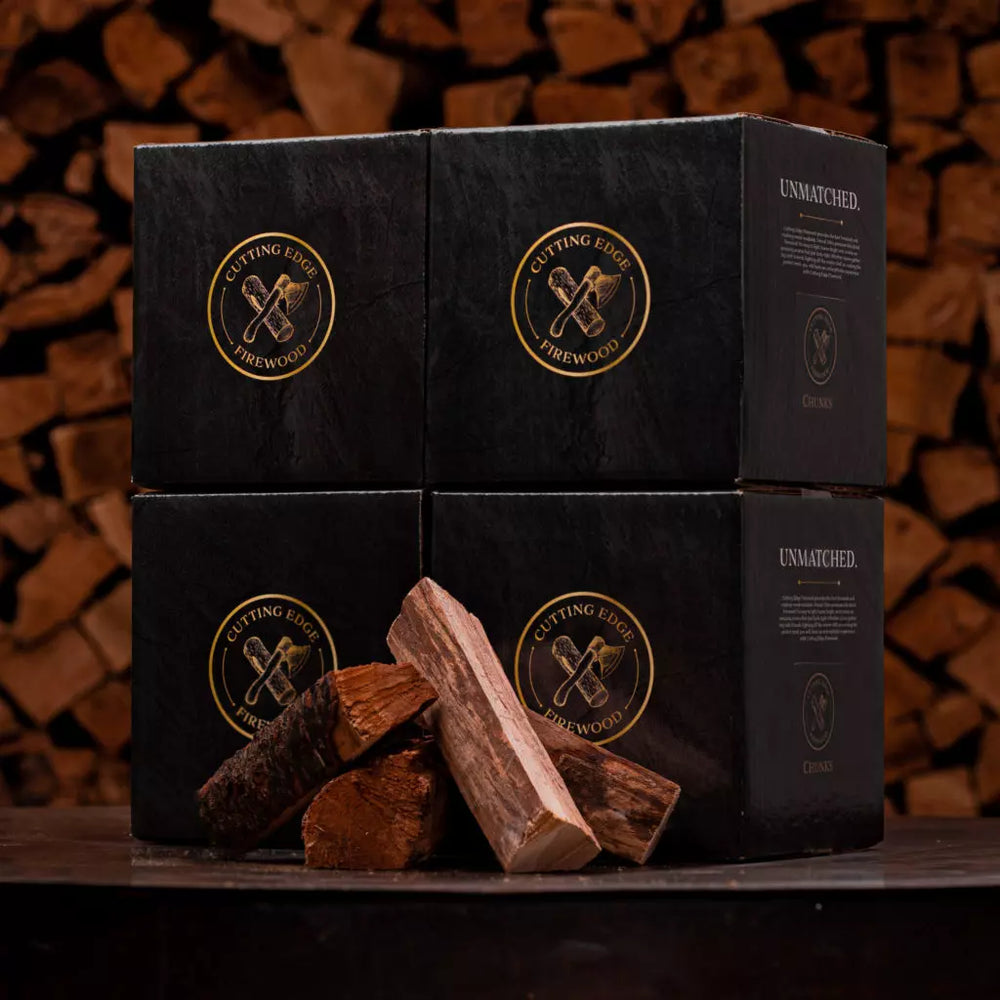
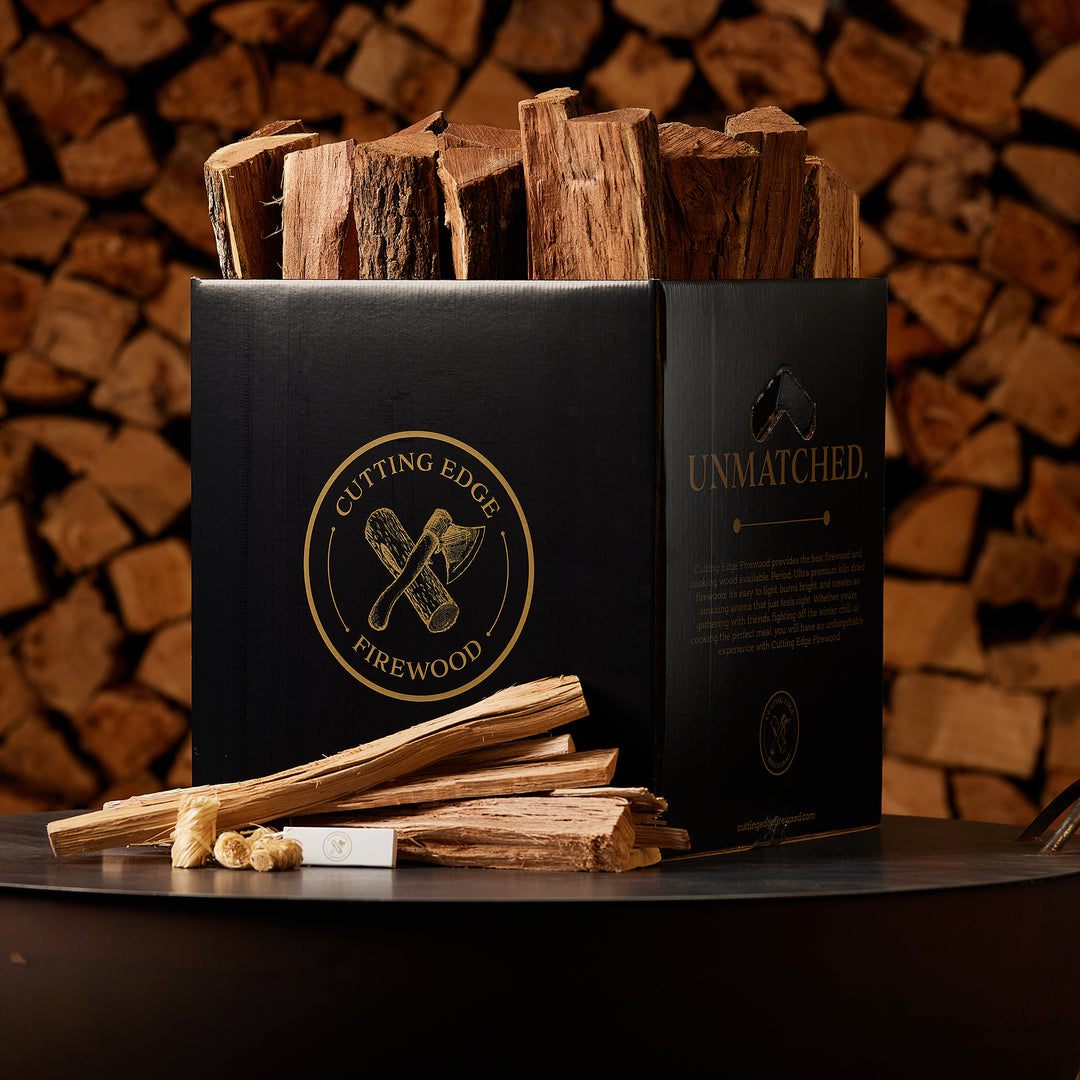
Most apple smoking wood you'll find at a hardware store has been air-dried for unknown amounts of time, which means variable moisture content, occasional mold, and inconsistent burns. Our apple cooking wood is fresh-cut, then ultra kiln-dried in a temperature-controlled chamber to drive moisture content well below the level of seasoned wood. The result is wood that's dense, clean, free of pests and mold, and burns at consistent, predictable temperatures — so the smoke you get is pure apple flavor, not muddied by water vapor or contaminants.
Apple Wood Smoking FAQ
What does applewood taste like?
Apple wood produces a mild, sweet, fruity smoke with a faint floral note and a clean, almost honey-like finish. The flavor is noticeably gentler than oak or hickory and slightly lighter than cherry. Because apple wood contains more natural sugars than most hardwoods, those sugars partially caramelize as the wood heats, contributing to the signature sweet character of the smoke. It complements rather than overpowers the meat — which is why pitmasters reach for it when they want subtlety.
Is apple wood good for smoking?
Yes — apple wood is one of the most popular and versatile smoking woods on the market, and a top choice for beginners. It produces clean, low-resin smoke with a mild, sweet, fruity flavor that pairs well with pork, poultry, ham, and fish. Because the smoke is gentle, apple wood is forgiving over long cooks: even if you smoke a pork shoulder for 14 hours, the meat won't turn bitter the way it can with mesquite. It's also widely available as kiln-dried chunks, splits, and logs.
What meat goes best with apple wood?
Apple wood pairs best with pork (especially pork shoulder, ribs, and ham), poultry (chicken, turkey, game birds), and fish (salmon, trout). It's also excellent for cold-smoking cheese. The mild sweetness of apple smoke flatters proteins that would be overwhelmed by stronger woods like hickory or mesquite. Apple is generally too gentle for brisket, beef ribs, and other big-cut red meats — those benefit from oak, hickory, or a mesquite blend. For most everyday backyard smoking, apple is hard to beat.
Apple wood vs cherry wood for smoking — which is better?
Both are mild fruit woods, but they have distinct profiles. Apple wood is sweeter, lighter, and more honey-like — it's the gentler of the two and excels with pork, poultry, and fish. Cherry wood is slightly deeper, with a faintly tart edge and a stronger color contribution (it gives meat a rosy mahogany hue). Cherry pairs better with beef and lamb than apple does, and many pitmasters blend the two to get cherry's color and apple's sweetness in one cook. Try both — they're complementary, not competing.
The Bottom Line
"Applewood smoked" simply means food that's been cooked over apple wood — and the result is a mild, sweet, fruit-forward smoke flavor that's hard to mess up. It's the smoking wood that flatters the most proteins, the wood most beginner pitmasters start with, and the wood most experienced ones keep coming back to for poultry, pork, ham, and fish. The key to getting it right is dry, dense, kiln-dried wood; low-and-slow temperatures; and patience. Everything else takes care of itself.